What Unites Us: Insights from the 2025 Democracy for All Project Survey
The Democracy for All Project is a multiyear collaboration between the Kettering Foundation and Gallup. This annual, national survey is designed to understand how Americans experience democracy and elevate all voices across groups and generations. The 2025 report is based on surveys of 20,338 adults conducted between July and August 2025, with a margin of sampling error of ±0.9 percentage points.
Americans agree on a lot. This may come as a surprise given the serious concerns that many US citizens hold about levels of polarization within our country. But Is Democracy Working?, a new report from the 2025 Democracy for All Project survey, illustrates that there are strong democratic values that unite us.
The survey, fielded in summer 2025, asked Americans their views on a wide range of issues related to their experiences with democracy. Featuring more than 20,000 respondents, it is the most extensive survey of its kind. The message to emerge is clear. Two-thirds of Americans agree that democracy is the best form of government. Though citizens may differ in their understanding of what democracy means in practice, Americans overwhelmingly desire democracy and agree on its basic principles.
Authoritarianism from Above
Broad support for democracy is consistent with global data, which suggest that in most countries around the world, citizens want democratic governance. Around 90% of the world’s population sees democracy as being the best form of government, and this preference has remained steady over the last 25 years.
Public support for democracy, both globally and in the United States, remains strong even amid a backdrop of democratic backsliding. In cases all over the world—from Serbia to Tunisia to Nicaragua—democracies are under threat at the hands of their elected leaders.
Surveys like the Democracy for All Project offer persuasive evidence that democratic backsliding is not happening because of citizen demand for authoritarianism. Rather, today’s wave of democratic decline is occurring despite strong citizen support for democratic governance. This decline indicates that today’s democracies are falling apart through a top-down process that is driven by power-hungry incumbent leaders and the political elites who support them.
How Democracy Can Fall Apart Even when Citizens Support It
The disconnect between the type of government citizens want and the behavior of their elected leaders may seem puzzling. But it reflects the deep societal reverberations that transpire in the face of incumbent attacks on democracy, which shift citizen understanding of healthy democratic norms of behavior and deepen societal divisions.
Most citizens simply do not have the time or resources to engage in critical reflections about what healthy democracy and democratic norms refer to in practice. They rely on shortcuts from their political leadership to generate an understanding of these things. When political elites justify bad behavior as being acceptable, this informs how their supporters process the behavior that transpired.
Anti-democratic leaders thus normalize their attacks on democratic institutions and often justify these attacks as being necessary to save democracy. Political elites in their inner circle get in line behind the leader’s narrative and send critical cues to everyday citizens that nothing is wrong.
Moreover, the divisive rhetoric that leaders use to frame their anti-democratic actions is polarizing and splinters society into two camps that deeply distrust and dislike the other. Even if citizens share many similar views, they are told otherwise by their political leadership. The ratcheting up of tensions only serves to benefit the power-hungry incumbent. As scholars have noted, polarization is often intentionally used by political leaders to advance their interests. With deep societal distrust, supporters of anti-democratic leaders turn a blind eye to bad behavior in an effort to prevent the other side from access to power and influence. In these ways, democracy can fall apart even amid strong support for it.
Why Americans Are Dissatisfied with Democracy
Many of these complex dynamics are typical in backsliding democracies. The Democracy for All Project survey data reveal much of this anti-democratic behavior and sentiment within our current political landscape. Americans report deep dissatisfaction with how their democracy is performing. A majority (51%) of Americans assess that democracy in the US is performing poorly, and that response is twice the number (24%) of those who assess it is performing well.
Who is to blame? Only 27% of Americans surveyed think their leaders are committed to having a strong democracy. A majority of Americans lack confidence that government decisions reflect the will of the people or the needs and interests of people like them. A majority likewise do not think that laws and policies uphold the principles of freedom and justice for all.
Given the steep erosion of democratic institutions that has transpired throughout 2025, most Americans understandably express frustration with how the system is working. They lack trust in the system because the system itself is crumbling under current political leadership. Americans on both sides of the political divide share this sentiment, though their assessment of who is to blame varies based on their partisanship. The data thus show that as the quality of democracy in the United States has eroded, ordinary citizens are sensing the consequences.
A Shared Political Culture in the United States Persists
Importantly, the Democracy for All Project data also illustrate the ways in which Americans are united in their core values, significantly more so than the media and political leadership portray. Large majorities of Americans express belief in democratic principles: political leaders should compromise to get things done, nonviolent expression should be allowed regardless of one’s views, and violence should be rejected as a means of achieving political goals.
The clear message to emerge is that Americans’ disillusionment with democracy is mainly about how it is performing and not based on the underlying values that undergird it. Despite concerns with polarization, the survey results reveal a shared political culture does persist in the United States, at least at the level of political ideals, even as some disagree over what those ideals mean.
In fact, though Americans disagree on many policies, we are far less divided ideologically than we think we are. This “perception gap” only serves to benefit anti-democratic leadership. When citizens perceive their views to be more ideologically polarized than they actually are, they are likely to feel more dislike toward and distrust of the other side. The perception gap helps to explain the rising affective (or emotional) polarization. When partisans overestimate the degree of partisan disagreement, they are more likely to support prioritizing their party over the general good of the country.
At the same time, when ordinary people have greater awareness of shared beliefs, affective polarization declines. For this reason, the findings of the Democracy for All Project survey, revealing a wide range of shared values, could not come at a more important time.
To Save Democracy, Build on What Unites Us
The task of defending democracy has grown more challenging. Democratically elected leaders are undermining democracy from within, even in places where citizens strongly support democratic norms and values. That said, recognizing the areas of agreement among Americans, as reflected in the Democracy for All Project survey, is a first step toward reducing the emotional divides that stymie reimagination of a democracy that can best serve us all.
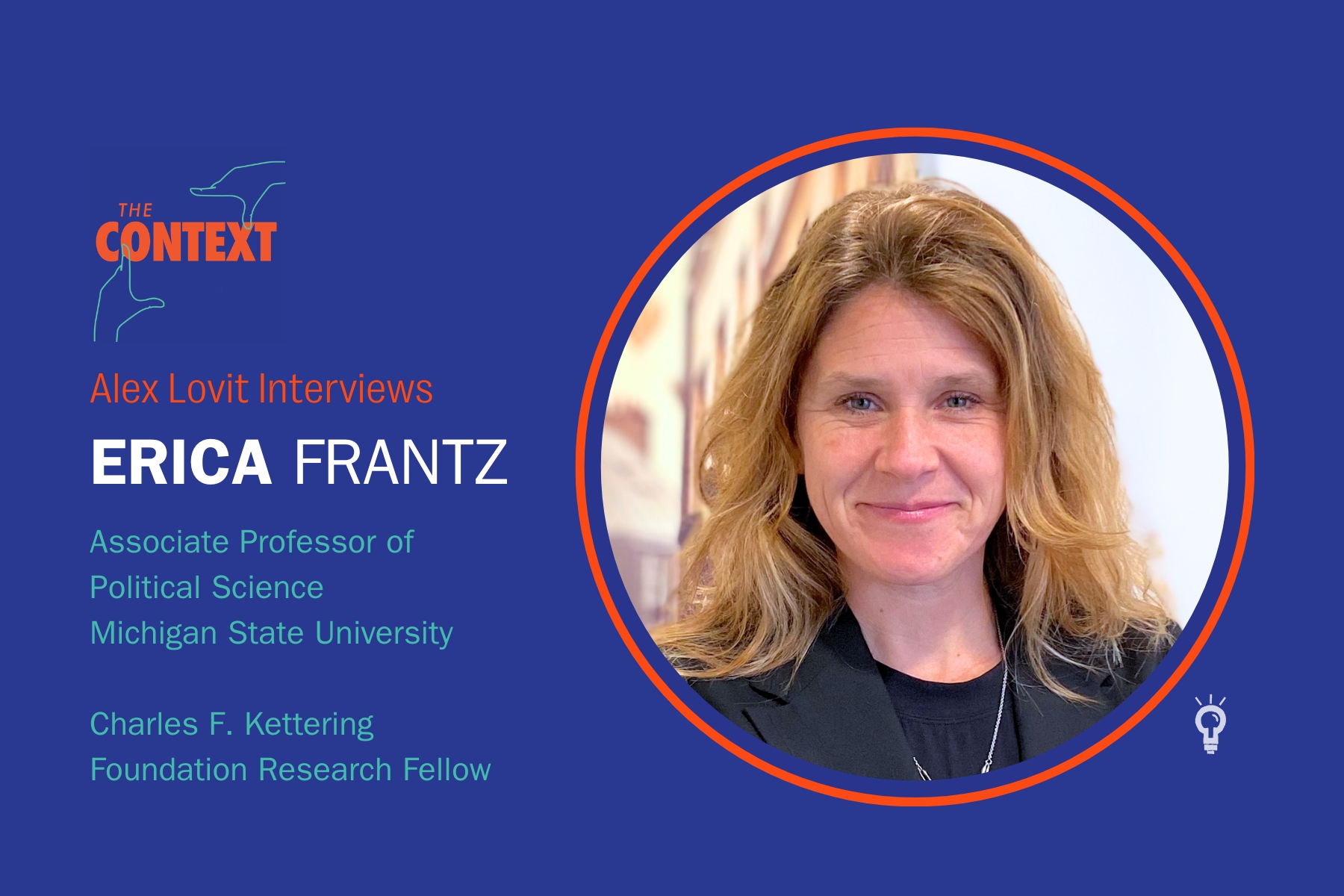
Erica Frantz is an associate professor of political science at Michigan State University and a Charles F. Kettering Foundation research fellow.
From Many, We is a Charles F. Kettering Foundation blog series that highlights the insights of thought leaders dedicated to the idea of inclusive democracy. Queries may be directed to fmw@kettering.org.
The views and opinions expressed by contributors to our digital communications are made independent of their affiliation with the Charles F. Kettering Foundation and without the foundation’s warranty of accuracy, authenticity, or completeness. Such statements do not reflect the views and opinions of the foundation which hereby disclaims liability to any party for direct, indirect, implied, punitive, special, incidental, or other consequential damages that may arise in connection with statements made by a contributor during their association with the foundation or independently.