Meaningful Solidarity Starts by Embracing Complex Realities
Resilience & Resistance has posted two earlier perspectives touching on the recent crisis in Venezuela: “Why Is There Silence in Caracas” and “Carrying the Weight of Being a Witness.”
As democratic backsliding accelerates around the world, solidarity across borders has become more important than ever. Yet solidarity is not always practiced in ways that help those who are facing authoritarian rule. International debates often fall into simplified narratives that frame crises as a binary choice between sovereignty and intervention, as if people on the ground or in exile could easily make such a choice. These framings overlook the complex realities experienced by the people living inside those crises. The case of Venezuela illustrates this problem clearly.
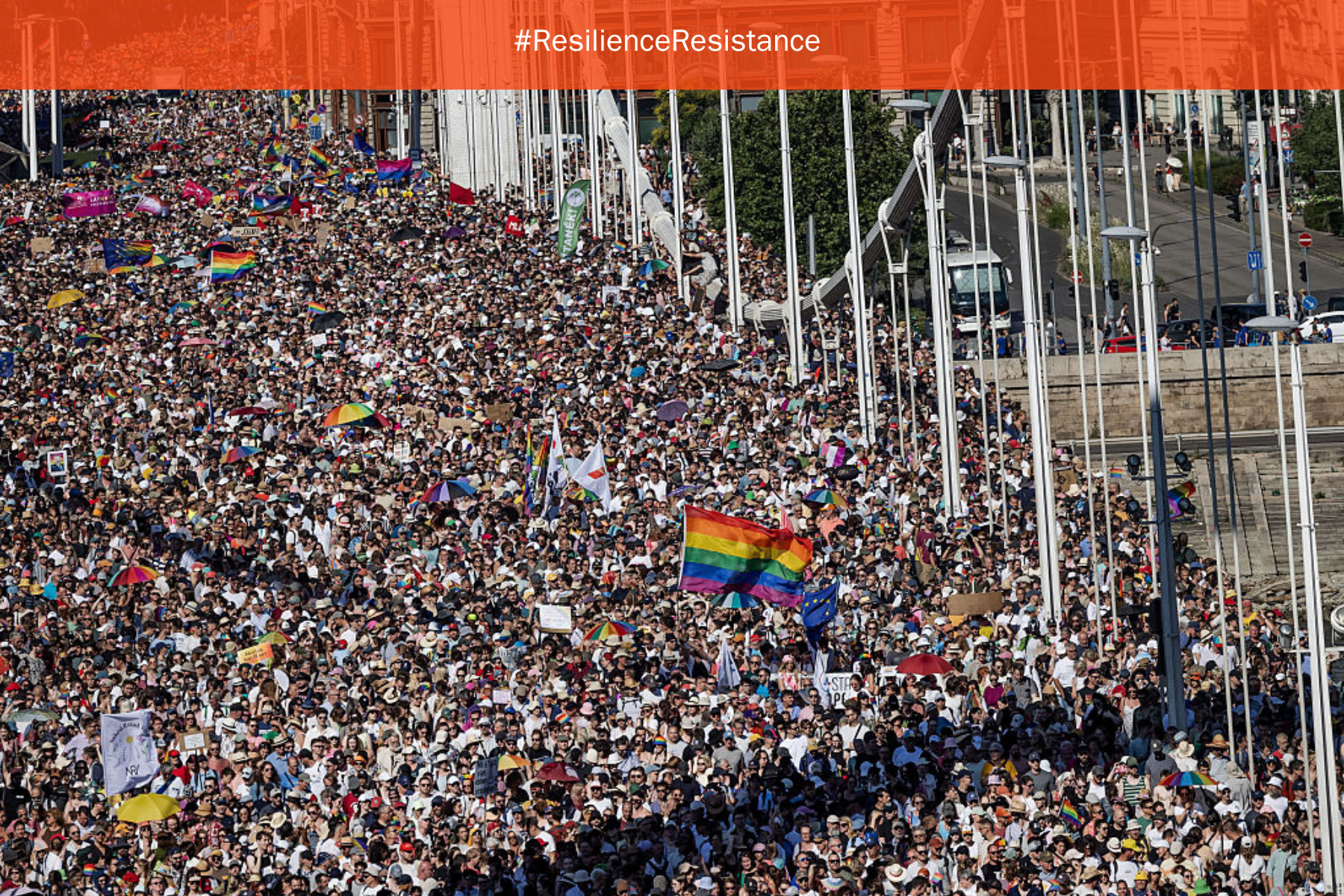
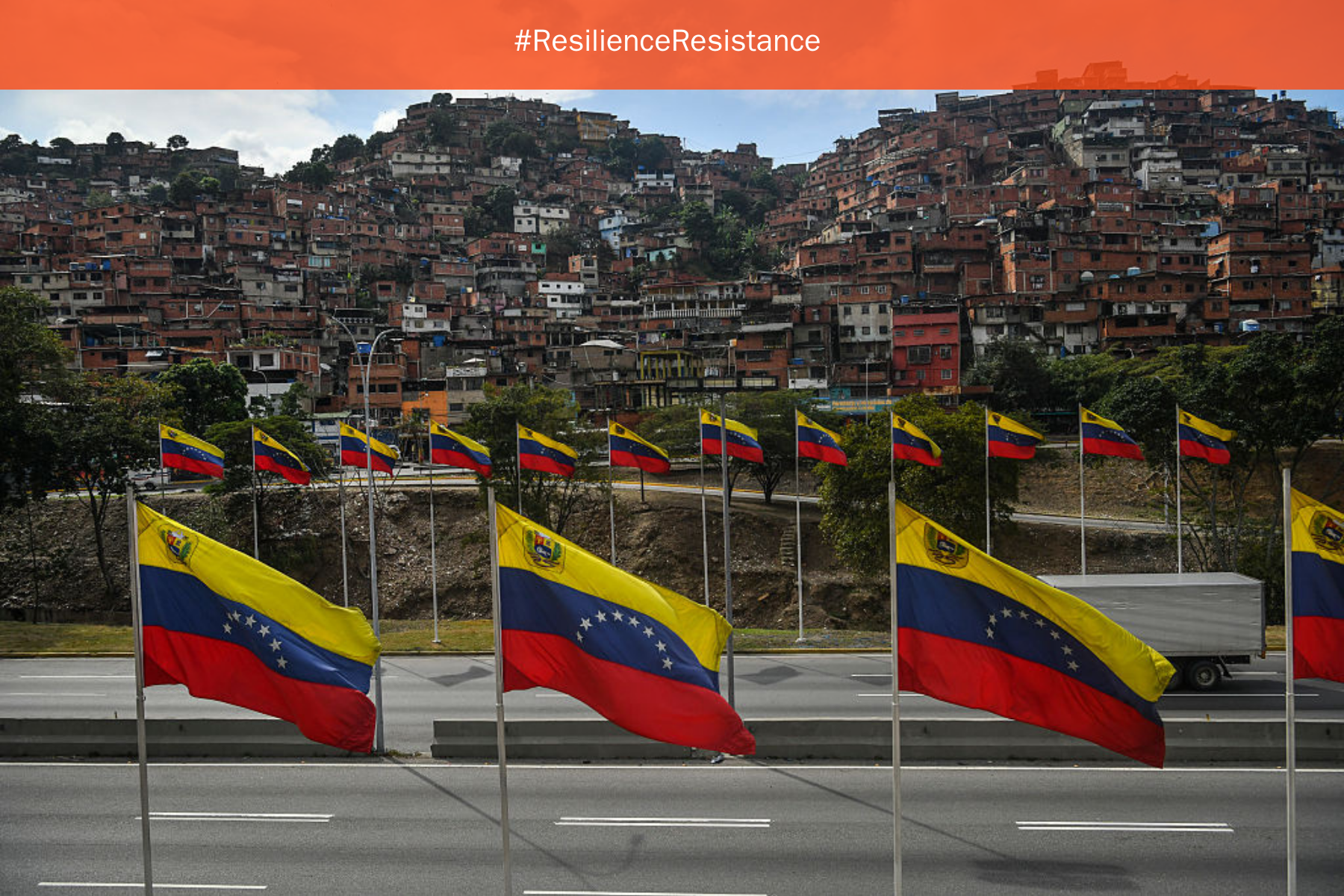
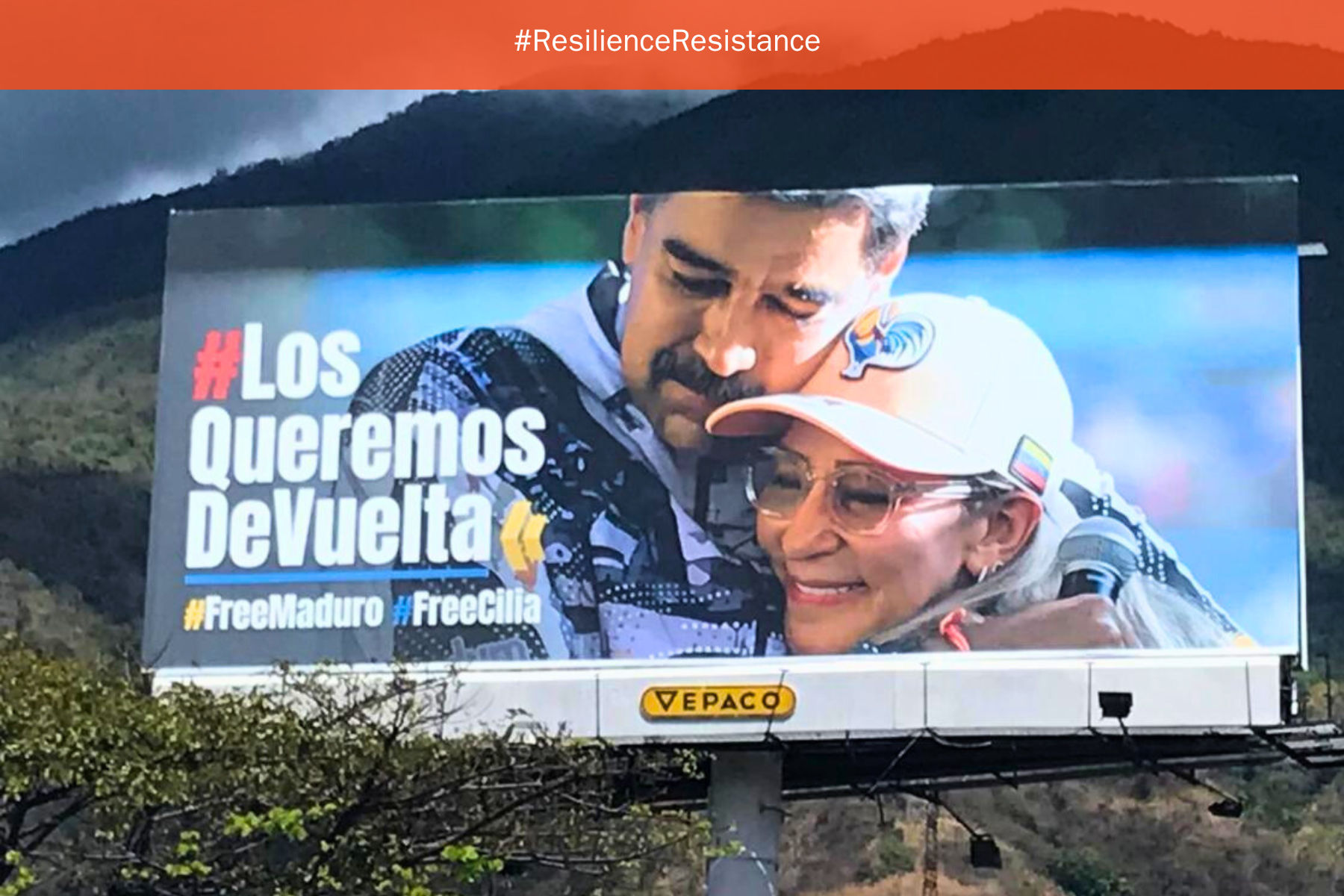
After the capture of Nicolás Maduro earlier this year, international reactions were swift and loud. Protests defending Venezuela’s territorial integrity erupted in major cities around the world, often without Venezuelans participating. In many global conversations, anti-imperialist language returned with urgency. Yet many Venezuelans, inside the country and across the diaspora, watched these reactions with mixed feelings: relief, confusion, and often, irritation. This is not because concerns about international law are misplaced. They are real and important. But something essential was missing: the perspective of Venezuelans themselves.
For years, the crisis in Venezuela has been discussed through ideological frameworks developed far from the country itself, often even excluding its people. Venezuelan sociologist and human rights defender Rafael Uzcátegui has described this dynamic as a form of “minor colonialism.” It occurs when external actors—often guided by universal principles or progressive credentials—assume the authority to interpret and rank the experiences of those living through the violence.
In this dynamic, solidarity has become pedagogical rather than horizontal and relational. Venezuelans are told how to interpret their own crisis. Observers abroad demand geopolitical maturity, strategic patience, or ideological clarity, and they demand this of the Venezuelan people but not the Venezuelan government. Meanwhile, the testimony of those who have experienced repression, economic collapse, surveillance, or forced migration is often dismissed as radical, emotional, or politically biased. While this asymmetry may not always be intentional, its consequences are real.
For many Venezuelans, the past two decades have consisted of living under a government that dismantled democratic institutions while invoking sovereignty and anti-imperialist rhetoric as shields against scrutiny. These narratives have been readily defended by sympathetic actors abroad, particularly in high-income democracies. However, courts were captured, elections hollowed out, and civil society organizations harassed or criminalized. Independent media outlets were closed or pushed into exile. Millions of people were forced to migrate in search of safety and survival.
Under these conditions, telling Venezuelans that their crisis should have been resolved internally or that external solidarity must avoid confronting the regime in order to preserve ideological coherence can feel profoundly disconnected from reality. For people who have been systematically surveilled, impoverished, and displaced, such arguments sound less like solidarity and more like dismissal.
Military interventions do set dangerous precedents. But so does the systematic dismantling of democratic institutions under the protective cloak of sovereignty. A state that antagonizes its own population, captures courts, criminalizes dissent, and weaponizes opacity also creates dangerous precedents. These processes open power vacuums and normalize impunity long before any aircraft or military operation appears.
Ignoring this longer trajectory does not defend international law: it weakens it. The Venezuelan experience also shows something else that deserves more attention: the resilience of civil society.
Despite more than 20 years of authoritarian pressure, Venezuelan civil society organizations have continued to document abuses, provide humanitarian support, defend political prisoners, and maintain networks of democratic resistance. Many now operate from exile or under severe restrictions, yet they remain some of the most reliable sources of information about what is happening in the country.
These organizations also play a crucial role in moments of transition and uncertainty. When institutions collapse, civil society often becomes the only infrastructure capable of documenting abuses, supporting victims, and preserving the possibility of democratic recovery.
For this reason, international solidarity needs less ideological positioning and more focus on strengthening the actors who continue, despite enormous challenges, to respond to people’s needs. The work Venezuelan civil society has carried out over the past two decades is immense. Yet the lack of meaningful engagement from international colleagues, along with narratives that dismiss what these organizations have documented on the ground, can be deeply alienating, especially when it comes from people and spaces that were once considered allies. As political crises around the world grow increasingly complex, international actors must learn to hold that complexity if they hope to build meaningful partnerships in difficult contexts, as these contexts have a lot to teach. These challenges are not distant. The same patterns of democratic erosion are now becoming visible in North American and Western European democracies as well.
Meaningful solidarity can be uncomfortable, and it is not always rewarding. It requires listening before interpreting, as well as being willing to face disappointment and reconsider cherished narratives. It means recognizing that those who live through violence have priority in naming it. It also requires humility from international actors, including civil society organizations in wealthier democracies. Building stronger partnerships means acknowledging the inequalities that still shape global advocacy networks and moving toward more horizontal and relational forms of collaboration.
The Venezuelan crisis is not a national story only. It is part of a broader global trend in which democratic institutions are gradually weakened while authoritarian governments support one another.
In this context, solidarity must evolve as well.
Declarations of support that overlook the people directly affected by repression risk reinforcing the very dynamics those declarations seek to oppose. What is left unsaid—the victims who remain invisible, the abuses that go unacknowledged—can matter as much as what is spoken loudly in international debates.
Venezuelans have entered a new phase of a crisis that has lasted for decades. International responses that confuse solidarity with paternalism will not help them navigate it. They quietly push the very people who should be part of the conversation out of the room.
What will help is something that is simple and yet more difficult. What is required is solidarity that listens, that embraces complexity, that accepts discomfort and disorder, and that strengthens the civil society actors who continue to defend democracy under extraordinary pressure.
Laura Vidal is a Venezuelan researcher in freedom of expression, a digital rights advocate, and an intercultural communication expert. She works as the communications manager for Digital Action and the Americas regional editor for IFEX.
Resilience & Resistance is a Charles F. Kettering Foundation blog series that features the insights of thought leaders and practitioners who are working to expand and support inclusive democracies around the globe. Direct any queries to globalteam@kettering.org.
The views and opinions expressed by contributors to our digital communications are made independent of their affiliation with the Charles F. Kettering Foundation and without the foundation’s warranty of accuracy, authenticity, or completeness. Such statements do not reflect the views and opinions of the foundation which hereby disclaims liability to any party for direct, indirect, implied, punitive, special, incidental, or other consequential damages that may arise in connection with statements made by a contributor during their association with the foundation or independently.