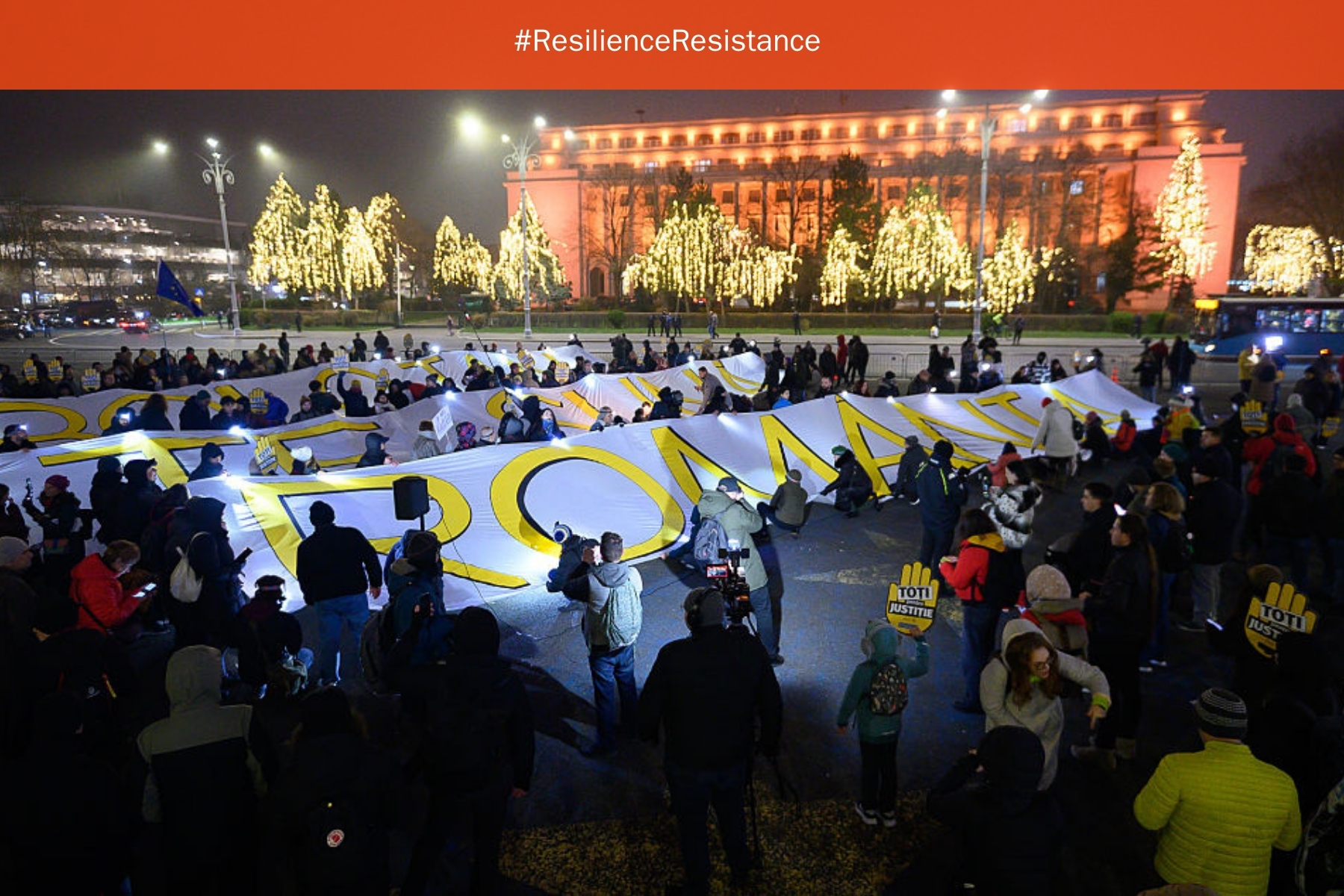
The Global Fight to Preserve Meaning, Truth, and Shared Reality
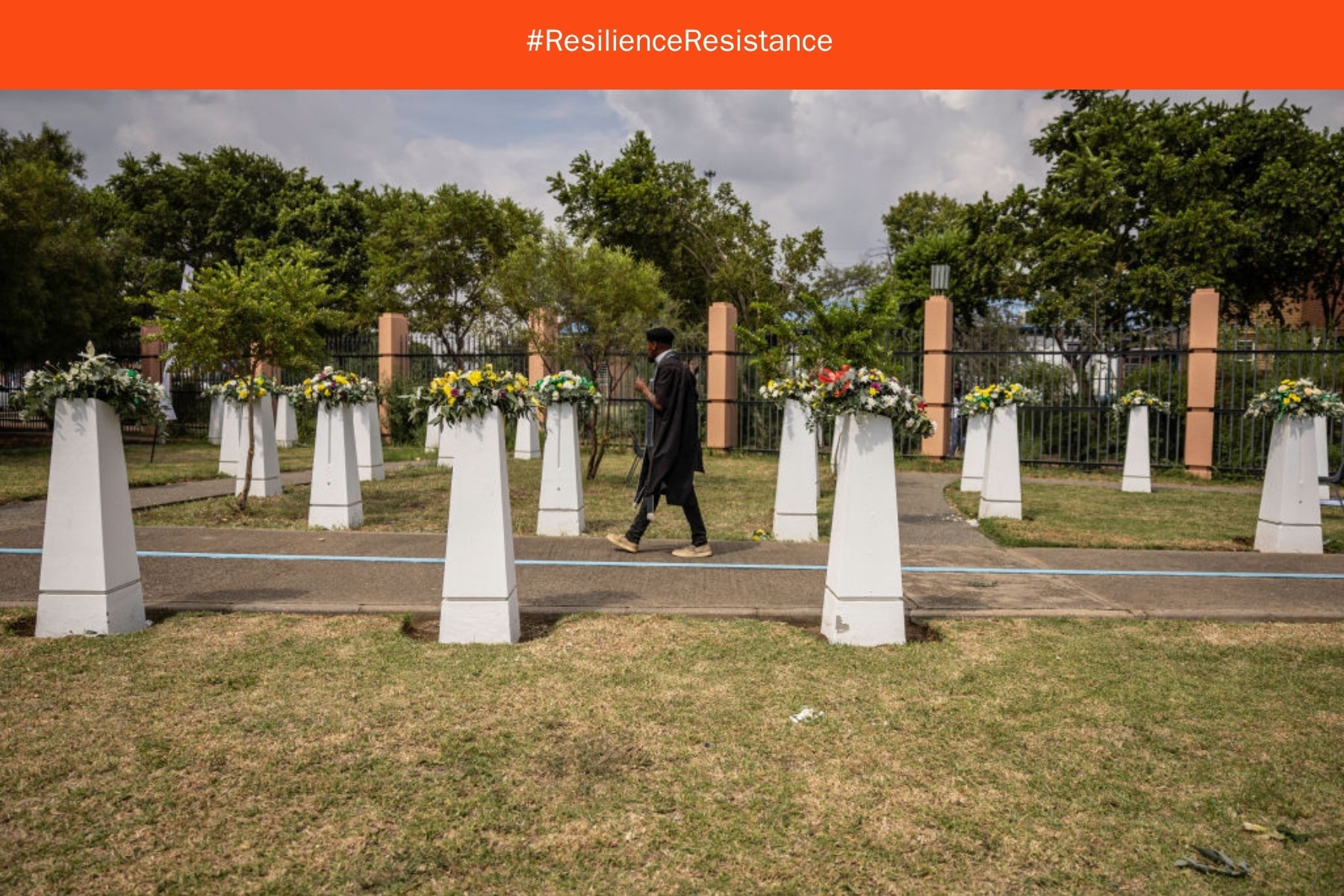
Columns representing the victims of the Sharpeville Massacre line the pathway to the entrance of the Memorial Garden in Sharpeville, South Africa.
In South Africa, where I am from, visual media like photos and videos have long been used to expose the reality of oppression to those who might rather turn away. They have been powerful tools for liberation movements.
For example, the Sharpeville Massacre on March 21, 1960, was a watershed moment in South African history. Sixty-nine people were killed and many more were injured while they were protesting pass laws, legislation designed to control the movement of Black people. Photographs of the massacre, which were published by international media outlets like Paris Match, brought the atrocities of South Africa’s apartheid system to the world. The day became so prominent that the United Nations declared it the International Day for the Elimination of Racial Discrimination and it later resulted in the adoption of the International Convention on the Elimination of All Forms of Racial Discrimination.
In 2012, police officers opened fire on striking mineworkers killing 34 and injuring many more. In the aftermath of what is known as the Marikana Massacre, visual evidence disproved the police version of events.
Of course, this use of visual media to expose raw injustice and inhumanity is not unique to South Africa. In the US, images of police dogs attacking protesters during the 1963 Birmingham campaign was a pivotal moment in the civil rights movement. These photos profoundly impacted public opinion both domestically and abroad and sped up the movement for civil rights laws. In 1991, the videotaped violent beating of a Black man, Rodney King, by Los Angeles police led to more people using videos to expose misconduct and the use of excessive force by the police.
The world has transitioned into an era in which the adage “seeing is believing” no longer holds true. In today’s digital era, governments, corporate entities, and other actors are increasingly attempting to erode confidence in the documentation meant to hold them accountable.
Doubt in the Aftermath of a Massacre
In Nigeria in 2020, nationwide demonstrations against extrajudicial killings, kidnappings, torture, and extortion by the Special Anti-Robbery Squad police unit took place. The #EndSARS protests called for the disbanding of the unit and were in response to a video showing SARS officers physically assaulting and shooting a young Nigerian on October 3, 2020.
Two weeks later at the Lekki toll gate, the Nigerian Armed Forces disconnected the CCTV and switched off streetlights before opening fire on protesters. Streamed videos showed demonstrators singing the national anthem in the dark, while shooting could be heard as people fled the site and demonstrators were seen caring for the wounded on the spot.
Obianuju Catherine Udeh, also known as DJ Switch, was among those who livestreamed the violence on Instagram. “Let’s make sure the world sees this so they don’t change the story and tell people that we killed ourselves,” she said at the beginning of the stream.
Her worries were confirmed, when the federal government accused her of spreading fake news and disinformation. As part of the ongoing denials that the killings occurred, the Minister of Information and Culture, Lai Mohammed, memorably described it as “a massacre without blood or bodies.”
Investigations by Amnesty International and CNN, which included using timestamps and data from geolocated video files, found that despite the government’s claims otherwise, deadly force had in fact been used against protesters. A judicial panel of inquiry would later find the Nigerian army culpable.
While there is still no justice for those who were killed that night, the existence of evidence of the breaches committed strengthens ongoing attempts to hold the perpetrators accountable and ensure justice for the victims.
Today, it is no accident that in places like Minneapolis, people who are documenting misconduct by police or Immigration and Customs Enforcement (ICE) agents are harassed and targeted. This underscores the significance of documentation in the pursuit of justice and just how critical it is to safeguard people’s capacity to safely document and preserve the truth.
Enter Artificial Intelligence
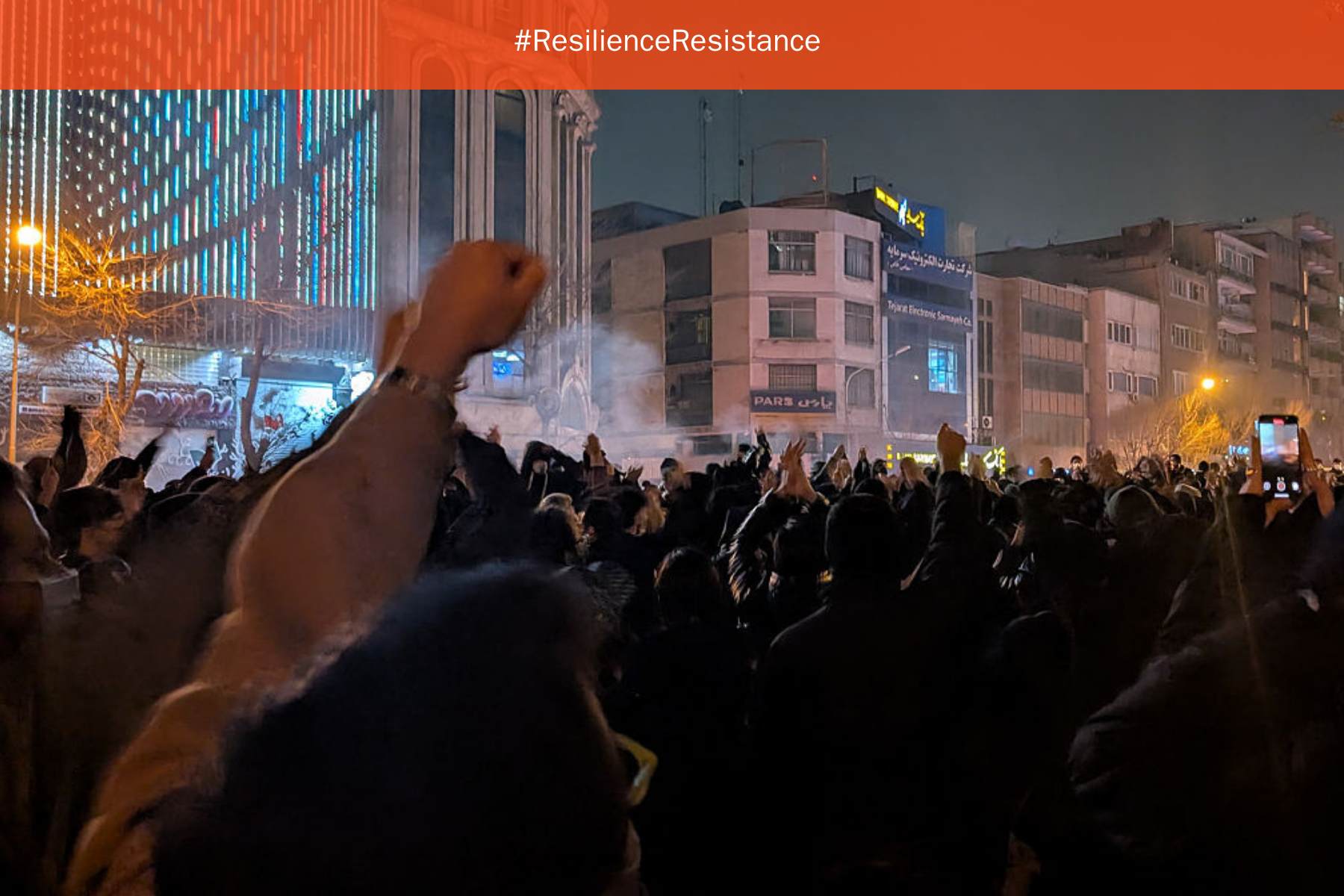
New technologies have further accelerated the assault on truth, meaning, and shared reality. In India, the ruling Bharatiya Janata Party (BJP) has used AI to create propaganda that dehumanizes Muslims. In Iran, there have been attempts by the state to dismiss anti-government protests with claims of AI manipulation and fakery.
Instances like these are no longer unusual. New technologies pose a challenge to people’s ability to discern between truth and deception, and this uncertainty erodes evidence and factual accuracy. In an age of synthetic media and generative AI, the challenge is no longer only about identifying what is fake but also about safeguarding what is real.
Beyond creating skeptical audiences who may be tempted to question the veracity of visual and audio evidence, these technologies are also making it more difficult to hold those in positions of authority accountable. Those accused can now claim that any evidence has been faked or AI manipulated—a phenomenon scholars have called the “liar’s dividend.”
WITNESS, a global organization that works to defend reality in the age of AI and contested truth, has long argued for a strategy that “combines technical solutions, human skills, and contextual verification” to ensure that truth and accountability can endure the era of AI. This strategy includes equipping observers with the skills to document harm and wrongdoing, prove the authenticity of evidence, and verify questionable information.
Where Do We Go from Here?
Because working to support capacity is not enough if the systems don’t work, WITNESS brings the challenges faced by frontline communities to the policy rooms, standards bodies, and platform negotiations where the rules of trust are being drafted. They are also advocating for laws to protect groups that are vulnerable to harm; pushing for AI detection that works for everyone, and investing in new ways to identify and authenticate content. These efforts will help shape AI policies, provenance standards, likeness protections, and detection benchmarks so that they are based on human rights and protect those who are most impacted by injustice.
The power to trust what we see and hear forms the bedrock of justice, accountability, and democracy. Today, that very bedrock is being shaken and the window to save it is closing fast.
Koketso Moeti has a long background in civic activism and works at the intersection of governance, communication and people-power. She was a 2025 Charles F. Kettering Global Fellow.
Resilience & Resistance is a Charles F. Kettering Foundation blog series that features the insights of thought leaders and practitioners who are working to expand and support inclusive democracies around the globe. Direct any queries to globalteam@kettering.org.
The views and opinions expressed by contributors to our digital communications are made independent of their affiliation with the Charles F. Kettering Foundation and without the foundation’s warranty of accuracy, authenticity, or completeness. Such statements do not reflect the views and opinions of the foundation which hereby disclaims liability to any party for direct, indirect, implied, punitive, special, incidental, or other consequential damages that may arise in connection with statements made by a contributor during their association with the foundation or independently.