Addressing Our K-Shaped Democracy
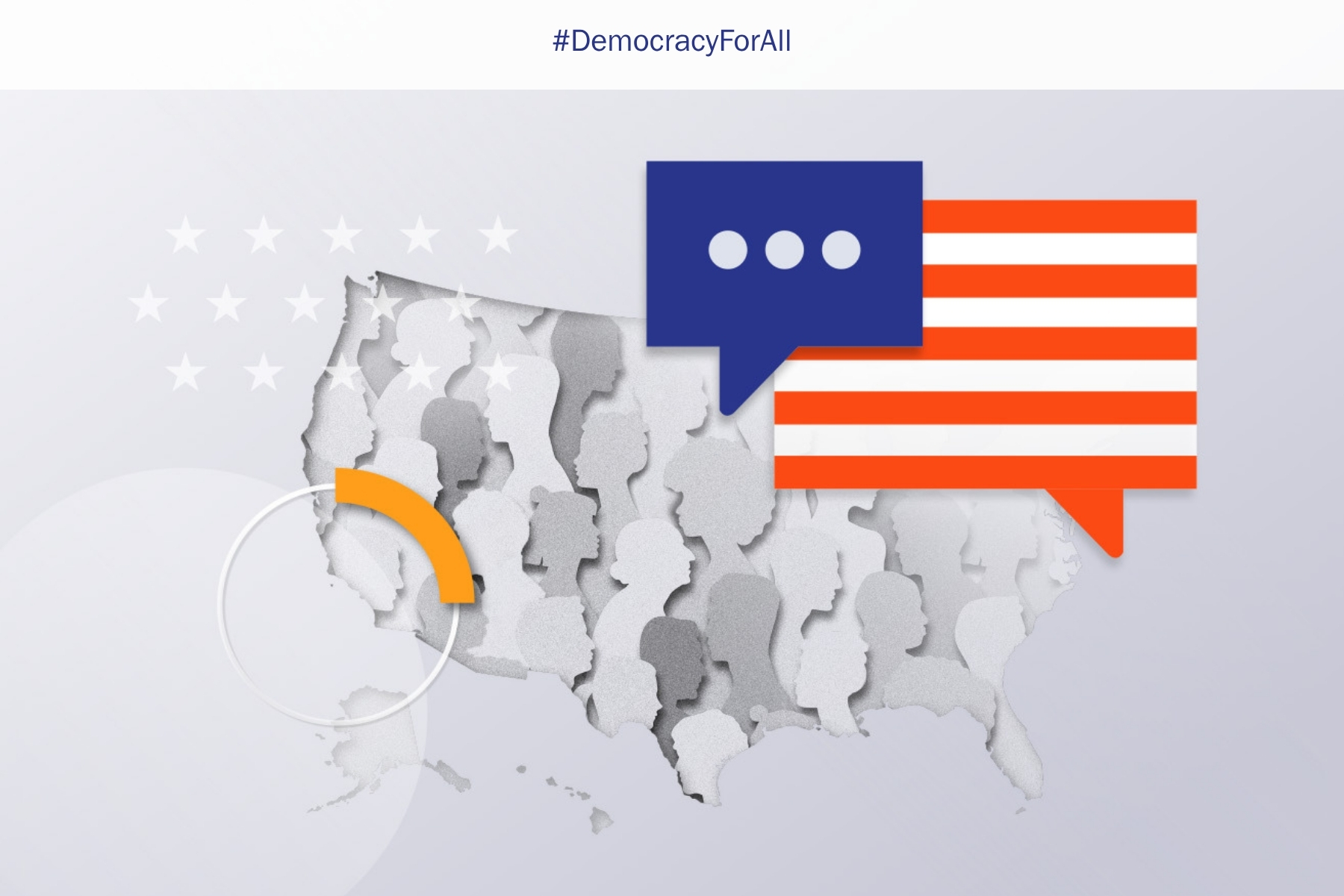
The Democracy for All Project is a multiyear collaboration between the Kettering Foundation and Gallup. This annual, national survey is designed to understand how Americans experience democracy and elevate all voices across groups and generations. The 2025 report is based on surveys of 20,338 adults conducted between July and August 2025, with a margin of sampling error of ±0.9 percentage points.
Economists have used the term “K-shaped” to describe contradictory US economic trends. Under conditions of inequality, the economy can look relatively strong for affluent Americans while the less well-off find their position increasingly precarious. One line goes up, the other down—like a capital letter K.
New survey research from Kettering-Gallup Democracy for All Project has reached a similar finding about attitudes toward US democracy. In a survey of about 20,000 Americans, two-thirds of respondents agreed that “democracy is the best form of government.” They also largely agree that the country’s democratic institutions are underperforming.
Even more revealing, support for democracy and views on its performance are softest among those who are least likely to associate with a political party, lower income, less educated, or younger. Those who said they felt lonely or did not feel respected, valued, or part of their community also were less likely to have positive views on democracy. This cohort, the bottom of the K, deserves more attention from democratic reformers.
Partisanship and the Perception Gap
The Kettering-Gallup Democracy for All Project finds that “currently, only the most ardent supporters of the incumbent political party believe democracy is performing well.” Such conditional support for democracy reflects a dangerous and growing divide in America, and this divide has led many Americans to become both more jaded about politics and more susceptible to populist appeals.
This divide is not only about policy preferences: it reflects what political scientists call “affective polarization,” or growing distrust and contempt between members of opposing political factions. As political scientist and Kettering research fellow Erica Frantz wrote in an earlier post covering the Kettering-Gallup research, affective polarization is partly explained by a perception gap between how ideologically extreme Americans believe opposing partisans to be and how extreme their fellow citizens actually are. Other research also shows Americans consistently overestimate support for political violence by members of the political party opposite their own.
Perception gaps like these are dangerous because democracy is, in large part, a system of conflict mitigation and resolution between competing interests across society. In order to avoid violence, constituencies agree to follow a set of institutionalized rules and norms, like free elections and respect for their results. This bargain breaks down if one side no longer believes the other will uphold it. As a result, those who are on the top half of the K are vulnerable to exploitation by partisan media and illiberal politicians who can use them to justify antidemocratic rhetoric and actions.
The Americans Sitting Out Our Partisan Conflicts
The dynamic above describes how politically engaged Americans are behaving against the backdrop of institutional breakdown caused by scorched-earth partisan conflict. However, the results of the Kettering-Gallup Democracy for All Project warn of a second, quieter crisis: the huge number of disengaged and disaffected citizens. Academic research suggests that individuals in this cohort—the bottom of the K—may be more amenable to populist appeals, making them an important group to understand if democracy is to be preserved. Moreover, understanding why this cohort of citizens has checked out of civic life can shed light on ways to reinvigorate it and make democracy more responsive.
The report’s results on the representativeness of American institutions suggest a partial explanation. On these measures, American democracy is failing: no public institution covered by the survey was rated as performing well by more than a third of respondents. A bare majority (51%) say US democracy is performing poorly overall, while only 24% believe it is performing well.
But if the data is broken down by age, income, level of education, or level of community belonging—related to what Robert Putnam called “social capital”—these numbers become even more negative for the young, the less advantaged, and the more isolated.
The report also finds that “those with no party ties—non-leaning independents—are less positive about democracy.” Only 43% of this group agree that democracy is the best system of government, with another 43% declaring themselves neutral. The report tells similar stories about those who report lower satisfaction with local services (46% believe democracy is best) and those who often feel lonely (58%). Perhaps surprisingly, those who feel neutral toward both parties are less likely to support democracy than those whose feelings toward the parties are negative (from 31% to 59%). The November 2025 report from the Kettering-Gallup research warns that these disengaged Americans are at risk of entering a “reinforcing cycle” in which those who do not feel strong community bonds are less likely to believe they can participate meaningfully in democracy.
Exclusion and the Paradox of Hope
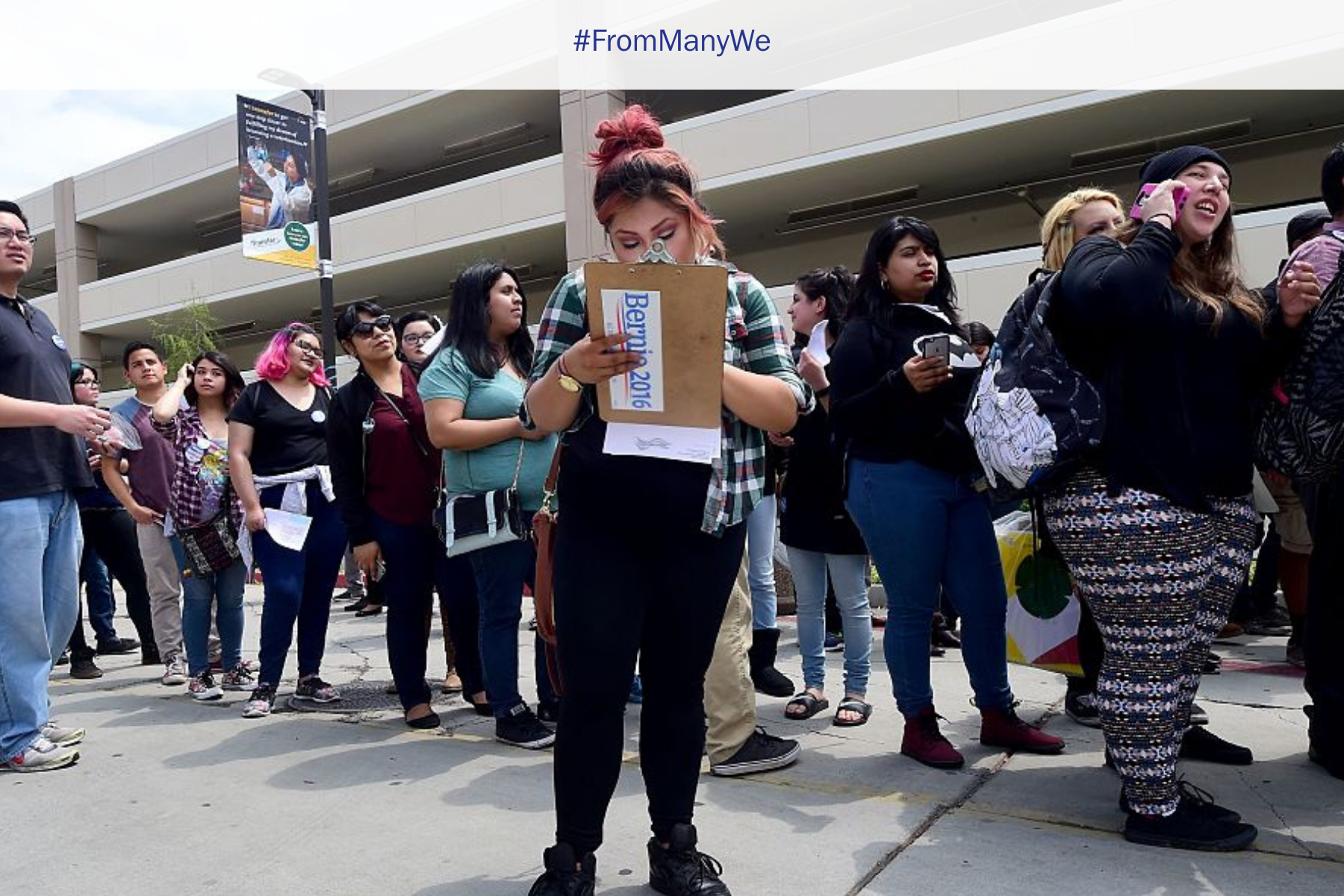
The survey results related to ballot access and faith in democracy provide a puzzling insight: Black and Hispanic Americans simultaneously are the least likely to say they feel it is easy for people like them to vote (59% and 63%, respectively, compared to 78% for White Americans), but they are also more likely than White Americans to agree democracy is the best form of government.
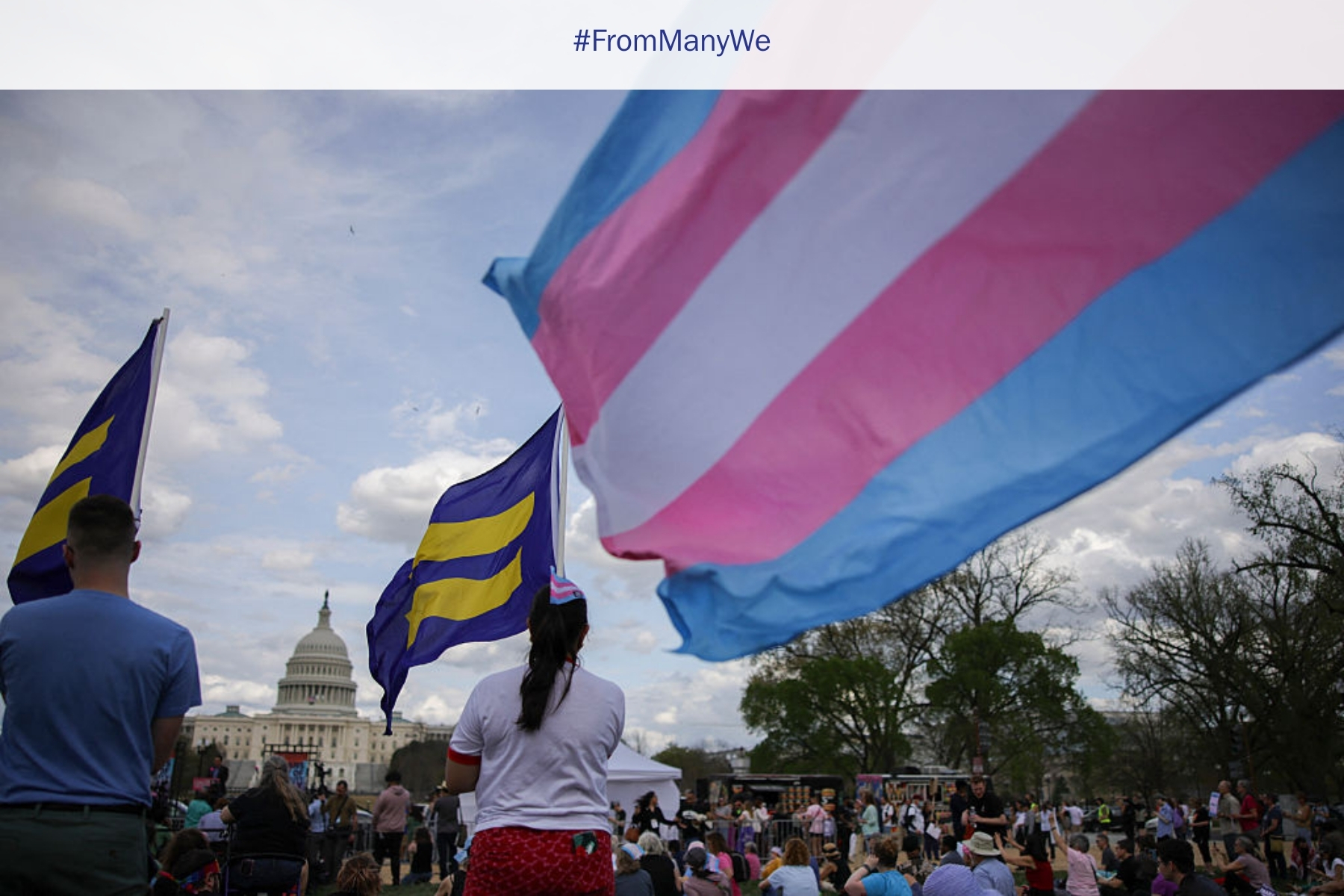
Similarly, while only 26% of Americans believe they are well-represented in government, older adults, those who identify as LGBT, women, and respondents who reported financial hardship were less likely to feel well-represented. However, these groups are more likely to agree that democracy is the best form of government than are the White Americans, lonely Americans, or unregistered voters.
These numbers differentiate the challenge of civic apathy from the problem of voter suppression. People of color, women, LGBT Americans, and the very poor seem to value democracy more despite barriers to participation because they are more recently connected to lived experiences of exclusion and undemocratic rule. The grandchildren of Black Americans from the Jim Crow South, the children of immigrants from Latin American dictatorships, the daughters of women who could not open bank accounts, and LGBT Americans faced with life in the closet are groups that may be collectively more clear-eyed about the value of democracy, even if they feel poorly represented within ours.
Fixing the People’s Role: Local Engagement and Structural Reform
The Kettering-Gallup survey found Americans to be almost evenly split on whether or not “the people’s role” in democratic governance is working well, with a plurality, 38%, saying it is. These numbers are not overwhelmingly negative, but they could be better.
Because national, and often state, politics are mired in partisan conflict or locked down through gerrymandering and other majoritarian practices, the local level can serve as a starting point. Ironically, voter turnout is often lowest in municipal elections even though the rubber-to-road nature of local politics makes it the most accessible to citizens. The nationalization of politics—and the decline of local journalism—has undoubtedly contributed to political polarization. Unfortunately, the real opportunities for constructive engagement at the local level have been a casualty of Americans’ new cynical political attitudes.
In fact, the Kettering-Gallup data shows a powerful relationship between satisfaction with local services, community engagement, and democratic commitment. It finds that “Americans who are more satisfied with the resources in their communities—such as housing, healthcare, food, schools, and childcare—are more likely to report having opportunities to engage in democracy” and express greater faith in the ability of citizens to create change. This may be an artifact of those in more affluent communities feeling more positive about democracy, more motivated to participate, and more able to devote time and resources to civic activities. These people see the process as working and are inspired to participate in it and strengthen it through their participation. Conversely, members of neglected communities may feel demotivated or be unable to make those same commitments, and their disengagement worsens the effects of failed governance.
These contrasting experiences describe vicious cycles of neglect, disenfranchisement, and disengagement, but the Kettering-Gallup data also describes virtuous cycles. For instance, survey participants who volunteer or otherwise “work to improve conditions in their community” report higher satisfaction with their ability to participate in civic life. This extends to nonpolitical community events like festivals and art performances. In short, the report states, “people who are involved in democracy believe in democracy.” The question is how to replace the vicious cycle of disengagement with its virtuous counterpart.
One way would be for policymakers, activists, and philanthropic organizations to urgently begin experimenting with on-ramps for local civic engagement, during and, crucially, in between elections. The Kettering-Gallup research demonstrates that efforts to build democratic culture, engage isolated and lonely citizens, enrich the artistic and cultural spirit of the community, and meet the material needs of the less well-off all have a civic component. They should be included in a portfolio of options to bring the promise of democracy to citizens who have become, or have always been, disillusioned.
More daring and structural changes should also be part of the conversation. Ranked choice voting would give voters a wider range of options and reward consensus candidates. Really, nearly any electoral system would be better than the winner-take-all system used today, which creates two parties primed for us-versus-them conflict. Other ways of making the political system more responsive and less conflictual—like redistricting reform, campaign finance reform, and participatory budgeting—also merit consideration. In her book, High Conflict, Amanda Ripley describes other surprisingly simple strategies, like having legislators alternate seating by party, which could reduce partisan antipathy. The crisis is serious enough that it requires radical experimentation; no idea should be off the table.
The United States cannot indefinitely maintain a K-shaped trajectory in which growing numbers of disillusioned citizens slide deeper into disengagement. The distribution of civic faith and engagement is increasingly unequal and equally unsustainable. Left alone, a K-shaped democracy will either cease to be K-shaped or it will cease to be a democracy. The Kettering-Gallup research should be a call to action for American society to address this crisis.
Dean Jackson is a senior fellow at the University of Pittsburgh’s Communication Technology Research Lab and at Tech Policy Press. In 2022, Jackson was an investigative analyst with the Select Committee to Investigate the January 6th Attack on the US Capitol.
From Many, We is a Charles F. Kettering Foundation blog series that highlights the insights of thought leaders dedicated to the idea of inclusive democracy. Queries may be directed to fmw@kettering.org.
The views and opinions expressed by contributors to our digital communications are made independent of their affiliation with the Charles F. Kettering Foundation and without the foundation’s warranty of accuracy, authenticity, or completeness. Such statements do not reflect the views and opinions of the foundation which hereby disclaims liability to any party for direct, indirect, implied, punitive, special, incidental, or other consequential damages that may arise in connection with statements made by a contributor during their association with the foundation or independently. The views and opinions expressed by contributors are likewise made independent of their affiliation with Gallup and without Gallup’s warranty of accuracy, authenticity, or completeness. Such statements do not reflect the views and opinions of Gallup, which hereby disclaims any association with or endorsement of such content.