Carrying the Weight of Being a Witness
For 26 years, the Venezuelan experience has been one of anxious dawns: a relentless cycle of rumors that spread like a low rumble, only to be silenced by official falsehoods. This reality is a constant knot in the heart, fueled by worry for the safety of loved ones. I recall the nights when rumors of Hugo Chávez’s death circulated around Christmas in 2012, the shocking sound of political police pounding on my apartment door at dawn. And, most recently, the terrifying jolt of waking at 2 a.m. to see images on my phone of the US bombardment of Caracas on January 3.
The news arrives like a punch to the gut: a familiar, sickening thud that overrides the miles separating me from home. My body knows this drill: the surge of cold adrenaline, the urgency that slices through ordinary life. I don’t think; I act.
The first step in my protocol is activating the family and friends network. Time collapses into seconds, each unanswered message a potential catastrophe. I begin the systematic check-in: pings, calls, frantic voice notes. Are they alive? Are they safe? Then the next layer of questions, the markers of basic survival in a country perpetually on the brink: Do you have power? Water? Food? It is a triage conducted across borders, an attempt to stitch together safety from fragments.
Once the immediate circle is accounted for, my focus widens. I check in with fellow Venezuelan activists scattered across the globe, the shared burden instantly reconnecting us. The crisis has a second dimension: visibility. Our question is always the same: How do we get the truth out, safely and verifiably, before it is buried by censorship and lies?
The weight of being a witness settles on my shoulders. Being visible is a form of survival. To disappear from international attention is to be quietly abandoned. Yet being seen incorrectly is worse when your story is hijacked by outsiders driven by their own agendas, indifferent to our history, our people, our pain.
People speak of war as if it only exists where bombs fall. I usually say nothing. What could I say? That our fear, our hunger, our deaths didn’t count because they weren’t televised? Because you were watching something else?
A Pound of Pain, a Barrel of Oil
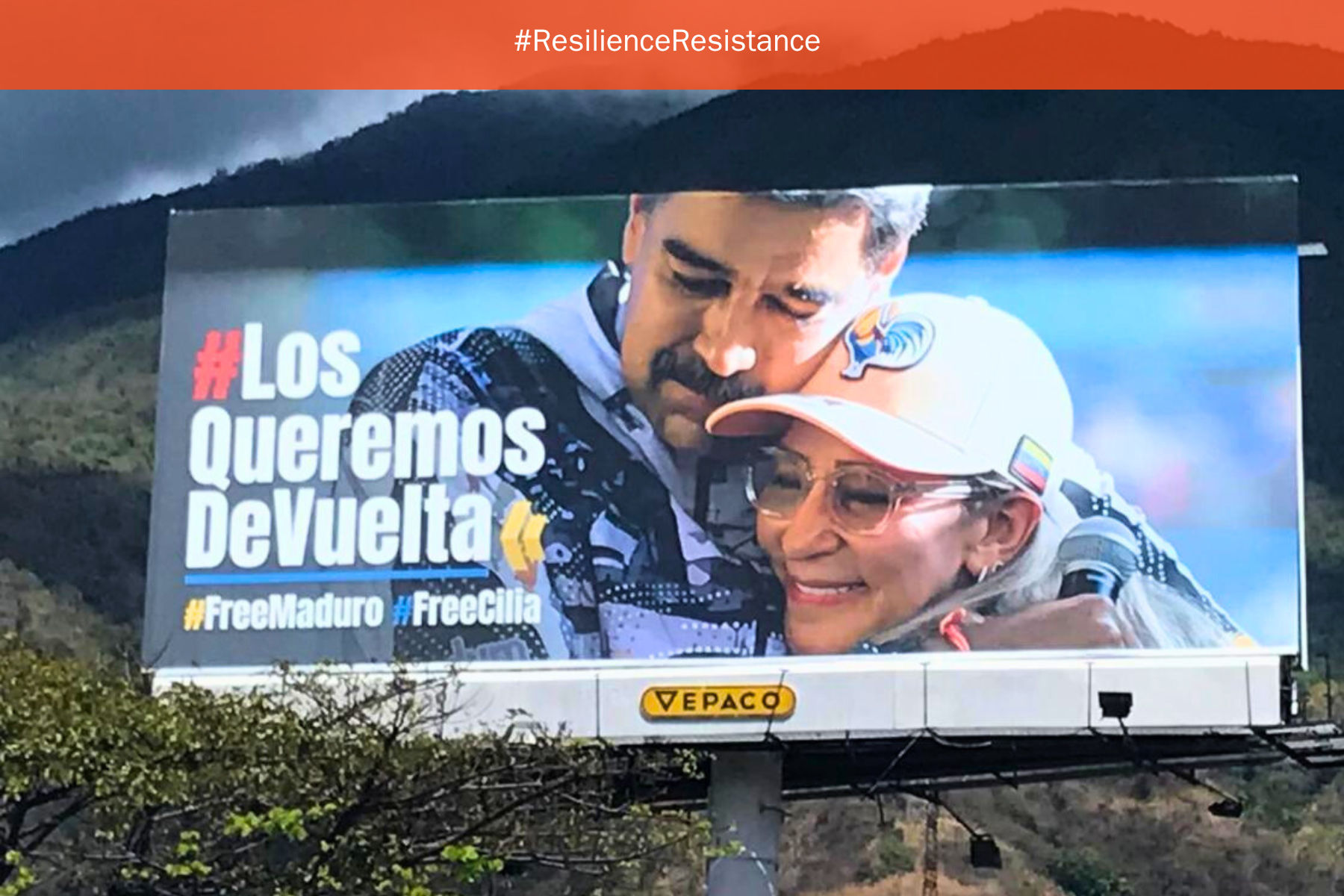
That day, we make the headlines. President Maduro has been kidnapped, the media say. Another case of US intervention. Nearly three decades of suffering flattened into a soundbite.
Few people try to understand the complexity of our tragedy, the reasons why Venezuelans cannot reduce their lives to theories of colonialism and sovereignty. No framework can compete with images of grandmothers wasting away from hunger, with David Vallenilla murdered by the Venezuela’s National Guard, with Dignora Hernández dragged screaming into police custody.
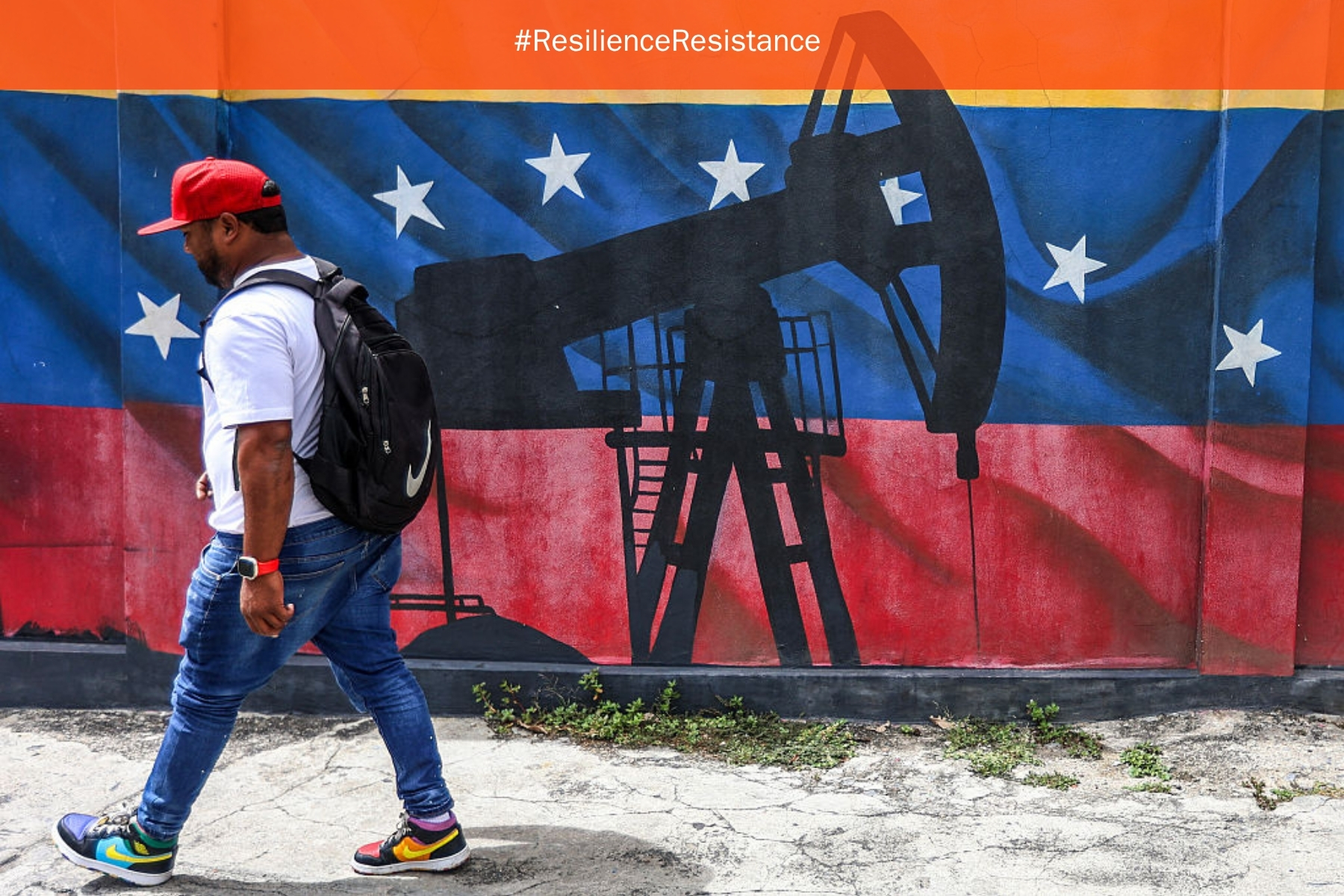
All through January, media requests flooded in. I passed them to those whose voices mattered most. But the questions were always the same: What do you think about the United States wanting your oil? The conversation fixated on resources, on power, on capital.
What was missing were the simplest questions: How do people feel? Are they afraid? Are they exhausted? Do they still hope?
These questions have been absent for years. Had anyone paused to ask them earlier—and listened—the world might understand our resilience and our losses with greater clarity. The crisis cannot be measured only in barrels and treaties. It lives in bodies, in families, in interrupted lives.
What Solidarity Looks Like
Solidarity rarely looks the way you expect.
For me, it looked like a Colombian activist dedicating years to documenting Venezuela’s displaced population with rigor and care.
It looked like a Chilean friend who sat with me, asking about my country and my life without rushing to fix anything, listening as my words turned into tears.
It looked like hundreds of activists signing an open letter, lending their names and credibility to keep a dangerous, silenced issue alive.
It looked like an American friend who saw my exhaustion and chose not to ask me one more question, understanding that sometimes care means protecting someone’s peace.
Solidarity is not measured by spectacle or scale. It is not about heroic rescues or public performances of empathy. It is not about showing up only when disaster is unavoidable.
Sometimes, solidarity is simply refusing to look away.
It is the commitment to witness suffering even when it is uncomfortable, even when it challenges your beliefs, even when it offers no easy resolution. Before you can act, you must see. And to see requires stillness, patience, and humility.
It is the quiet presence that says: I see you. I am here.
That presence, sustained over time, carries its own weight. It is the burden of remembering when others forget, of staying when others turn away. It is the labor of bearing witness, again and again, in a world that prefers oblivion.
Marianne Díaz Hernández is a Venezuelan human rights researcher, activist, and fiction writer. Based in Santiago, Chile, her work spans online freedom of speech, privacy, internet infrastructure, web filtering, and digital security. Her most recent research delves into the intersection of identity and the body as shaped by technology.
Resilience & Resistance is a Charles F. Kettering Foundation blog series that features the insights of thought leaders and practitioners who are working to expand and support inclusive democracies around the globe. Direct any queries to globalteam@kettering.org.
The views and opinions expressed by contributors to our digital communications are made independent of their affiliation with the Charles F. Kettering Foundation and without the foundation’s warranty of accuracy, authenticity, or completeness. Such statements do not reflect the views and opinions of the foundation which hereby disclaims liability to any party for direct, indirect, implied, punitive, special, incidental, or other consequential damages that may arise in connection with statements made by a contributor during their association with the foundation or independently.