
Changing Minds Is Hard—Especially Your Own
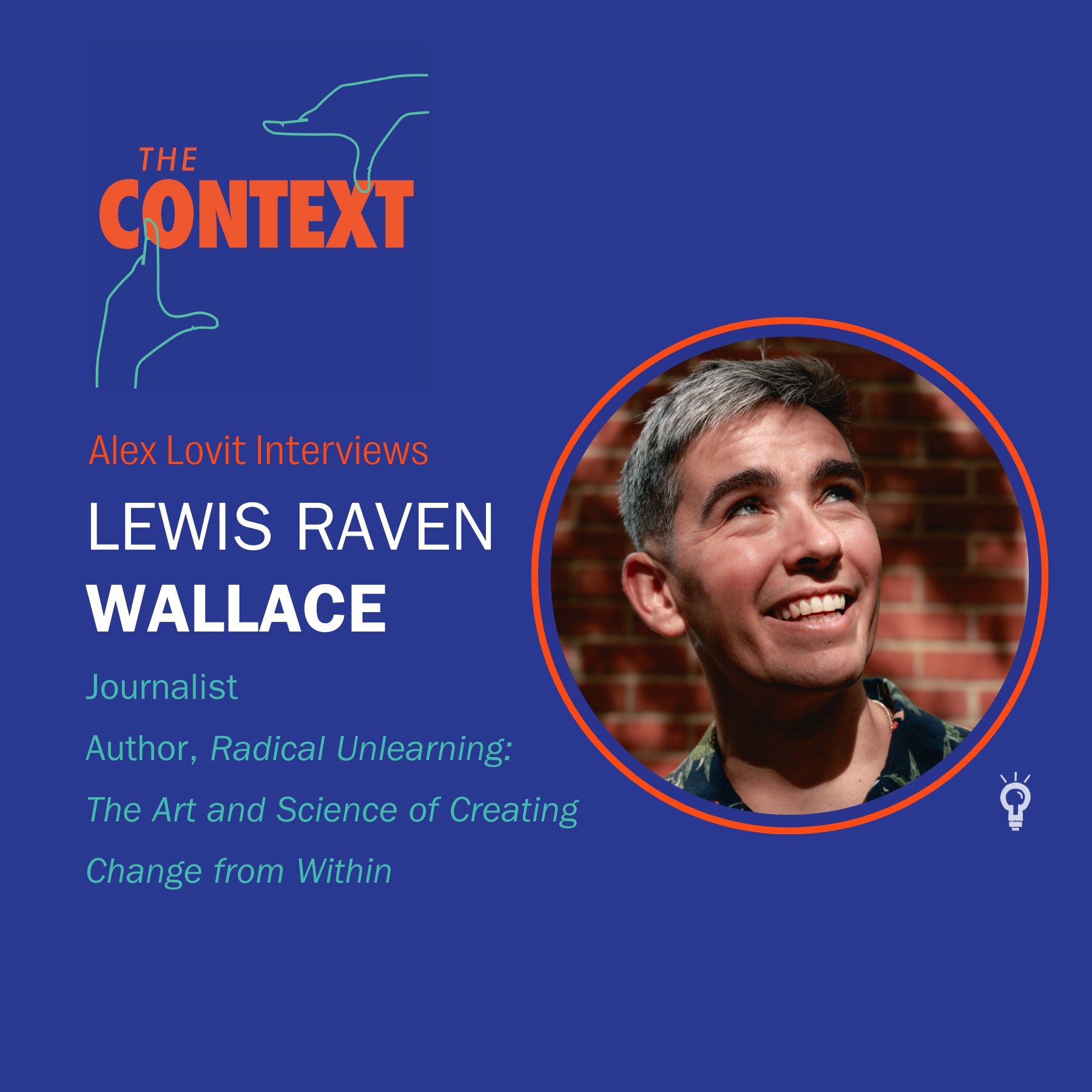
Lewis Raven Wallace joins host Alex Lovit to discuss the conditions that make it possible for people to change their minds.
Children gradually learn about the world: what to expect from themselves and from others, who is or isn't part of their social group, and what society looks like. But for adults, learning new ideas requires unlearning old ones first. Wallace has advice for anyone who wants to shift their own perspectives or encourage others to do the same.
Lewis Raven Wallace is a journalist. He is the Abolition Journalism Fellow with Interrupting Criminalization. He has written multiple books, including his most recent, Radical Unlearning: The Art and Science of Creating Change from Within.
https://www.interruptingcriminalization.com/projects-all/abolition-media
Share Episode
Changing Minds Is Hard—Especially Your Own
Lewis Raven Wallace joins host Alex Lovit to discuss the conditions that make it possible for people to change their minds.
Children gradually learn about the world: what to expect from themselves and from others, who is or isn't part of their social group, and what society looks like. But for adults, learning new ideas requires unlearning old ones first. Wallace has advice for anyone who wants to shift their own perspectives or encourage others to do the same.
Lewis Raven Wallace is a journalist. He is the Abolition Journalism Fellow with Interrupting Criminalization. He has written multiple books, including his most recent, Radical Unlearning: The Art and Science of Creating Change from Within.
https://www.interruptingcriminalization.com/projects-all/abolition-media
Share Episode
Changing Minds Is Hard—Especially Your Own
Listen & Subscribe
Lewis Raven Wallace joins host Alex Lovit to discuss the conditions that make it possible for people to change their minds.
Children gradually learn about the world: what to expect from themselves and from others, who is or isn't part of their social group, and what society looks like. But for adults, learning new ideas requires unlearning old ones first. Wallace has advice for anyone who wants to shift their own perspectives or encourage others to do the same.
Lewis Raven Wallace is a journalist. He is the Abolition Journalism Fellow with Interrupting Criminalization. He has written multiple books, including his most recent, Radical Unlearning: The Art and Science of Creating Change from Within.
https://www.interruptingcriminalization.com/projects-all/abolition-media
Alex Lovit: You’ve learned a lot of things in your life; vocabulary, history, math, how to do your taxes, why Bruce Wayne became Batman. And along the way, you’ve picked up a few ideas about how the world works, what society should look like, and what you expect from yourself and from others. Hopefully, those lessons have served you well. But for most of us, there are also some beliefs we need to unlearn. Ones that hold us back or even harm our neighbors or the people we love. What then? Can people change their most deeply held beliefs?
You’re listening to The Context. It’s a show from the Charles F. Kettering Foundation about how to get democracy to work for everyone and why that’s so hard to do. I’m your host, Alex Lovit. My guest today is Lewis Raven Wallace. He’s a journalist and his most recent book explores how unlearning certain types of beliefs can help us build a better world, where everyone is included and respected.
It’s called Radical Unlearning: The Art and Science of Creating Change From Within. Lewis spent years researching how people unlearn, what conditions make it possible, and what mind change looks like. So if you’ve got a few ideas you’d like to leave behind, or you have people in your life you wish could think differently, this conversation will help you be more effective in making positive change. Lewis Raven Wallace, welcome to the context.
Lewis Raven Wallace: Thanks for having me.
Alex Lovit: Your latest book is called Radical Unlearning: The Art and Science of Creating Change From Within. What does this word mean, unlearning?
Lewis Raven Wallace: So unlearning refers to the process that happens when we let go of a deeply held belief or ideology or a habit and replace it with something else. So unlearning is really a form of learning that kind of overrides learning that we’ve experienced before.
Alex Lovit: So you did some research into psychology and brain science for this book. What can those tell us about how unlearning works, how we can make it happen?
Lewis Raven Wallace: So I think the most exciting thing is that there’s a lot of particularly new neuroscientific research that suggests that unlearning is very possible. It’s something that we do a lot. And the neuroscience term for why is neuroplasticity. Basically, that means that our brains don’t develop in this sort of old-fashioned way that we used to think, which was like you have a blank slate and then everything is kind of written on and then eventually you become who you are and then you can’t teach an old dog new tricks. So neuroplasticity shows that our neurological wiring changes throughout our life. We’re imminently capable of kind of retracking our minds.
Alex Lovit: Well, as an old dog myself, that’s good news. What do we need to unlearn? As Americans, what are the lessons that we might need to replace?
Lewis Raven Wallace: I tried very hard with this book not to be too prescriptive about what people should unlearn, right? Because it’s very personal. So I started with personal stories about my own unlearning around racism, around binary gender, as well as my grandmother, Sarah McCrory, who in her old age did a lot of unlearning work around racism and transphobia in the context of being a white woman in South Carolina and trying to kind of understand her racial context. And then also being a grandparent to somebody who’s trans, she wanted to confront her own transphobia. She was interested in what it meant to love somebody like me when loving me brought up a lot of challenges for her.
Alex Lovit: I’m a little worried lately that it seems like people in America are unlearning the wrong lessons or unlearning democracy or unlearning tolerance. Is that something you worry about? Is that something that this work could apply to?
Lewis Raven Wallace: Yeah, absolutely. So I think that the ability to unlearn is one of the most important fronts of resistance to fascism and authoritarianism because what authoritarian thought and kind of top-down hierarchical systems do is show people what to do, how to think, and then convince people that the safest thing to do is to kind of dig in to your current set of beliefs.
And so unlearning to me is kind of inherently a way of resisting that, right? But to your point, it doesn’t mean that every single case of mind change is towards a positive or benevolent thing that benefits all society. People change their minds in all kinds of directions and retract their brains. So I encourage people throughout the book to engage with their own unlearning and think about what is harming me, harming people around me, how can I resist systems of thought and habits that are perpetuating harm?
We always have the potential to change and changing from a place of love and changing towards more connection and more kind of pluralism is extremely beneficial to democracy and to politics, right? To approaching each other in compassionate ways and also pursuing compassionate solutions to problems.
Alex Lovit: So as you’re saying there, unlearning can be pretty individualized and the book is often framed that way about trying to help the reader figure out how they can unlearn themselves. In the introduction you write about, I think as you were starting to write this book and talking to people about it, a lot of people’s reaction was, “Oh, great. Everyone else needs to unlearn things.” And then you write about a former piano teacher of yours who responded, “Oh, I need to unlearn things.” Why should people apply this concept to themselves rather than thinking about others that need to change their mind?
Lewis Raven Wallace: There’s a lot of discussion in the popular media right now and over the last 10, 15 years about persuasion and mind change. And a lot of that is premised on kind of this idea that I know something or we know something politically that other people are ignorant about, and so we need to change their minds. I think a really good example of that is the discourse around climate change and climate deniers versus people who believe they’re real science.
And there’s a kind of, dare I say it, liberal elitism that sometimes emerges there of kind of like we, the liberals who read the New York Times and listen to NPR, et cetera, have it all figured out and we just need to tell these other people the truth and then they’ll have it all figured out. Of course, that’s not how change works. People don’t change thinking that they’re being looked down upon or that they’ve been wrong their whole lives.
People change because they’re engaged in relationship and community. They’re challenged in ways that hold them accountable. And I think the best place we can start in producing that kind of change is with ourselves, is with exploring our own unlearning and then creating the conditions for unlearning in others. So instead of trying to convince you, I’m inviting you into relationship, into spaces where you might engage differently.
The other thing that happens is that that kind of mindset lets people off the hook for their own biases, right? So we all grow up in a racist society. That means as a white person, I’m always going to have work to do around that. And I’m not really helping the cause of anti-racism if I kind of say to myself, okay, I’ve got racism figured out. This is all great. Now I’m going to go tell other white people how to be, right?
Alex Lovit: Well, speaking of persuasion, I found this book persuasive. It has influenced how I think about my own reactions and how I should approach them. But I did have a couple of defensive reactions reading it, and I think these are probably reactions other people have had as well. So I’m just going to say them and let you talk through them.
So one is, okay, yeah, you’re right. I have bias in me. We all do. I should be working on that. I need to be working on that and I am working on that. But I look at the society and I am not the main problem. I see other people that are more biased, more openly biased. How do you respond to someone that says, well, okay, but I’m not really the problem in our society?
Lewis Raven Wallace: I think that’s a great question because it actually gets to a kind of larger analysis of power and the question of how does change happen? There’s often this assumption that the main way that change happens is through sort of political machinations, who we elect, who’s in charge, et cetera. And that leaves out a lot of potential sources of power that we have in community.
And so, one of the places where we have kind of the most individual power is over ourselves and how we act. And then another really important one is over and within the people that we’re close to and in relationship with. So my hope is that this argument that you start with yourself is actually an empowering one that says, hey, there might be these like really bad actors over there, but what are you going to do about it? And then you end up kind of giving up or saying, ugh, I don’t know how to change that. And then you feel powerless.
Whereas if you look right around you and you say, okay, what can I work on right here in my life and my community? You actually tap into power that at scale can actually drive change in really fundamental ways. And I think we’ve seen that. At one point it kind of occurred to me, movement building is unlearning at a mass collective level, right? So we’ve seen that in movements like the Civil Rights Movement or movements for trans and queer rights.
There’s lots and lots of people kind of doing their work in their community and unlearning and then it actually in a sense filters up instead of filtering down. And when it filters up, it’s actually a more powerful form of change, right, because you’ve transformed people on the ground. If you just pass a new law that dictates transphobia no longer allowed or racism no longer good, then you end up with all these people who don’t actually agree with that and you have backlash, which is part of what we’re living in now, right?
The top-down approach to making some of these changes has not worked to kind of reach people where they are. And so it’s really easy to organize those same people around reactionary anti-trans and racist politics.
Alex Lovit: Let me talk through the other kind of defensive reaction I’ve had here, which is I can’t drive to work in the morning without contributing to the burning of the planet. I can’t drink a cup of coffee without getting enmeshed in exploitative capitalists and global systems. My whole country is built on stolen land and then it starts to feel very overwhelming. How do you respond to that?
Lewis Raven Wallace: I’ve been really moved and influenced by the work of Black feminists and also indigenous thinkers who embrace the spiritual and communal aspects of this work. So rather than conceiving radicalism or conceiving social change work as trying to perfect the individual, it’s more of an ongoing spiritual engagement.
And I think that really helped me. When I first encountered real talk about racism as a white person, my reaction was so fearful and I would have these dreams and nightmares, not because I thought, no, there’s no way I’m racist, but because I thought, but what if I am? And what if I don’t know how to let go of that? And what if I am doing all this harm all the time that I don’t see? If you’re coming from a compassionate place to sort of be overwhelmed by the potential of thinking about the consequences of all your actions.
And for me, the way to move through that and to keep kind of doing the next right thing became a spiritual path that was about opening myself in vulnerability and in conversation, ceasing to defend or sort of protect the way that I thought things were. And that is kind of ongoing work that I think initially is really uncomfortable. It’s so vulnerable that it’s unpleasant, like you don’t feel good, but then becomes something else. It becomes a way of life that’s actually transformative where you make a mistake or you harm somebody, which we all do in life.
And then when that information is brought to you, you might not immediately embrace it, but you have more tools to kind of not react immediately, patiently sit with it, draw the lessons. Everybody ever have all made mistakes, have all contributed to systems that we ultimately don’t believe in. And there’s a communal aspect to that and it enables you to face reality more fully, even when it’s painful.
Alex Lovit: I wanted to ask you about another of the stories in the book, Adrian Black, and that’s maybe a kind of extreme example of unlearning, but it shows that it’s possible. It is a thing that people really do in real life. Can you tell the story of where did she start? Where did she end up and how did she get there?
Lewis Raven Wallace: Adrian was one of the first people that I talked to when I embarked on this journey because she had been raised by these white nationalists in Florida and she was basically a white nationalist activist, like an important youth activist. She had a radio show. Her father was the founder of Stormfront, which is a prominent white nationalist website, and she was the founder of Youth Stormfront. And together, her family and the people that they were around created a lot of the infrastructure for the kind of white nationalist bent of our current politics. They basically prefigured and made possible the Donald Trump form of white nationalism.
So they’ve been very successful as activists, right? It was a fringe ideology at the time that she was growing up and then it became mainstream. She went to college and when she got there and people learned that she was affiliated with white nationalism, she was confronted, she was protested, people were angry, people were scared, and there were some people who kind of took her under their wing, not because of her expressed racist beliefs, but in spite of them.
So this group of Jewish students had Shabbat dinners every Friday that they would invite her to. And keep in mind, this was someone who had never met a Jewish person before she went to college or a person of color. And the Jewish students sat with her and talked to her about her beliefs and challenged her kind of point for point. And she was exposed simultaneously to the kind of profound impact of people being afraid of you, people seeing your beliefs as really toxic and bad, and to people who were going to love her and engage with her anyway.
And over time, it took several years. She slowly came to believe that her white nationalist beliefs were really faulty and wrong and harmful. And she graduated college and after she finished, she publicly renounced her family’s beliefs in a blog post on the Southern Poverty Law Center blog. She lost her whole family and kind of became who she is now, which is an anti-racist activist.
The first time I talked to her, she was not yet out as trans. She was just a few years into sort of being out as anti-racist. And the second time I talked to her, she had just come out as trans as well. And so the one transformation kind of then I think enabled and opened up space for the other. And as you said, it is a more extreme case and I didn’t want to write about just a series of really extreme transformations like that because I think it almost would be too easy on the reader. Most people are not from prominent white nationalist activist families, but I do think that Adrian Black’s story is important in that it shows that even under quite extreme conditions and conditions where you have to make a lot of sacrifice, unlearning is possible.
The other thing is that she was always really deliberate about pointing out it wasn’t just about the kindness and the handholding and the friendship, it was also about the confrontation and the discomfort that she experienced. And it was both of those in tandem that supported and facilitated her unlearning over time.
Alex Lovit: Well, yeah, so that’s exactly what I wanted to ask about is sort of those two factors. On the one hand, community and relationships are important for unlearning. There has to be some degree of acceptance. It can’t all be yelling in your face, but also it can’t just be total acceptance or there wouldn’t be any change. There has to also be confrontation. How do those two factors, both essential, and how should they be balanced?
Lewis Raven Wallace: A lot of people come into unlearning because of an uncomfortable or unpleasant experience, right? Somebody challenges you or quote unquote calls you out or something just feels wrong. There’s another interviewee in the book who was a member of the Israeli military and then was deployed. And during his deployment, he saw that what he’d been told about his role in the military versus what he was actually doing were very different and it created cognitive dissonance for him.
And it was extremely disheartening and unpleasant, but that was the beginning of an unlearning journey that he went on. And so it’s important that we always approach unlearning, not from a place of sort of protecting people from discomfort, but knowing that discomfort and disorientation are part of it. They’ll come up over and over, they’ll continue to come back and they usually have something to teach you.
Alex Lovit: We’ve touched on a couple of the elements that are essential for unlearning those being community relationships and some form of confrontation or cognitive dissonance that’s prompting change. A third significant factor is duration, is practice, is doing it over time. So can you talk about the importance of practice, the importance of duration of these practices?
Lewis Raven Wallace: I think one of the places where we often really miss each other in this whole debate about calling people out or even having civil conversation, et cetera, is exactly this point around duration. One of the ways that we’re really suffering as a society is in how kind of transient we have been influenced to be in our communities and in our relationships.
Being in one community over a long time doesn’t guarantee a transformative kind of relationship, but it is one of the ways that the work absolutely has to happen. Adrian Black’s story actually says, I think something pretty important about college, about college campus life and the potential that is created through people being in community with each other over time. But I think your point is really well taken that it requires deep community engagement and practice over time. It’s not just an overnight thing to unlearn.
And we’re so used to interacting with each other in kind of a disposable way. The lack of grounding in the community really makes it easier to manipulate people ideologically from the top down because we don’t have communities that hold us accountable. At a collective level, we have to believe that people are capable of transforming and we have to have at least some of us who are willing to do that work and who are willing to do it somewhere.
I’ve focused a lot of that kind of energy for myself around my immediate family of origin, my biological family, and they are not white nationalists. They’re not extremists of any kind, but together we all come from a background of people who enslaved people, people who have held and perpetuated really racist beliefs. And I love these people. I have loving connections to my mother, my grandmother, my cousins. And so I see that as kind of part of my political responsibility, but also part of my participation in a family.
Alex Lovit: So for listeners to this podcast, I’m trying to think about how they could apply these factors we’ve just been talking about; community, confrontation, duration, and how they could apply that in their own lives. Should people kind of look around and think about where they have opportunities, what relationships they could use? How should people think about applying these lessons in their own life to changing other people’s minds?
Lewis Raven Wallace: So one of the chapters of the book is about questions and how questions themselves can create conditions of unlearning. I like that one as a very accessible entry point. I’ve worked as a journalist for about 15 years, and so I’m lucky in that I can say to somebody, hey, I want to interview you. Why? Because I’m a journalist. I’m making a story about it.
Alex Lovit: Well, you’re also good at asking questions.
Lewis Raven Wallace: And I have a lot of practice in asking questions, right? But in fact, that’s something that we can do in these daily ways. So with my grandmother, I never approached her like, I’m going to change your mind. I approached her and said, “I want to interview you about your life and how you grew up and how you came to believe the things that you believe and how your beliefs changed over time. And she let me interview her for hours and I did it again a few years later and then I did it again. And over the span of those interviews, she was changing, right? She was transforming and she was also getting to know me.
And so it was a beautiful way to engage that sort of oral history work. A little tiny bit of that has been published or aired places, but most of it was just for us, right? Documenting her life and her stories. And it gave me a chance to understand as well where she was coming from. So I think asking questions is a really great place to start and a really great thing to practice. The book has some questions and prompts. There’s one section that’s just called Questions for People You Love, that is the format of these unlearning conversations exactly as I did it as I was reporting this book over many years. Just all the questions I would ask, right? So you don’t even have to come up with them. You could read them off the page.
But I strongly recommend doing that with family members. It’s so powerful when you realize that, oh, I didn’t know why this person thinks the way they do, or I didn’t know that she was struggling to work through X, Y, Z. There’s just so much we can learn about each other that is powerful in the context of relationship and love, but also ultimately I think can facilitate unlearning as well.
Question asking to me is really an underappreciated art. I feel this is one of the things that journalism could do and journalists could do a lot more to sort of offer and share how awesome it is to just go around asking people things. People love to talk. Many people don’t have real experiences of being listened to in life, and that can be transformative too, just to have someone deeply listen. And deep listening is also a beautiful skill. So I strongly recommend just like practicing the asking of questions.
Alex Lovit: Well, on the asking questions front, you write about deep canvassing as a tool of changing minds. It’s not just you saying asking questions is transformative. There’s some actual research and science here. Could you talk a little bit about that and what the evidence shows?
Lewis Raven Wallace: So deep canvassing takes exactly this idea of getting to talk about yourself and being asked thoughtful questions is transformative and kind of instrumentalizes it for political campaigns. So the idea is that traditional canvassing is like, hey, are you voting in the upcoming election? Here’s my candidate or my issue and here’s why you should support it. So that’s a 2-minute conversation, right?
Deep canvassing, it’s not even that long. It’s 10 or 15 minutes instead of the two minutes. And the canvasser calls or knocks on the door and then they ask the person a bunch of questions about the issue and to understand where they’re coming from and why they think the way that they do. And then it’s very formulaic. At the end of the conversation, they say, well, I hear you. I feel you. Here’s how I relate to that. And that’s why I’m supporting this candidate or this issue, right?
And so it is just canvassing. It is a form of persuasion, but it’s a form of persuasion that engages the kind of somatic connective experience that happens when somebody feels listened to and feels seen. And the numbers show consistently that traditional canvassing has almost no mind change effects. It might get people to go vote, but doesn’t change people’s minds at all. Whereas deep canvassing has a documented change in viewpoints effect as it’s been tested, particularly around issues of bias. So the tests that have been run were around immigration and I think gender LGBTQ issues.
And these are issues where a 10 to 15-minute conversation, one at a time, one at a time, can change how people think just in the span of that conversation and how they might be likely to vote. So this question asking practice doesn’t have to be a 14-hour thing in order to potentially make change, right? Just sitting next to someone at the bar and being like, why do you think the way you do? And then they open up to you and then you say, here’s how I think. That can have a huge effect on somebody over time. You probably won’t know that it did, but it can.
Alex Lovit: Yeah. Unless you have researchers coming behind you and measuring the impact.
Lewis Raven Wallace: Right. And following up with metrics on their views on immigration or whatever.
Alex Lovit: We’ve touched on this a little bit already, but I wanted to ask about a little bit more in depth. One of the chapters is also about art and how art can help to promote unlearning. And that’s something that here at the Kettering Foundation, one of our focus areas is art and democracy. So we believe that art can be a tool of promoting democracy. How in your own experience has art been helpful for your own unlearning?
Lewis Raven Wallace: I got really into the surrealists in the writing of this book. And so art and specifically surrealism became my focus because surrealism was a politicized art movement that said not just like, we’re going to make art about things, but we’re going to propagate the making of art and the making of art that taps into the subconscious as a source of resistance to colonialism.
So contrary to what we often learn about surrealism, the surrealist movement really started in North Africa, started in indigenous peoples of the African continent, sharing these ideas with some of the artists in the 1920s and 1930s who were based in Paris. And in this kind of interracial community of artists, they developed a praxis of art making that was about tapping into the subconscious in order to resist the ideologies of colonialism from the belly of the beast, which was Paris.
And so it was an anti-colonial movement, very, very cool. And the surrealists believed that it wasn’t enough to look at art or think about art, you had to do it. You had to be making it. I think that relates really strongly to art and democracy, right? That art that we all go and look at can be edifying and interesting, or we learn about it in school or whatever, but all of us tapping into our own potential as artists and tapping into our own kind of subconscious currents of what we want to make and what we want to write, that is a much more potentially liberating process.
So surrealists go beyond just like art makes change and into making art is what makes change and we all have to do it. They developed all these games that are ways of getting people to just sort of have surrealist encounters. So I try to always do surrealist games at my events now, much to the initial horror of people who come thinking they’re just going to sit for a book reading and then instead I’m like, we’re going to play a game where you make art.
But I really do think it loosens people to other kinds of interactions. You begin to think differently about your own perspective. You might even begin to think of yourself as an artist, which is an area of unlearning that a lot of people have, right? You’re either someone who makes art or you’re not, but we all have that creative potential in us and it’s one of the things that I think is kind of crushed by colonialism and fascism, both on the oppressor and the oppressed side.
Alex Lovit: So trying to think about how these lessons apply at kind of a broad societal level, freedom of speech means people are going to say offensive things and I need to live with that. And democracy means that people are going to vote in ways that I disagree with or even find offensive. Do you believe in democracy?
Lewis Raven Wallace: I paused for too long. Just the pause, it was so pregnant. I am getting a degree in history now. And oh my goodness, the 17th century, the 18th century in these here, British colonies, the level of racism, the level of violence, the kind of foundation on which the democracy that is the United States was built is so toxic, right? That doesn’t mean that I think it’s unrecoverable. And I think it’s important to note that Black leaders and Black thinkers have been some of the most visionary people in imagining what a healthy democracy could be or what real participatory politics can look like.
I would not say that democracy is a failed experiment, but I do think that the kind of toxic admixture of democracy with capitalism and racism has made its highest ideals very, very difficult to attain. That doesn’t mean they’re unattainable, but I understand why people begin to look towards other political systems in hopes of something more ideal.
I’m not into predicting the future or political theory per se, but my own sense is that the core sort of rot is in the capitalism. It’s not in the ideals of democracy themselves. But also now that I’m deeply studying the history of the United States, I think, ugh, can these two even be separated from each other?
Alex Lovit: Yes. Well, I think historically they kind of grew up together, at least in the U.S. context. And I absolutely agree about early American history. There has rarely been something as baldly evil as European colonialism, stealing land from one people, stealing labor from another in a giant profit making enterprise. And that is a history that our country was built on, that we need to reckon with.
Lewis Raven Wallace: And the individual, the like empowered… It used to be in the United States property owning white male individual, and then who counted as an individual has been gradually expanded. But the individual as the fundamental unit of politics doesn’t quite sit right with me. And I think that’s something that Radical Unlearning gets at too. It’s actually not an individual process. It’s a relational process. Unlearning is, and so is political change. And I think in its sort of ideal forms, so is democracy.
So we have some problems at the root when it comes to how democratic ideals and individualistic ideals are kind of intermixed in the United States. I don’t know if a more collectivized and relational democracy can be salvaged out of that, but given the stakes, I think it’s worth trying.
Alex Lovit: Well, yeah, I think it’s always worth trying to save democracy. That’s what we’re trying to do around here.
Lewis Raven Wallace: Yeah.
Alex Lovit: So let me ask another question about this broad societal level. So some of the things I’m trying to unlearn are lessons I learned in school and that the couple of dozen people sitting in that classroom with me learned and the tens of thousands of kids reading that textbook learned. Is there a way we can think about structuring education or other parts of public institutions so that maybe we’ll have less to need to unlearn in future?
Lewis Raven Wallace: I’m really inspired in this part of the work by my friends who work in education and who do early childhood education particularly. So my friend Jess Ray, who is interviewed in the book, she draws a lot off of this Italian tradition called Reggio Emilia that is actually an anti-fascist early childhood education tradition, which is, oh my God, it’s like everything is the Radical Unlearning book, but for kids who are like one, two, and three years old.
And the thing is, they don’t really have to unlearn in order to tap into this sort of relational, creative, land-based, community-based approach to learning, they’re naturals at it. And the reason that this is an anti-fascist tradition was the idea that these folks in this town called Reggio Emilia in Italy, the idea that they had was if we just start with the youngest and teach them not like fascism bad or racism bad, but teach them how to think in a curious questioning way, how to learn an unlearn in community, how to engage with the land and their surroundings, they become people who can’t be told what to think.
And I think it’s a really, really brilliant theory of change that also recognizes the creative capacities of children instead of seeing them as vessels to be taught or demoralized. So it recognizes child wisdom, child curiosity, the kind of surrealist creativity that a three-year-old just sort of naturally embodies. If you don’t shame that out of them, then they can become somebody who’s an embodiment of that resistance.
Alex Lovit: Unfortunately, we can’t just wait for the next generation to grow up. We’re going to have to deal with the current generation of us adults. Is it possible to reach people who don’t want to unlearn?
Lewis Raven Wallace: Yes.
Alex Lovit: Another pregnant pause.
Lewis Raven Wallace: Okay. It’s possible to reach people who don’t want to unlearn. I could not resolve the question in the process of my research about this of whether anybody really unlearns deeply that doesn’t want to. And so the conclusion of the book is about desire, which to me was sort of one of the ineffable forces. It’s a condition that is required, but they can’t be produced. How you make somebody want something, right?
So I think we see a lot of queer and trans people moving towards unlearning because we’re experiencing a desire in our bodies and ourselves that goes counter to the way we’ve been raised or what we’ve been taught. And that desire drives our unlearning. Or we see a lot of people unlearn in love. Even like, this is a little simplistic, but something as simple as an interracial relationship or a relationship across difference can create that driving desire to unlearn. It’s not a guarantee, but it can. I’m not sure how we produce desire in people.
I think this is a question for kind of social justice movements writ large, right? That nobody wants to join something that just feels like a slog and a bunch of meetings and boring and hopeless. So we have to create spaces that have like some appeal, however you want to produce that. It could be like carnival kind of fun appeal or it could be erotic appeal. People are attracted to it in some sense. It could be the appeal of having a loving community where you didn’t have one growing up.
Churches offer a lot of this kind of space, right? Churches and religious spaces. Create things that people want and then people come and adjust and adapt and become a part of that community because they want to be there. So we have to think about desire, but it’s not an easy question as to like how you produce a given desire in a certain individual, right?
But that’s why I’m all about the sort of how do we create the conditions instead of saying like, okay, I’m looking at like this person right there and thinking, I want to change them. It’s more like, I’m having a carnival. It is a carnival of unlearning and you could come and maybe like that person will come.
Alex Lovit: We got surrealist games. Yeah.
Lewis Raven Wallace: Invitations. And short of that, I also think that like confrontation and cognitive dissonance are important. And sometimes somebody who, especially if they’re in a position of power, really doesn’t want to unlearn, I think that the strategies and tactics of publicly denouncing, shaming, that kind of stuff, it doesn’t work to make a certain individual unlearn, but it can work to produce cognitive dissonance for others who are witnessing it.
Alex Lovit: Lewis Raven Wallace, thank you for this book and thank you for joining me on The Context.
Lewis Raven Wallace: Thank you so much for having me.
Alex Lovit: The Context is a production of the Charles F. Kettering Foundation. Our producers are George Drake Jr. And Emily Vaughn. Melinda Gilmore is our director of communications. The rest of our team includes Jamaal Bell, Tayo Clyburn, Jasmine Olaore, and Darla Minnich.
We’ll be back in two weeks with another conversation about democracy. In the meantime, visit our website, kettering.org to learn more about the foundation or to sign up for our newsletter. If you have comments for the show, you can reach us at thecontext@kettering.org. If you like the show, leave us a rating or a review wherever you get your podcasts, or just tell a friend about us.
I’m Alex Lovit. I’m a senior program officer and historian here at Kettering. Thanks for listening. The views and opinions expressed in this podcast are those of the host and guests. They’re not the views and opinions of the Kettering Foundation. The foundation’s support of this podcast is not an endorsement of its content.
Speaker 3:
This podcast is part of The Democracy Group.
Speaker 4:
Politics and religion. We’re not supposed to talk about that, right? Wrong. We only say that because the loudest, most extreme voices always seem to take over. Well, there’s a podcast called Talking Politics and Religion without killing each other, and it’s taken some of that space back. If you’re dying for some dialogue instead of all the yelling and you know it’s okay to have differences without having to hate each other, then talk of politics and religion without killing each other is for you. They’re really easy to find at www.politicsendreligion.us. That’s www.politicsendreligion.us.
More Episodes
 Published On: April 7, 2026
In this first episode of our series, “Democracy, Under Construction,” Sherrilyn Ifill joins host Alex Lovit to discuss the Second Founding, when...
 Published On: March 24, 2026
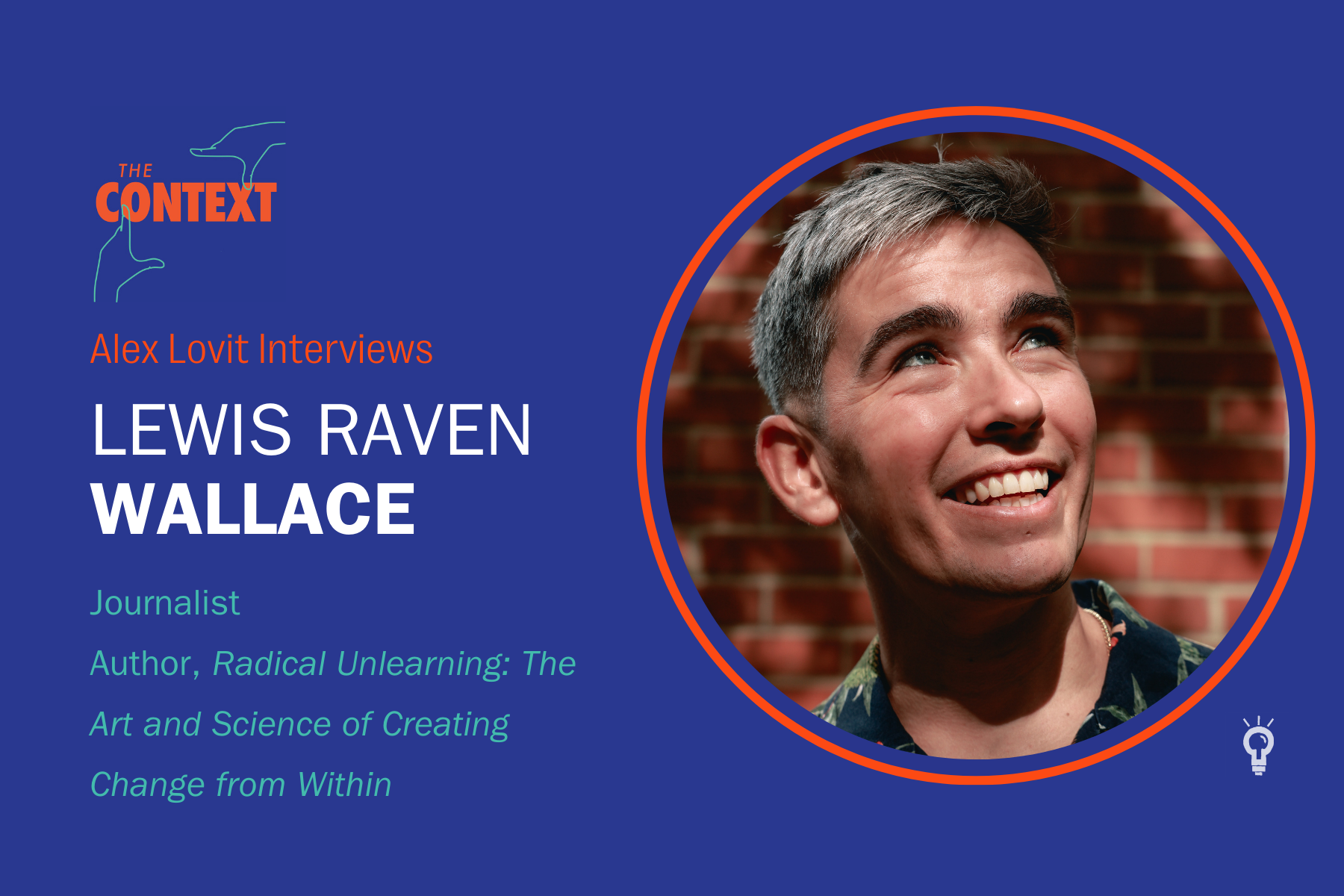
Lewis Raven Wallace joins host Alex Lovit to discuss the conditions that make it possible for people to change their minds. Children gradually learn about the...
 Published On: March 10, 2026
The decisions judges make during the coming months in various active legal cases will affect who can vote, which districts they vote...
 Published On: February 24, 2026
As the United States continues to experience democratic backsliding, people are looking for ways to rise to the moment. But what does...
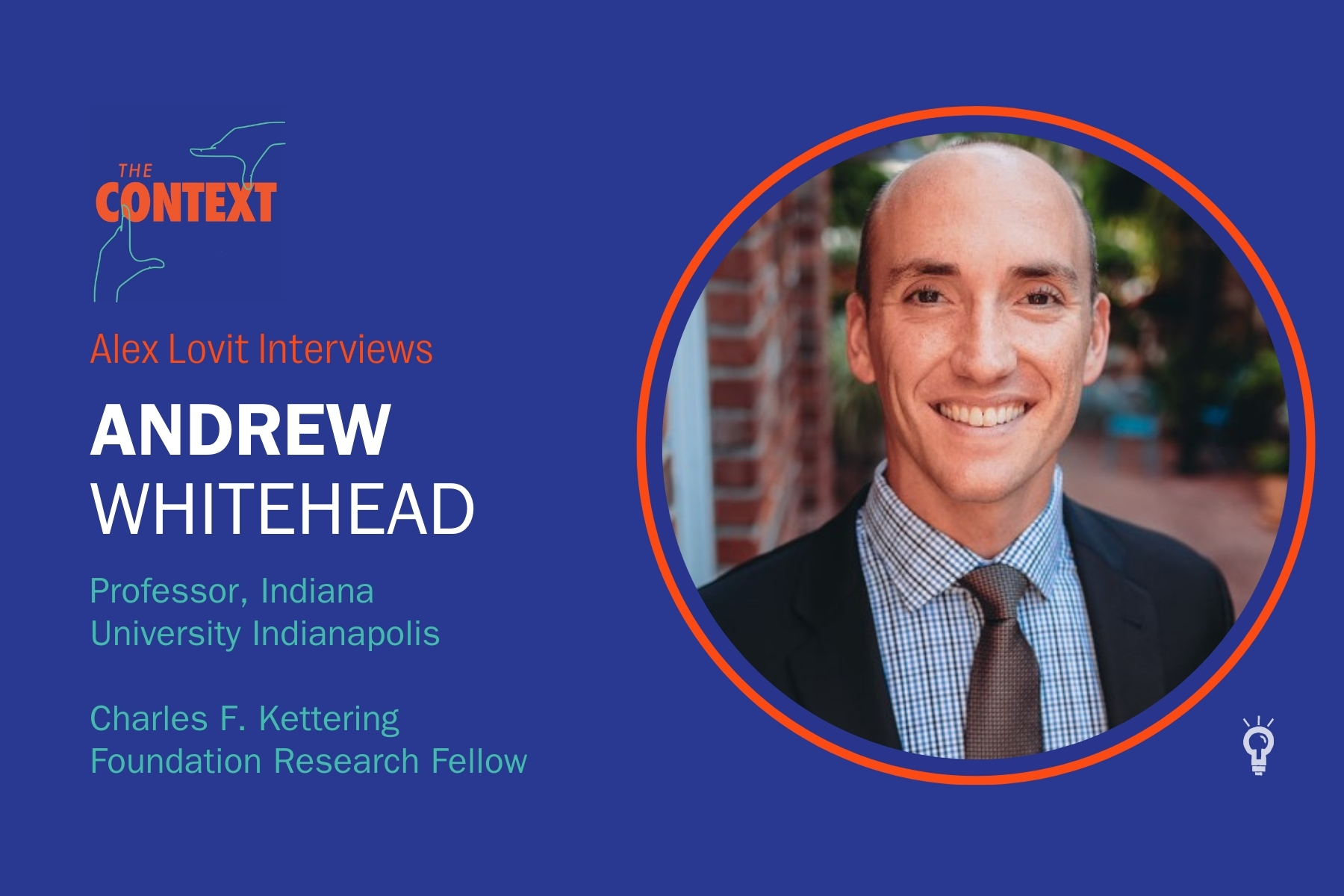 Published On: February 10, 2026
Christian nationalists view other religious, cultural, and racial identities as less than fully American. Andrew Whitehead joins host Alex Lovit to discuss...
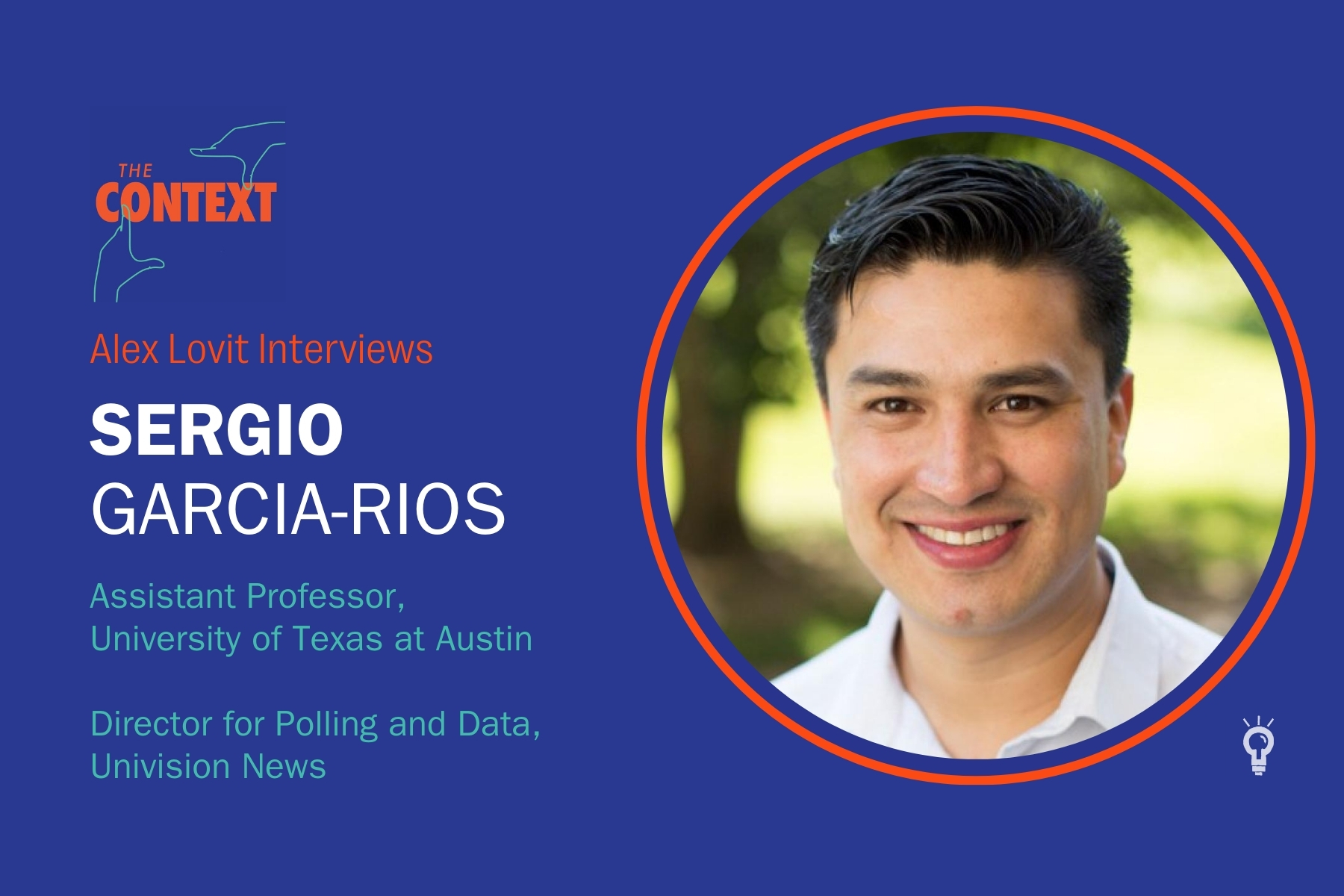 Published On: January 27, 2026
Latinos are the largest and fastest growing minority group in the United States, which means they have growing political influence. In recent...
