From Stereotypes to Storytellers: The Narrative Power of Young Artists from Colombia’s Chocó Region
In many conflict-affected places, young people are spoken about far more than they are listened to. Colombia’s Pacific region of Chocó is no exception. Abundant in biodiversity, culture, and ancestral knowledge, yet marked by historical racism, poverty, and armed conflict, this Pacific region is often portrayed either as a victim of violence or as a distant paradise.
What rarely makes it into the national conversation are the complex stories and political imagination of Chocó’s youth: young leaders who are already shaping peaceful paths in their communities through art, activism, and everyday acts of resistance.
In 2025, the Institute for Integrated Transitions (IFIT) partnered with a group of young artists from the region to challenge that narrative imbalance. Using our narrative peacebuilding approach, we codesigned an arts-based process in which music, dance, and visual art became tools for young people. This approach empowers them to map, analyze, and ultimately enrich the narratives that circulate about their region.
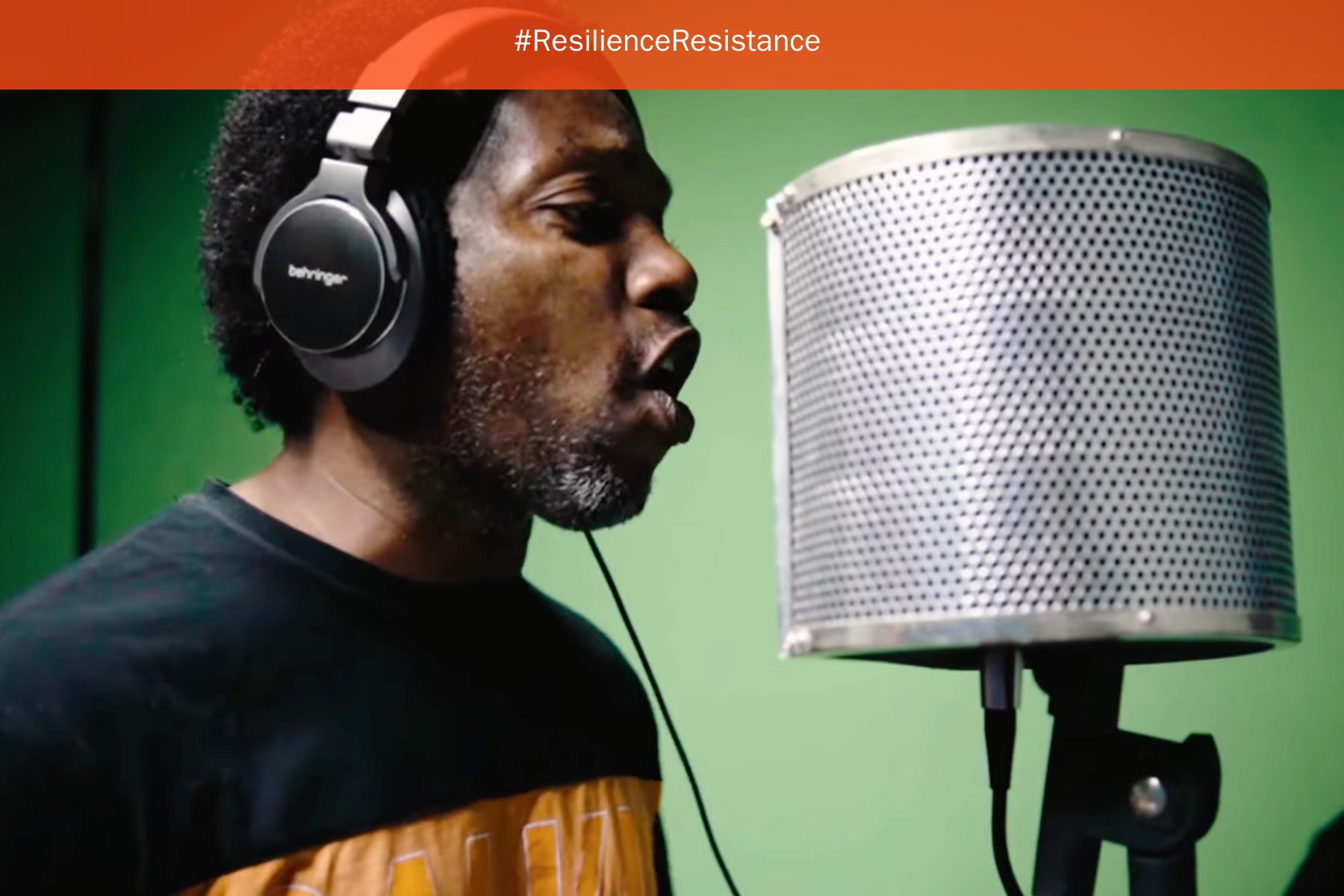
What began as a set of conversations ended in the collective creation and public launch of “La Rompemos” (“We Disrupt It”). This original song, its music video, and a live performance are all rooted in the participants’ own realities and hopes.
Why Chocó? Why Now?
Chocó’s demographics and historical marginalization make narrative enrichment especially urgent. The area’s population, which is majority Afro-Colombian with a significant number of Indigenous communities, endures some of the highest poverty rates and has the most limited state presence in the country.
Two-thirds of the area’s residents live in poverty, with nearly 4 in 10 in extreme poverty. Roughly 80% lack reliable access to drinking water and electricity. Life expectancy lags far behind the national average.
But these statistics hide another truth: Chocó is also home to powerful traditions of cultural expression, community organization, and youth leadership. In other words, its conditions of exclusion and difference are not only material but also narrative.
To help reshape dynamics in such situations, IFIT applies a purpose-built method centered on the metaphor of “narrative trees” standing in a “narrative landscape.” This lens enables communities to see which narrative trees become dominant and why, and which are stifled or blocked. It also allows people to find space where smaller narrative trees can grow.
The aim is not to grow one large narrative tree, or a single unifying message, but rather to populate the narrative landscape with many stories and thereby greater complexity and representativity.
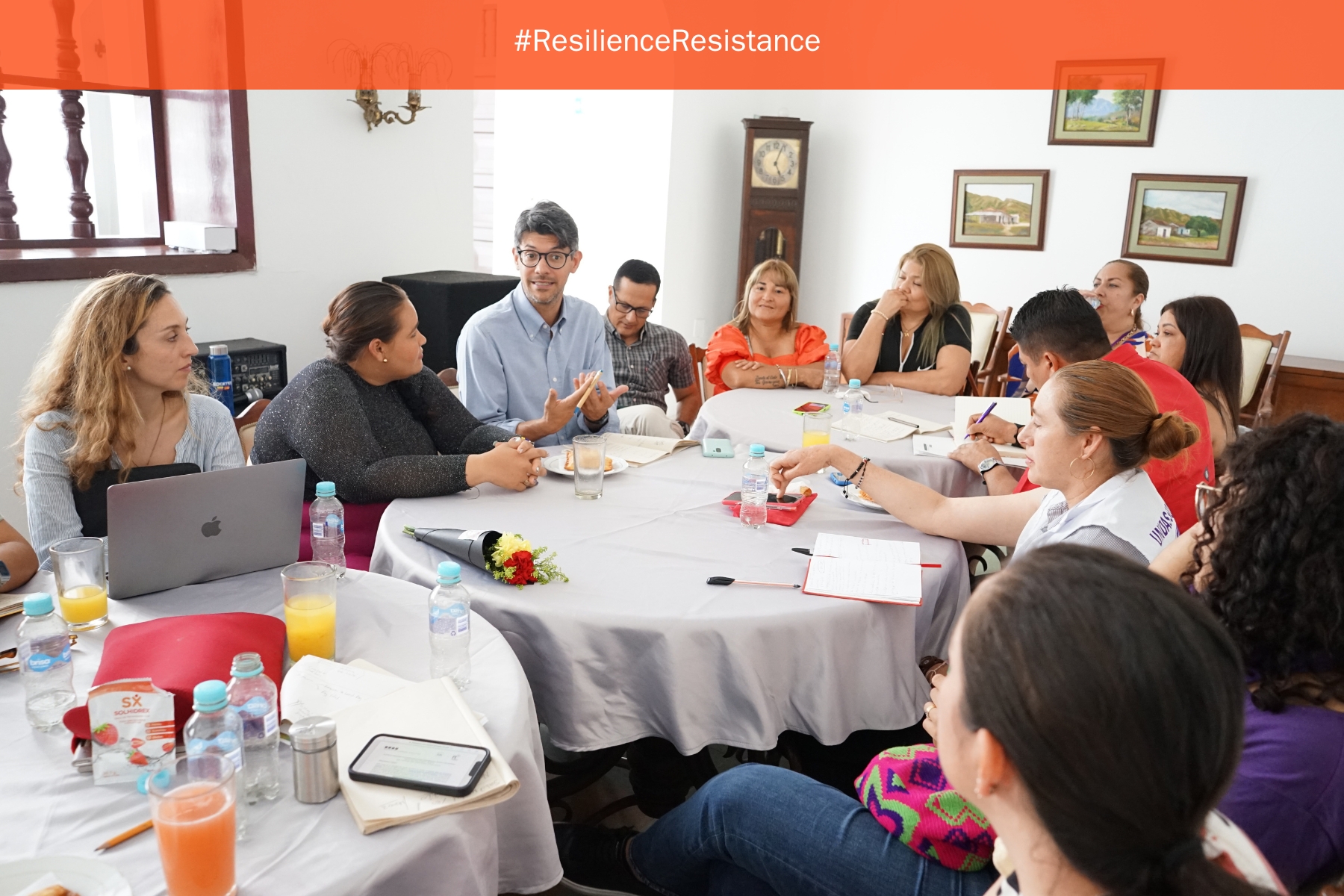
Building on this approach, IFIT’s Colombia team convened 20 young artists—singers, composers, dancers, community leaders, and an illustrator—from diverse backgrounds. They were chosen not only for their creative talent but also for their positive leadership in their communities. The goal was to recognize them as narrative protagonists whose art already shapes how Chocó is seen.
Turning Narrative Insights into Art
Over several days, the IFIT team helped the young artists map the narratives that define Chocó in public debate and everyday life. They noted how the national media tends to emphasize illegal mining, armed groups, state absence, and environmental degradation in the region, while stories of care, creativity, and community organizing remain largely invisible. The youth also explored internal tensions, between Afro-descendant and Indigenous communities and between rural and urban residents.
Using guiding questions from IFIT’s narrative peacebuilding methodology, the group examined: Who tells the story of Chocó? Who benefits from these narratives? Which stories justify certain policies?
The group worked not to erase the painful narratives but to add and amplify stories that reflect joy, pride, solidarity, and long-term vision.
Together, we then worked with the group to translate narrative analysis into artistic creation. The young artists organized themselves into three teams:
- Music: A songwriting group wrote lyrics and melodies grounded in the themes identified in the narrative mapping process—from the trauma of displacement to the beauty of local rivers and ancestral knowledge.
- Dance: A choreography team embodied those narratives, using movement to express resilience and connection to the land.
- Visual art: An illustrator crafted the aesthetic identity of the song and designed cover art.
Draft lyrics were brought back to the group for collective questioning: Are we reproducing stereotypes? Are all voices represented? Does the chorus only denounce what is wrong or does it also promote reflection and solutions?
Rehearsals, studio recordings, and the launch performance at a regional cultural festival were treated not just as artistic milestones but also as spaces to consider how the final product would enter and reshape the wider narrative landscape.
Arts-Based Narrative Peacebuilding as a Tool for Civic Participation
For the participating artists, the process opened a new understanding of narrative power. They began to see how the stories attached to their region can expand or limit their political agency; they can be perceived as victims and criminals or as protagonists of change.
When entire regions are reduced to simplistic narratives, the population’s claims to equal citizenship weaken. Social projects become something done to them, not with them. By contrast, narrative enrichment efforts like those facilitated by IFIT in Chocó allow young people to collectively name their problems, debate their representation, and shape how their region is understood.
Of course, an initiative like ours cannot alone address the region’s larger structural inequalities. However, it can open space for new conversations—in classrooms, on local radio, and in municipal debates—about what a place like Chocó is and what it could be.
By listening closely to young artists and supporting them as narrative actors, we set the stage for a richer, more inclusive story of who “we” are.
Mariana Valderrama Arriola is a research associate at the Institute for Integrated Transitions.
María Alejandra Fonseca is an external consultant at the Institute for Integrated Transitions.
Resilience & Resistance is a Charles F. Kettering Foundation blog series that features the insights of thought leaders and practitioners who are working to expand and support inclusive democracies around the globe. Direct any queries to globalteam@kettering.org.
The views and opinions expressed by contributors to our digital communications are made independent of their affiliation with the Charles F. Kettering Foundation and without the foundation’s warranty of accuracy, authenticity, or completeness. Such statements do not reflect the views and opinions of the foundation which hereby disclaims liability to any party for direct, indirect, implied, punitive, special, incidental, or other consequential damages that may arise in connection with statements made by a contributor during their association with the foundation or independently.