
How Christian Nationalism Undermines Democracy
Christian nationalists view other religious, cultural, and racial identities as less than fully American. Andrew Whitehead joins host Alex Lovit to discuss the threat that this poses to democracy.
Andrew Whitehead is a professor of sociology and executive director of the Association of Religion Data Archives at the Center for the Study of Religion and American Culture at Indiana University Indianapolis. He is also a research fellow for the Charles F. Kettering Foundation.
https://andrewwhitehead.substack.com/

Share Episode
How Christian Nationalism Undermines Democracy
Christian nationalists view other religious, cultural, and racial identities as less than fully American. Andrew Whitehead joins host Alex Lovit to discuss the threat that this poses to democracy.
Andrew Whitehead is a professor of sociology and executive director of the Association of Religion Data Archives at the Center for the Study of Religion and American Culture at Indiana University Indianapolis. He is also a research fellow for the Charles F. Kettering Foundation.
https://andrewwhitehead.substack.com/
Share Episode
How Christian Nationalism Undermines Democracy
Listen & Subscribe
Christian nationalists view other religious, cultural, and racial identities as less than fully American. Andrew Whitehead joins host Alex Lovit to discuss the threat that this poses to democracy.
Andrew Whitehead is a professor of sociology and executive director of the Association of Religion Data Archives at the Center for the Study of Religion and American Culture at Indiana University Indianapolis. He is also a research fellow for the Charles F. Kettering Foundation.
https://andrewwhitehead.substack.com/
Alex Lovit:: What does an American look like? What language do they speak? What God do they pray to? In an inclusive society, these questions can’t have answers.
People of every race, religion, and culture, can be Americans, but the reality is not all Americans want to live in an inclusive society. Today we’re looking at a small, yet powerful group of people who believe that non-white, non-Christians don’t deserve the same rights and privileges that they do. We’re talking about Christian nationalists. As anti-American and fringe as their beliefs are, they’ve made it all the way into the West Wing. How did that happen?
You are listening to The Context. It’s a show from the Charles F. Kettering Foundation about how to get democracy to work for everyone and why that’s so hard to do. I’m your host, Alex Lovit.
My guest today is Andrew Whitehead. Andrew’s a professor of sociology at Indiana University where he also serves as the executive director of the Association of Religion Data Archives, and he’s a Kettering Foundation research fellow.
Andrew spent his career studying Christian nationalism warning about the threat it poses to American democracy and trying to push back against it. We’ll mention a couple of his books during this episode and if you like this conversation, you might also want to check out some of the articles he’s written for Kettering’s blog series From Many, We.
Andrew Whitehead, welcome to The Context.
Andrew Whitehead: Great to be with you.
Alex Lovit: So tell me, what is Christian nationalism and if I care about democracy, which I do, why should I be worried about it?
Andrew Whitehead: Yeah. Some people will talk about Christian nationalism and say that it really is just if I love Jesus, and I’m patriotic or love America, that’s what it is. But Christian nationalism, as we survey the American public, gather data on it, really is this desire to privilege a very particular expression of Christianity in American civic life and to have the government at all levels vigorously defend that particular expression of Christianity as central to our national identity, who we are, what we’re all about, our public policies.
When they say Christian, what they mean is really something more than just this idea of historic beliefs, like the divinity of Jesus or the Trinity or different things like that. When they say Christian, they also mean things like a comfort with authoritarian social control, that the world is chaotic, and we need strong rules, and we need a strong ruler to come in and enforce order, that our society should have a hierarchy of certain people at the top, others in the middle and others at the bottom. And usually this revolves around men leading and women supporting and families have a mom and dad and kids. Those ideas. Also, strong ethno-racial boundaries, that this is a country for white Protestant people made for them, made by them and others can be here, but this country isn’t really defined or existing for those folks.
So to get to the second part of your question, when we define Christian nationalism empirically like that, we start to see how it does threaten democracy, because in a pluralistic democratic society, the idea is that everybody has access to participate. Whether that is participating in the voting process or in civil society, but within Christian nationalism because it’s focused on elevating and privileging this one particular expression of Christianity, anyone who falls outside of that or the cultural boundaries of it really is less than, isn’t a full citizen in the sense of a true American. And so that’s where it really does threaten democracy. It isn’t democracy for everyone. It’s a democracy for those that align with this vision of the country that Christian nationalism lays out.
Alex Lovit: So what’s the difference between Christian nationalism and evangelical Christianity or white evangelical Christianity?
Andrew Whitehead: It’s essentially an overlap. So within white evangelical Christianity, historically Christian nationalism has been a part of that religious tradition. And when we look at all the folks that strongly embrace Christian nationalism, the largest proportion are from the white evangelical tradition. But what we find is that it isn’t one and the same. If we’re talking about Christian nationalism or those that strongly embrace it, it doesn’t mean that they’re automatically white evangelical Christians. And the opposite is also true. If you’re a white evangelical Christian, the likelihood that you strongly embrace Christian nationalism is high, but we find over and over through survey research that there are white evangelical Christians who do reject Christian nationalism.
Alex Lovit: Thinking about how the Christian part of it meets the nationalist part of it, you’ve written about how American symbols and patriotic symbols are in a lot of Christian churches. Can you talk a little bit about that? How are Christian churches deploying these symbols?
Andrew Whitehead: This is something that for my own personal history, growing up in northern Indiana in a very religious area and attending an evangelical megachurch all through childhood and then into my teenage years, it was something that we all kind of saw. In the corners of the sanctuary, there was a Christian flag. If somebody has never seen that; it’s white with a blue square and a red cross in the corner, and then an American flag on the other side. We never really looked at it and thought, “Why is the American flag in the sanctuary?” It was just kind of how we understood ourselves to be a good Christian is to be American and to be American means you’re probably Christian. And they kind of were one and the same.
And I’ve had different folks tell me this or pastors say, “If you ever want to start a fight in your congregation or theirs,” they were like, “if I tried to move the American flag.” So it’s something that just sits there. It seems kind of innocuous, but you realize the power of it.
And so that is one way that we can kind of start to peel back the layers of how closely are people intertwining their American identity in their Christian belief or value system.
Alex Lovit: Let me ask, how large is the Christian nationalist movement in the United States?
Andrew Whitehead: Yeah, no, this is a great question, and it’s one that continues to change.
A decade ago, when we were first working on this and gathering national survey data, trying to understand the extent of Christian nationalism, what we found was around 20% of Americans strongly embrace Christian nationalism, which means that when we asked them six different questions, like the federal government should declare the United States a Christian nation or should advocate Christian values, these are the people that usually strongly agree with every single one of those questions. So it’s about 20%. But then we have folks who maybe agree or undecided with most of those, and we called these folks accommodators of Christian nationalism. So they don’t embrace it really, really strongly, but their idea is as we talk to these folks that, well, if this country is going to be religious, it might as well be Christianity.
And so these accommodators we found were around 30% of the population. And so again, they may not be advocating to make this country Christian, but they wouldn’t stand in the way.
That was about a decade ago, and what we find over time is that the percentage of the country that strongly embraces it and even those that are at least sympathetic to Christian nationalism is shrinking. A lot of journalists may contact me or others and want to write a headline that this is sweeping the nation and just spreading like wildfire. And it really isn’t. Right now, the best estimates are probably a third of the country either strongly embrace Christian nationalism or at least sympathetic to it. So that means a majority of Americans are resistant to the idea of Christian nationalism, of elevating a particular expression of Christianity, but there is a minority that really does strongly embrace it, and so that continues to slowly shrink over time.
A lot of times I get asked that, well, if it is slowly getting smaller, why is it such a part of the discourse? Why does it feel so prevalent? So this group might be getting smaller, but as it does, the group then starts to see we’re kind of the last remnant. And so that identity as a person who believes this country should be Christian becomes even more salient. And so more and more of their discourse, how they vote, who they support, is in terms of this identity of we need to defend this Christian nation.
Alex Lovit: Yeah, I think that’s part of the answer to the question of if this is a shrinking segment of the population, is this a problem that’s going to solve itself? Do we need to do anything about it? So part of the answer is what you’re saying about increased salience and a third of the country is still a big chunk of the country, and if a third of the country acts in anti-democratic ways, that’s still a big problem, but also that varies a lot by geographic location.
Could you talk a little bit about that? Where is the largest proportion of Christian nationalism?
Andrew Whitehead: That’s an excellent point, and that’s super important because the way that our political system is structured with the electoral college and by state, it can have an out-sized influence just as you’re pointing out.
What we find as we look across the 50 states is that it is very prevalent in the south. Those southern states have the highest percentage of folks that are ambassadors of Christian nationalism, who strongly embrace it, or at least accommodators who are sympathetic towards Christian nationalism. And then the Midwest too is not quite as high as those southern states, but it is still very prevalent. So I’m in Indiana, and about 40% or so of Hoosiers are at least sympathetic to Christian nationalism. So it plays an out-sized influence in my home state and in others.
When we look at the Northeast or the Pacific Northwest, that’s where the numbers get lower, but again, the way that our political system is structured, they can in some terms kind of punch above their weight. They may be a third of the country, but electorally and politically, they can actually kind of enforce a lot more of their views and what they would like to see happen.
Alex Lovit: We talked a little bit about churches and the role that they play as institutions. Obviously, some evangelical congregations are important institutions pushing this ideology, but you also say that some Christian nationalists don’t actually go to church. They’re not in some respects very religious.
What other institutions are advancing this or promoting this idea?
Andrew Whitehead: Well, I think the key is this overlap and kind of partnership between religious congregations and some of those organizations and political parties, but particularly the Republican Party. As we look at the current iteration of Christian nationalism in the US, it really comes to fruition in the 1970s with the rise of the moral majority, and the Republican Party really kind of joining forces with evangelical religious leaders, and their goal was to bring evangelicals kind of into the political sphere so that they could have more political power and really kind of activate that group.
They legally couldn’t endorse a person running for political office, but they do often endorse or say, “Well, if you’re going to vote, here are the things that are most important.” It might be same-sex marriage; it might be abortion; it might be these kind of political wedge issues that will funnel their folks towards a very particular view and outcome.
Alex Lovit: So thinking about this political alignment in particular with the Republican Party, I think traditionally the religious right has been understood through a lens of issues, that they want to ban abortion, they want to push back against expansion of LGBTQ rights. So those are kind of issue platform-based things.
Something I get out of your work, and tell me if I’m right here, is that a lot of it isn’t so much issue based, it’s just identity based. That’s another part of politics for anyone is I’m voting for this politician because they support an issue I believe in, but also they represent people like me.
Do I have that right? Is that how you see this alignment?
Andrew Whitehead: Yeah, definitely. It is about these issues, but we have to get people to care about those issues, and the way we do that is to help them see that you are a part of the “us”. This is our group. Our group cares about issues, X, y and Z. And so you need to get on board, and if you do, then we will reward you for being a good member of this group with friendships, with feeling like I have a home in this culture. So that is a really key and important part of it.
And in that sense, it becomes really powerful too, like if we’re asking people to think through particular issues, they’re going to be very resistant to it because that’s a lot to give up. It’s giving up this whole network of people that I’m a part of, whether it’s my home church or my community or whatever else.
Alex Lovit: This alignment between Christian nationalism and the Republican Party that dates back many years. The Republican Party has changed a lot in the last decade. Donald Trump has come on the scene and changed a lot of the policies that the Republican Party stands for.
Have you noticed any shift in that alignment? Is Christian nationalism becoming more strongly associated with the Trump era Republican Party, or less strongly associated?
Andrew Whitehead: I think it’s the former, as you said. I think it has kind of become this purification aspect where it has been distilled down. So now it’s just a very strong alignment where there really isn’t anything other than this idea of this is a Christian nation. We have our hands on the levers of power, and this is the way that we want to see this country move forward. We see with Trump over the last decade that now the religious right feels it has a person that will deliver those wins, whether it’s the Supreme Court as they see it defending Christianity in the United States.
Alex Lovit: Well, this kind of gets back to that policy versus identity issue we were talking about earlier. The Supreme Court, with a significant number of nominees by Donald Trump, a third of the court was nominated by Donald Trump, has ended Roe v. Wade. That is a long-term objective of the religious right in the United States. That’s a big win that Donald Trump has delivered. So that’s kind of the policy angle of it.
On the identity angle of it; I am like the twenty-thousandth person to say this, but Donald Trump is in some ways a strange embodiment of Christian values. He’s twice divorced. He’s literally criminally convicted for paying a porn star for an affair he had while he was married. In many respects, his personal behavior doesn’t seem to fit with Christian ideology.
Do you see that policy win, or other major policy wins is that’s tying this, or is there something about the identity that Donald Trump sort of embodies the identity of I am for people like you?
Andrew Whitehead: I think that’s exactly it. He’s the natural endpoint of a lot of the work that was done with the rise of the religious right. And it seemed before that, and we would hear this, I know I heard it growing up or on the news or whatever else, where they’re saying we need to elect good Christian people, but what they were really saying is, we need somebody who’s going to come and enforce this hierarchy and order that we see as part of this being a Christian nation. It isn’t about whether this person that we elect aligns with historic Christian beliefs or values or embodies those in any way, but will this person provide us access to the levers of power, and will they push for those policy changes that we believe are central to how we want it to look, whether it is rolling back LGBTQ rights and protections and access to civil benefits, or if it’s overturning Roe, v. Wade, all of that is a part of this larger package.
And so Donald Trump, I think, is essentially the perfect distillation of that desire of we just want the person in power who will fight for those desires and beliefs. That person doesn’t necessarily need to be a good Christian, and maybe it’s better if this person isn’t, because then they can fight unfair, which they feel that’s what they need to fight back against the forces of, in their words, sometimes evil or secularization or whatever else.
Alex Lovit: From your observation of Donald Trump, is he aware of the power that he has? How is he utilizing that?
Andrew Whitehead: Yeah, Donald Trump is very skilled sensing what types of messages resonate. And so as he starts to utilize the rhetoric of Christian nationalism, of defending Christianity to fight back, saying Merry Christmas again, people could say Merry Christmas all throughout the history of the United States.
Alex Lovit: Yeah, I’m Jewish and I’ve been saying it for years.
Andrew Whitehead: Exactly, yeah. But even folks that we interviewed would literally say that, I’m just glad that I can say Merry Christmas again. And so that resonated with folks. And I think he’s able to pick up on that. He recognizes this is what will bind this group together and also bind them to me and get them motivated to get out and vote and to support him.
Alex Lovit: I want to ask about kind of what’s motivating Christian nationalists politically. There was a stat in one of your books that blew my mind, which was, among that 20% of the country that is very committed to Christian nationalism, among that group, more than half of them say that they’re worried that a democratic president will ban the Bible, which to me sounds insane.
How do you read that? Do you think that’s a literal fear?
Andrew Whitehead: I think so, and part of it is the media that folks consume, and over and over for years and years being told Democrats are coming for your religious freedom and are going to take away your Bible, even though there’s no Democrat that would ever say that or has ever said that, but people have been told that. So, in some sense, it isn’t necessarily their fault. It’s kind of the media capture of a very particular subset of the United States, because for them, it’s an existential threat. How am I supposed to be Christian in this country if they’re going to take my Bible away? And so I need to align closely with this group and ensure that we’re fighting to protect that.
We had folks that again, truly believed that they lost the right to say Merry Christmas. These silos are really powerful. They have this charismatic leader; they have a media apparatus that really creates a bubble around the types of information that even break through, and then they’re rewarded for being all in with this group.
Alex Lovit: Can you talk a little bit more about the media? I’m used to thinking about politically polarized media, so Fox News, MSNBC. Is there a kind of specifically religious version of that? Is there kind of a Christian media world that is pushing some of these ideologies?
Andrew Whitehead: Yeah, for sure. Fox News is kind of the biggest one, but then you have broadcasting conglomerates that essentially own a lot of different, let’s say radio stations, across the US. The Christian radio station in Norman, Oklahoma, is owned by the same folks where a Christian radio station is in West Virginia, and it’s playing Christian music, but will also hear news stories and news programs on those stations that are perpetuating this idea of this is a Christian nation, it’s under attack, you’re under attack. The forces of evil are trying to steal it away. All those things are being perpetuated there across the US.
Alex Lovit: So thinking about these fears, which are, as you’re saying, amplified and echoed around these media bubbles, banning the Bible is maybe an extreme version of that, or it’s one particular version of that.
Could you talk more broadly; what are people scared of? What is that fear of?
Andrew Whitehead: We’ve been doing some research on this, and then specifically looking at the fears Americans have, and we found that there are actually a number of different fears that folks that strongly embrace Christian nationalism aligned with when we particularly talk about how afraid they are of something.
So one, we find a fear of any sort of diversity racially and ethnically. So as they look at the US, they’re actually afraid of the time when white Americans are no longer the majority. So they’re afraid of any sort of growing diversity in that sense. Immigration; they fear immigrants or more immigrants coming to this country, feeling that that is changing the culture of this country in a way that is against what they think it should be.
But then also diversity in terms of gender and sexuality. They tend to have very strong beliefs about “traditional gender roles and ideologies or sexuality”, that there’s men and women and there’s just two genders, and marriage is for men and women and all of these different things. And so anything that they feel is weakening that they’re afraid of those changes.
But then we also find that there’s a fear of what they see as socialism, communism. They couldn’t necessarily define what those terms are, but they are afraid of them. There’s this populism that is also a part of Christian nationalism that this country is for the common men and women, and there are forces that are trying to steal it away.
And so, yeah, fear is this key aspect in some of my work. The way to understand it is power is kind of this central organizing principle of Christian nationalism, the ability to get what you want, despite others’ resistance, and it’s power that is self-serving. But when you feel like there are other groups, whatever they might be that are threatening that power, that’s where the fear comes in.
And that is the most powerful motivating tool for politicians. That’s the most powerful way to get them motivated and to get them out supporting your cause and this fear of these other groups that are kind of threatening that power and privilege that they’ve enjoyed.
Alex Lovit: One thing that I’m thinking as you’re saying that, is if the fear isn’t part of diversity, of cultural change, those are kind of inevitable. So those aren’t things you’re really going to be able to stop with government policy. So does that mean that then there’s no satiating Christian nationalism?
Andrew Whitehead: It’s a great question, and honestly, I think it’s true. I don’t think there is a way to, like you say, satiate it.
When we look at it, demographic change, whether it’s around race and ethnicity or even religious diversity, our country is much more diverse across those measures than it was a hundred years ago, and they aren’t misperceiving that reality. But again, the way that they interpret that or the way that they’ve been told to interpret that, I think, that’s where the real difficulty comes in.
It’s going to be really hard to break through because it isn’t just about giving people facts about actually communities with more immigrants are safer, crime is lower in communities where there are more immigrants. Study after study shows that, but when you have an information environment, and you’re in kind of an echo chamber of a network where all you’re hearing is the opposite, presenting a fact won’t change what people think or feel because again, they’re so tightly aligned with, this is my group, this is my identity, and turning against that would cost a lot more than just setting aside one belief for another.
Alex Lovit: So thinking about how they fit into kind of broader politics. So if it’s somewhere between a fifth to a third of the American public, that’s a pretty significant portion of the American public, a pretty significant portion of the support of the Republican Party, but it’s not all of it. And some of the policy objectives that Christian nationalists seek are pretty unpopular with the larger public. Even overturning Roe v. Wade has proven to be pretty unpopular. So there’s sort of a tension there of how much politicians can concede to Christian nationalism without losing other portions of their base.
How do you see that tension playing out within the Republican Party or within American politics more generally?
Andrew Whitehead: The thing that comes to mind to me right away is early on in the rise of the religious rights, so back in 1980, Paul Weyrich, who was a political operative working within the GOP, bringing up the religious right within that, has a famous quote where he essentially is saying, “A lot of Christians think it’s better if a lot of people vote.” And he’s like, “It’s actually the opposite.” He’s like, “We have more power when fewer people vote.”
And so ever since then, this group is focused on making it harder for diverse Americans of all types to vote to ensure that democracy is not for everyone, and it’s not a right, but they define it as a privilege, and privileges can be revoked. If you don’t align with, or you’re not a “true American”, then you don’t get the privilege of voting. And so, in that sense, they can say, “Well, we’re defending democracy by ensuring that only the true Americans vote.” Well, who are the true Americans? They’re the people that align with the beliefs and values that we have and have always held dear.
So they may have policies that generally across the entire American population are lower than 50%. It’s like not a majority of Americans want it, but who are the people that are actually voting whose voices are being heard? At least a third of Americans. I think it was even more than that in the last election didn’t vote, are literally not heard. So they may show up in polling of their views towards a policy, but are these people actually voting? So that’s where that disconnect, I think, really comes to the fore.
Alex Lovit: So, this is a big country. There’s a lot of people in it. A lot of people believe things that I disagree with, but it is their right to go vote for that. And that’s how a democracy is supposed to work. But if the belief is about trying to limit access to voting, that’s very directly an attack on democracy. So it’s not just a policy belief that I may or may not disagree with. It’s actually an attack on democracy. It’s hard to draw that line sometimes.
So if someone says, “I don’t think minorities should be able to vote,” well, that’s obviously anti-democratic. If someone says, “I think immigration levels should be lower,” well that’s a policy position. I might or may not agree with it, but that’s probably should be represented as part of the democratic public.
How do you draw that line?
Andrew Whitehead: That’s key. It’s this idea of if we’re going to live together across all these differences, whether it’s religious, racial and ethnic, different cultural beliefs and values, for us to be able to do that peacefully, we have to all essentially agree to play by the same rules.
That’s what democracy is. It’s this idea that we will allow other folks to have a say, and we will abide by the results of these elections, and we will transfer power peacefully, and we will regroup and try again next time to push forward with what we believe a change should or shouldn’t be. But when we have groups of folks who are trying to privilege this one particular view or this one group of people, then they’re going to be looking at ways to kind of shave off who has access, who can participate. Will we allow their voice to be heard or not? Will we just ignore their voices, or will we actively try to suppress those things? All that comes into play.
Alex Lovit: Well, so let me ask you about, because you don’t just analyze this from an academic perspective, you do do that, but you’re also trying to do something about it. And you mentioned you grew up in an evangelical tradition. Do you identify as a Christian today?
Andrew Whitehead: I do. Yeah.
Alex Lovit: Talk to me about, this is sort of an awkward question, but what do you see as the moral lessons of the Bible? On the one hand, there is a scriptural basis for this. There is a message of inclusivity of we are all God’s children. And on the other hand, there is this movement of exclusivity of only people in this particular group really are Americans, really should dominate society.
How do you reconcile those things in your head?
Andrew Whitehead: Yeah, so that is a big question. It was taken for granted that the US is a Christian nation in the spaces where I grew up. But then as I got older, kind of seeing these little cracks breaking through of, well, if this is a Christian nation, something as simple as, well, why were we so brutal towards indigenous populations that were here before us? For a young white guy like myself living in northern Indiana, it just made me stop and think in church, I’m told we’re supposed to love everyone no matter what, giving to those who don’t have enough, protecting the vulnerable that God loved the world, and what this faith is about is the fact that there is a God that cares about all humanity.
And that is kind of the journey that I was on. And the more that I studied Christian nationalism, I was able to see, okay, this is a very particular religio-political ideology that has captured much of Christianity in the United States, but there’s nothing necessarily unique about Christianity being captured by a political movement. Other world religions and other countries get kind of drawn together with nationalistic tendencies, whether we look at India or elsewhere.
And so that allowed me too, to get a little bit of distance and see that the Bible or any other religious texts can be used and things pulled out of it for very different ends. We could find verses, and we have folks that use verses in certain ways to either support trying to essentially round up minorities and deport them from this country. They’re quoting scripture. But then other Christians can go to scripture and find verses that say, we should care for these immigrants and folks that are from other countries.
That’s the real difficulty, is that it’s kind of like nuclear power or even fire. Fire can bring warmth. It can cook food. It can provide all these things for us to flourish, but then, when it is out of control, it’ll burn everything and destroy everything. And I think in some ways, religion, whether it’s Christianity or otherwise, is such a powerful thing. These existential questions and answers of life and death, eternity, all of these things can really do good, bring people together and inspire them to do really wonderful things, or also bring people together, inspire them to do really terrible things, as we’ve seen through history and even in the present day.
Alex Lovit: Let me ask about your book, American Idolatry. Your first book, Taking America Back for God, is social science, and I enjoyed it quite a bit. There’s bar charts and regressions and social science. American Idolatry is a different book for a different audience.
Who are you trying to reach with that book, and what are you trying to achieve?
Andrew Whitehead: American Idolatry really trying to write to other American Christians, wanting to think through with this foundation of all this empirical research that I’ve done or have been part of of what Christian nationalism not only is, but what are the implications of it, and how does that differ from what a lot of Christians in Christian teaching wants to see come to pass for those around us and for our communities?
One way that I like to think about it is that I grew up in a very supportive rural town where people would serve each other and do whatever anybody needed. They would show up. That’s beautiful when we have community like that. But what I came to understand is that, well, how broadly do they define the us? Is it just white Christians that they’ll show up for? Or, as Christians, are we supposed to look even more broadly and show up for folks that maybe aren’t our same religion or our same race?
So American Idolatry is just trying to talk to American Christians, and say, no, we should actually take the Bible literally. And Jesus, literally. When our Christian tradition says, no, love your neighbor. Neighbor means everyone. You can be a strong Christian and believe very deeply in it and not engage in Christian nationalism.
And I think what’s telling is I’ve had folks in my own family ask me why I hate Christianity because I critique Christian nationalism. I think that shows me how tightly intertwined those are, but trying to give folks space to question that intertwining and understand that those can actually be disentangled, and you can be Christian without engaging in Christian nationalism.
Alex Lovit: The copy of the book that I read was a used copy, and whoever had read it before me had underlined several passages, and they were all quotes from Jesus there.
Andrew Whitehead: Oh, interesting.
Alex Lovit: You were reaching at least I think one Christian there.
Andrew Whitehead: Then they got rid of it. Yeah.
Alex Lovit: Well, then they sold it. Underlines lasted all the way to the end. They finished the book.
Andrew Whitehead: That’s funny.
Alex Lovit: What have you heard back about that book or from other efforts to reach out to Christians?
Andrew Whitehead: One thing that has been really encouraging is a lot of the feedback is just saying, thank you for helping me get a framework around what I’ve been seeing and what I’ve been experiencing in these religious communities, that there are ways to be Christian in the United States that isn’t constantly trying to put itself at the front of the line or at the head of the table, that it can engage with others openly and honestly, and empathetically. That’s possible. That exists. And so helping folks find that.
That’s been the most encouraging kind of feedback and things that have happened, but also heartbreaking because there are folks that they feel as though they no longer have a church home because they can’t go back to those spaces.
Alex Lovit: I’m fumbling here with the faith tradition that I didn’t grow up with, but one thing that I hear in the Christian tradition is a belief in the universality of sin, that we are all sinners, and the necessity of forgiveness. I see in our political world right now, a lot of demonization and not just on the right. Can Christianity teach us something about how to welcome people back into team democracy, who may not have always been there?
Andrew Whitehead: Yeah, I think so. And I think honestly too, Christians have so much to learn from other religious traditions or Americans of no religious faith as well. It works both ways. I think we are in an important moment where for folks that maybe are in some ways starting to question, should I continue with this group, it could be that they just kind of went along to get along, but if they’re now seeing I want to protect democracy, or I want to advocate for those that are being harmed, it shouldn’t matter to us when they came to that conclusion; it should be more of, well, welcome to the team.
I think, yeah, with this idea of team democracy, I think setting aside some of those differences that are important, but maybe could be handled down the road, because right now the bigger question is whether we are going to live in a democracy with all the aspects of our constitution as it’s laid out, fully functioning or not. That’s the big question, and that I think is kind of where we’re at this point.
Alex Lovit: What’s your answer to that big question?
Andrew Whitehead: In what sense?
Alex Lovit: Well, what do you think happens now? Our democracy is being tested, and Christian nationalism is a part of that test. What do you think the future holds for the United States?
Andrew Whitehead: That is a big question. It’s a difficult one, and I think it probably changes almost easily day to day, probably hour to hour, like optimism or dread. I think that the forces aligned against democracy are quite strong. There’s a lot pushing against this idea of a pluralistic democratic society. But I also see in the news recently with the unrest in Minnesota, you hear of communities rallying around each other and coming together and planning how can we support those that are most vulnerable or that are being harmed in some way, and people engaging in that civil and community work to create these strong bonds to make sure that everybody is cared for. That I think gives me hope.
And so as I look at what’s happening in the US right now, yeah, democracy is at least being tested, and I think in some ways we’re kind of on the other side of a fully functioning democracy, but I do still have faith and belief, and I have to choose to at some points in Americans coming together and wanting to actually support and encourage one another and care for one another, trying to be a part of that, so that everyone can flourish, not just a particular political group, whether it’s to the right or left of me, or a particular religious group, or the non-religious folks that all are engaged in this. I want to see everyone have that opportunity to flourish in not just a few.
Alex Lovit: Certainly that’s a vision for our country that I think is worth fighting for. And I like what you had to say about choosing to have faith; pessimists who give up, don’t change the world. Optimists who believe it is possible and work are the people that changed the world.
Andrew Whitehead, thank you for joining me on The Context.
Andrew Whitehead: It’s been great to be with you. Thanks, Alex.
Alex Lovit: The Context is a production of the Charles F. Kettering Foundation. Our producers are George Drake Jr. and Emily Vaughn. Melinda Gilmore is our director of communications. The rest of our team includes, Jamal Bell, Teo Clyburn, Jasmine O’Lare, and Darla Minich. We’ll be back in two weeks with another conversation about democracy.
In the meantime, visit our website kettering.org to learn more about the foundation or to sign up for our newsletter. If you have comments for the show, you can reach us at thecontext@kettering.org. If you like the show, leave us a rating or a review wherever you get your podcasts, or just tell a friend about us.
I’m Alex Lovit. I’m a senior program officer and historian here at Kettering. Thanks for listening.
The views and opinions expressed in this podcast are those of the host and guests. They’re not the views and opinions of the Kettering Foundation. The Foundation’s support of this podcast is not an endorsement of its content.
Speaker 3:
This podcast is part of the Democracy Group.
More Episodes
 Published On: December 16, 2025
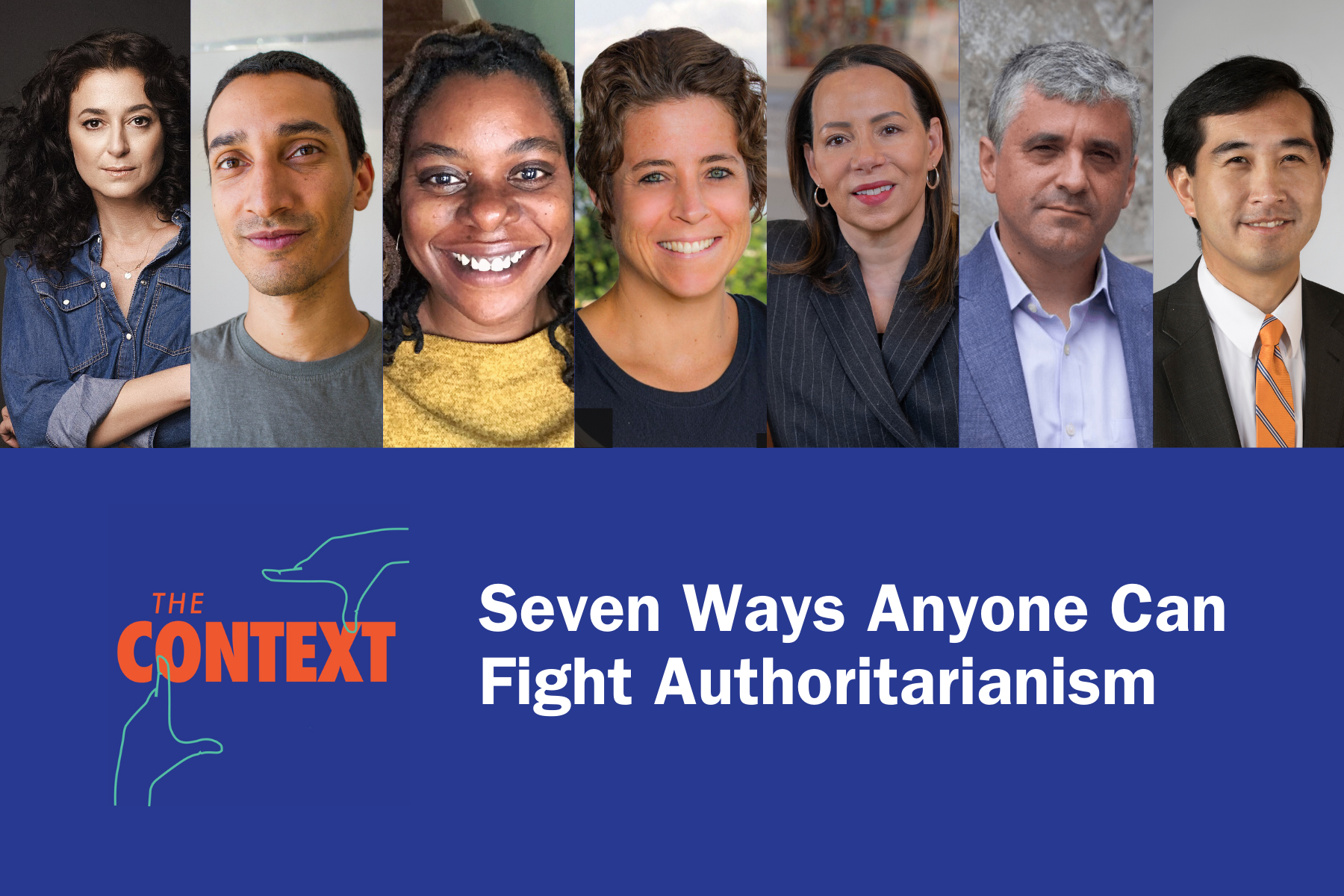
We’ve gotten a ton of excellent advice from our guests this year about how everyday people can get involved in fighting authoritarianism...
 Published On: December 2, 2025
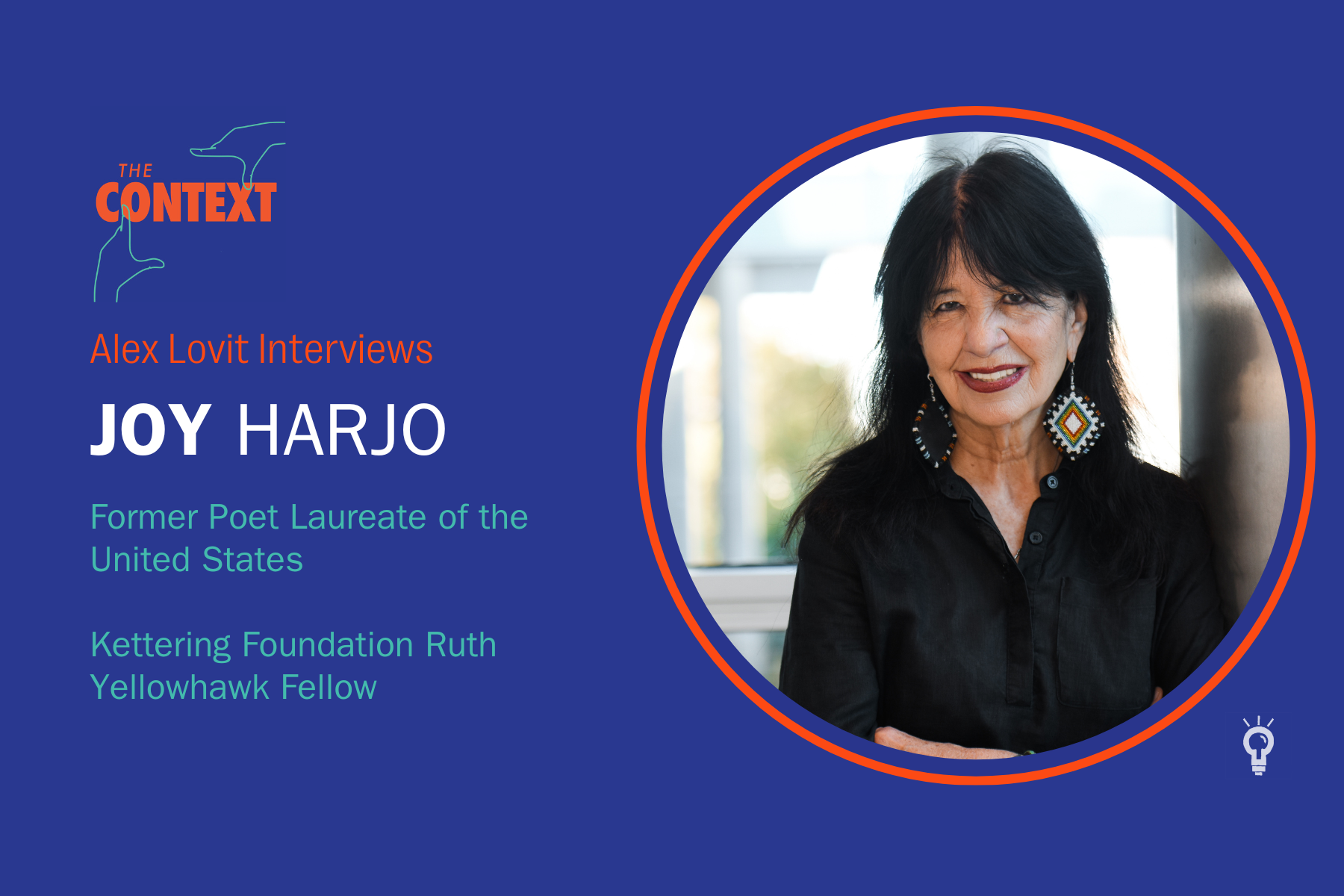
The news is full of stories of political crisis, and these stories are fed to us with speed and intensity through social...
 Published On: November 18, 2025
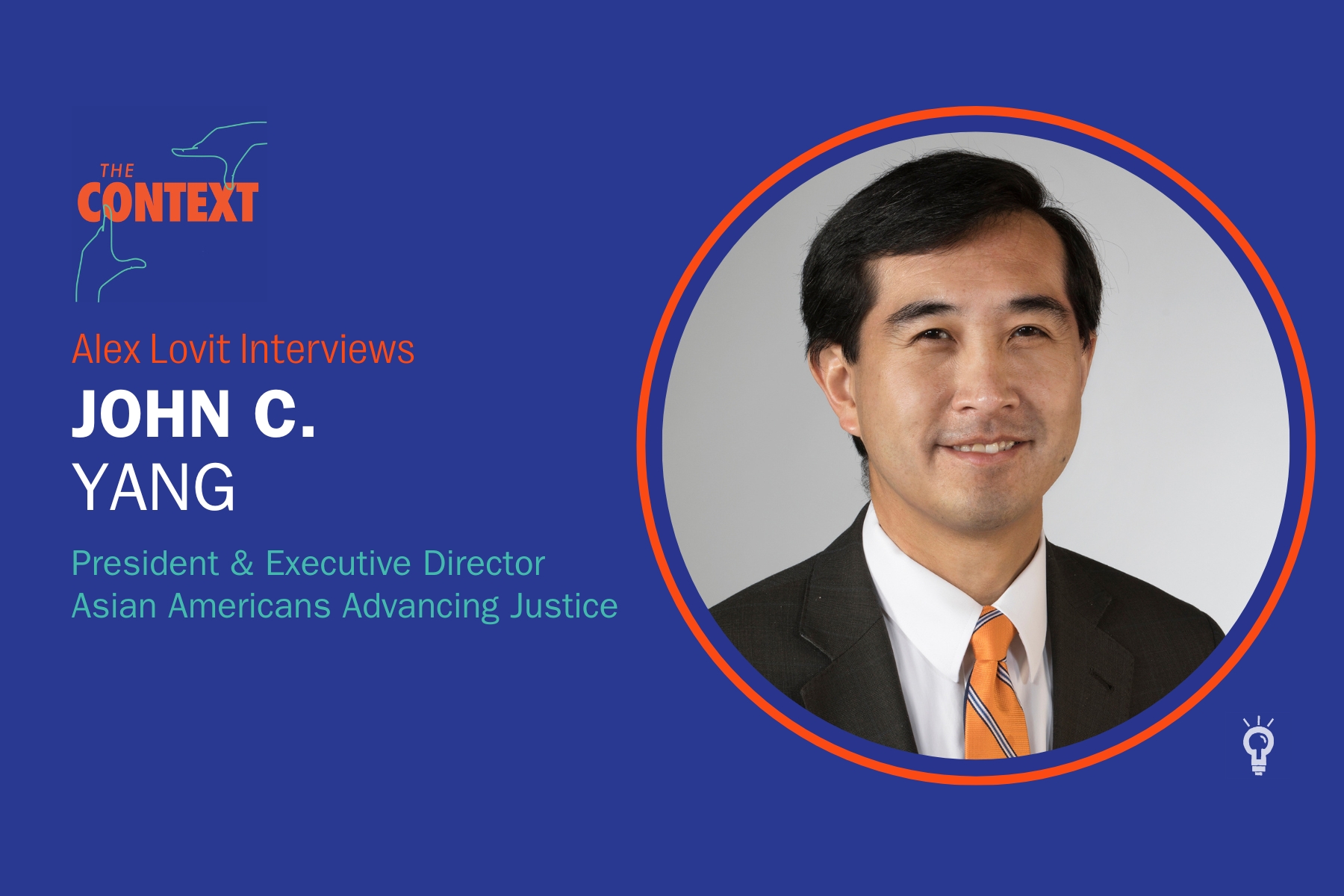
The Trump administration is trying to restrict who gets to be an American: who can be in the country, who has citizenship,...
 Published On: November 4, 2025
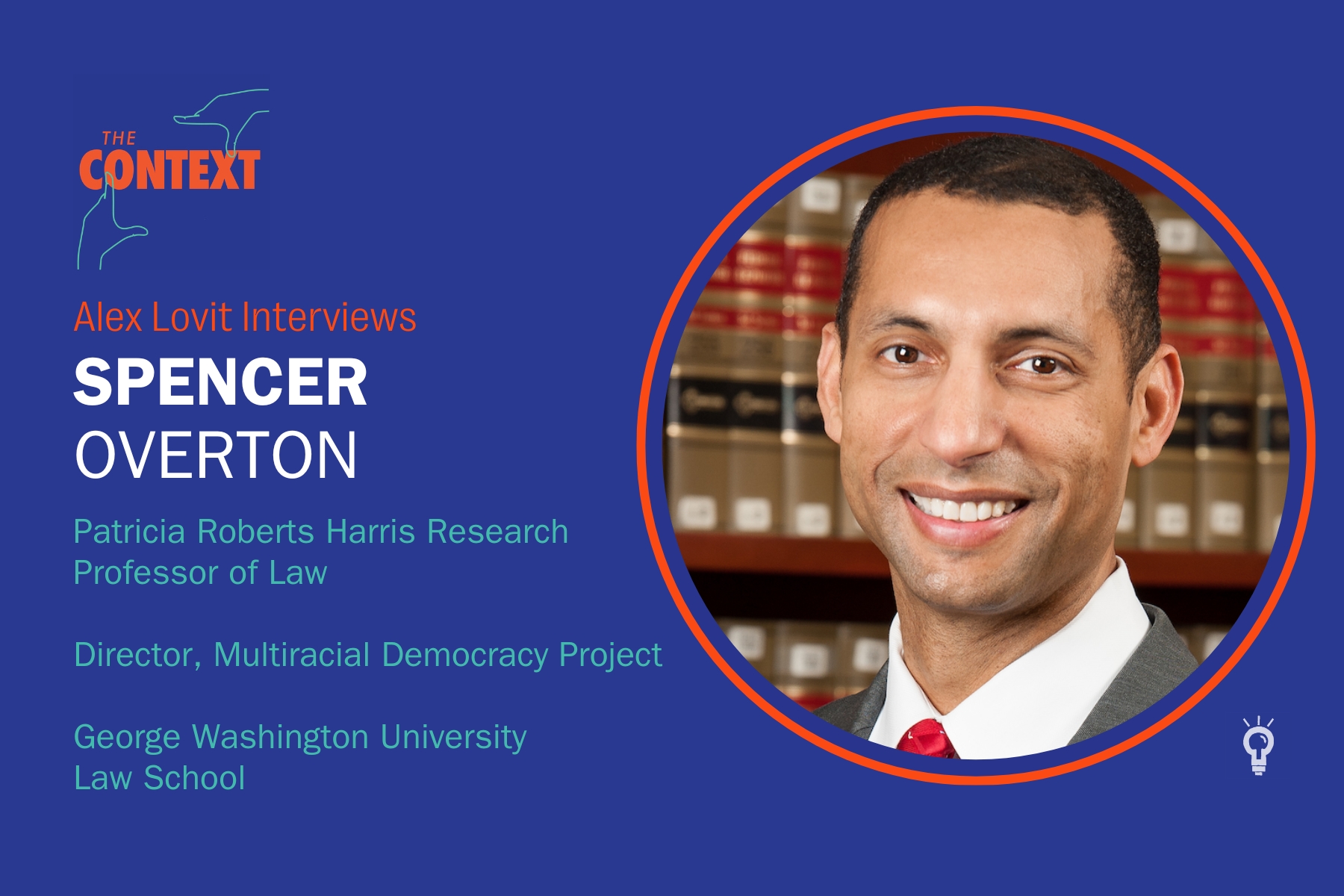
Recent advances in artificial intelligence have drawn a lot of media attention. But little of this has focused on how this new...
 Published On: October 21, 2025
How did right wing voices take over podcasting? Media analyst Angelo Carusone joins host Alex Lovit to discuss how the online media...
 Published On: October 7, 2025
Nonviolent movements are more effective at combatting authoritarianism than violent resistance, according to research from today’s guest. Maria Stephan joins host Alex...
