Lessons Learned from USAID: How to Operate During Rapid Change
With the United States experiencing democratic backsliding, attacks on civil society, rising political violence, and the decay and corruption of independent institutions, defenders of democracy need to adapt to new and rapidly changing challenges and threats. Before its destruction in 2025 by the Trump administration, the US Agency for International Development (USAID) was a global leader operating successfully in dynamic and unpredictable environments. The dismantling of USAID is a disaster for global democracy and a boon to authoritarians everywhere, but lessons and models from its work can be adapted to live on in pro-democracy efforts in the United States and around the world.
Working in Transition: New Models Based on Flexible, Iterative, Adaptive Approaches
Rapidly changing, unpredictable political environments create uncertainty that can destabilize even the best planned and organized pro-democracy work. Previous assumptions about cause and effect no longer hold, and long-term strategies can become irrelevant if they do not keep up with progressing developments. Democracy defenders who embrace complexity and operate intentionally within it will be the most successful in achieving their desired outcomes. At the same time, existing pathways to success cannot be abandoned before they are rendered obsolete by the changing environment. The challenge for managing pro-democracy strategies is to find a balance between developing new models, approaches, and relationships while still using the previous versions that are still working. Three examples from USAID’s work in chaotic, complex environments can help illustrate this balance in action.
Colombia: Build on Community Strengths
In 2015, the Colombian government and the Revolutionary Armed Forces of Colombia neared agreement on a peace accord to end five decades of conflict. I led the initiation of a USAID program designed to provide rapid response capacity for the challenges of peace accord implementation. Along with our Colombian partners, we immediately faced the challenge of implementing a peace accord that had not yet been signed. We would also have to help the most conflict-affected communities prepare to adapt to a new reality.
Despite significant political will to have the peace accords succeed, the institutions that would implement those accords largely did not exist in 2015. New institutions needed to be created, resourced, and set into motion at both the national and local levels. This required planning for the period after the peace accord signing, when Colombian politics would be transformed. At the same time, USAID’s experience in Colombia created opportunities to help the communities most affected by conflict prepare for what the peace accord signing would mean for them. By embracing both existing advantages and relationships, and planning and building institutions for a new reality, USAID and its Colombian partners were able to better prepare for peace accord implementation at both the national and local levels. We supported the implementation of Territorially Focused Development Programs, which were designed to build on existing civil society and nascent government presence and to outline a new vision for governance and development in the key areas that emerged from conflict with the signing of the peace accords. This approach combined existing community strengths with new governmental capabilities to envision an existence beyond the decades-long conflict. Now that USAID has been dismantled, the United States is far less equipped to contribute to peace in Colombia.
Syria: Get Creative in Dark Times
In the early years of the Syrian Civil War, the internationally supported opposition government-in-exile was losing legitimacy. It was fractured, disorganized, and unable to coordinate the actions of opposition groups who remained within Syrian territory. Extreme radical Islamist groups were more effective on the battlefield against the Assad regime. The prospects for a free, democratic Syria, which was the aspiration of the peaceful protestors in 2011, were grim.
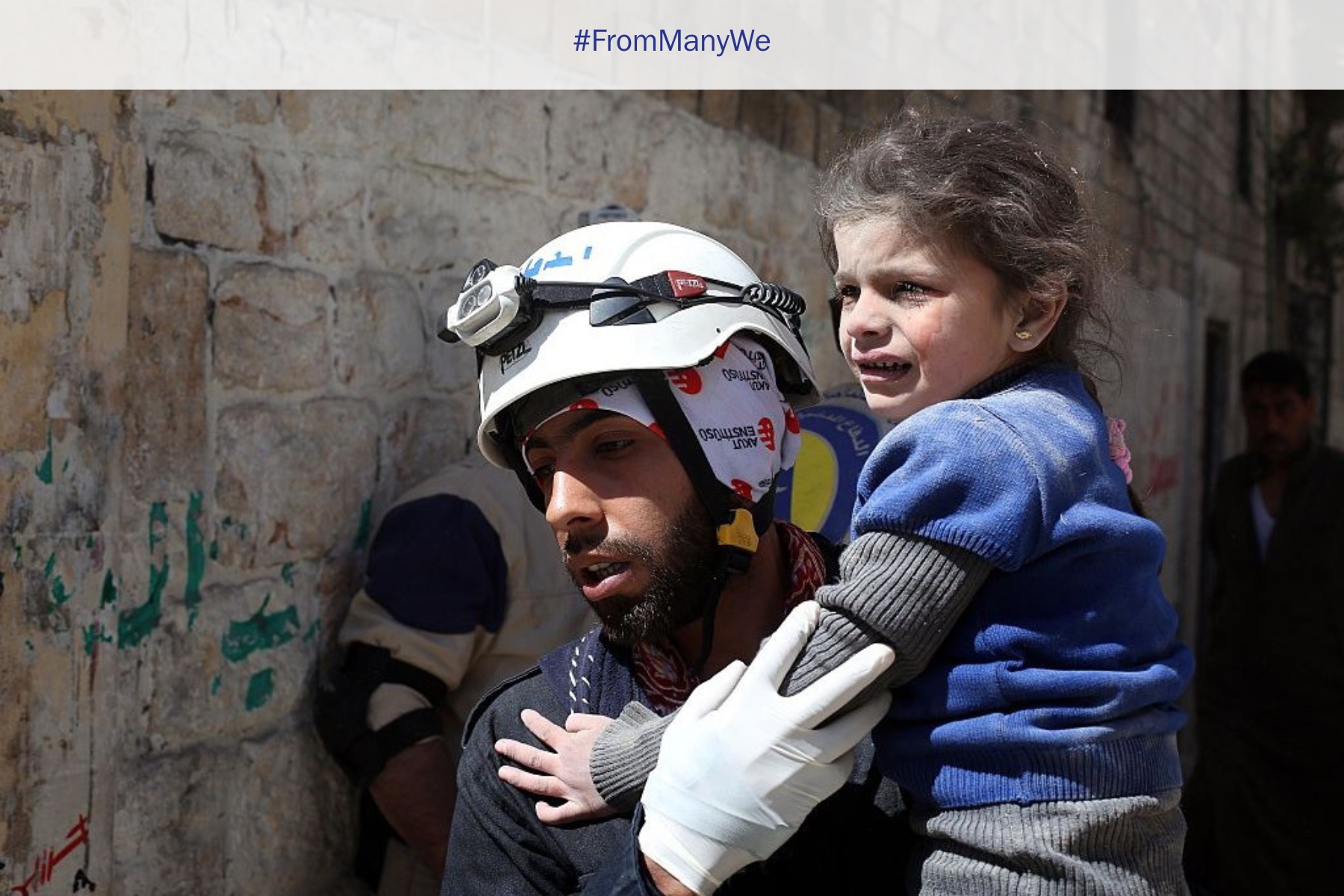
Amid this chaos and stagnation, a group of brave volunteers thought more broadly and creatively about the organization and assistance that Syrians needed at that moment. Coming from all walks of life, they formed teams of volunteers that were willing to venture out to rescue others amid the Assad regime’s escalating attacks on civilians. With USAID support, they formalized their organization as Syria Civil Defense and set up centers in different regions to establish relationships across the country. This group, eventually known as the White Helmets, excelled in emergency response and, through their bravery, inspired Syrians and others around the world to remember that a different world was possible. The White Helmets built relationships that were critical to Syrians in terrible situations and reminded them that they were not alone. After the December 2024 fall of the Assad regime, the White Helmets are now poised to play a new role in determining Syria’s future as they participate in Syrian politics based on their legitimacy and extending civil defense services to the entire country.
Moldova: Check in to Reassess
In spring 2023, the country of Moldova was in a moment of transition. The pro-European government that had won the 2021 parliamentary elections had begun to advance the ambitious slate of reforms that will be necessary for Moldova’s eventual accession to the European Union (EU). Russia’s full-scale war of aggression in neighboring Ukraine was entering its second year, and Moldova was increasingly becoming a target for Russian information warfare and other interference designed to hinder Moldovan EU accession prospects. Pro-democracy and pro-EU Moldovans, along with their international partners, knew that this was a critical time in the fight for Moldova’s future.
The USAID program that had been launched a year earlier to support Moldova’s democratic and pro-European aspirations was also in a moment of transition. The program was ramping up its operations and budget and increasing staff levels and programmatic ambition. This transition also presented an opportunity to make any necessary changes to the program’s strategy and operations and to analyze what risks the program might face. Such check-ins are especially important while operating in fast-paced, complex environments where long-term strategies can quickly become irrelevant due to rapidly changing events.
To do this, the program gathered its staff together in Chișinău for a three-day strategy review session. I was on a team of USAID staff who did not regularly work in Moldova and that designed the session to provide an outside perspective and facilitation expertise. We conducted interviews with all program staff to ensure that their opinions were integrated into the agenda design. We also interviewed the program’s external stakeholders to provide input into the program’s strategy. During the sessions, conversation focused on the strategy, operations, and risk management to ensure that the program remained relevant to the political situation in Moldova and was operating effectively and safely within that environment. The program team emerged from the strategy review session with a clear approach to supporting Moldova’s democratic and pro-EU aspirations, countering Russian information warfare, and remaining effective and adaptable in the face of further rapid changes.
Pro-democracy Moldovans in favor of joining the EU have struggled in the face of the dismantling of USAID. Flexible and adaptive USAID programs were critical tools in countering Russian interference tactics that constantly probed for weaknesses. Moldovans reelected their pro-European government in parliamentary elections in September 2025 despite the loss of USAID support. This pro-democracy vote keeps Moldova on the path to EU accession and maintains a democratic future independent from Russian aggression and interference.
Lessons for US Democracy Defenders
These three examples from USAID’s work in Colombia, Syria, and Moldova illustrate how considering dynamic and complex operating environments can lead to greater success for pro-democracy and pro-peace efforts. Democracy defenders in the United States are fortunate that the US does not have anywhere near the level of violence experienced in Colombia or Syria, or the level of Russian interference that Moldova must endure. However, US democracy defenders can ask themselves similar questions to those that their allies in those countries asked themselves to successfully operate in chaotic and dynamic environments:
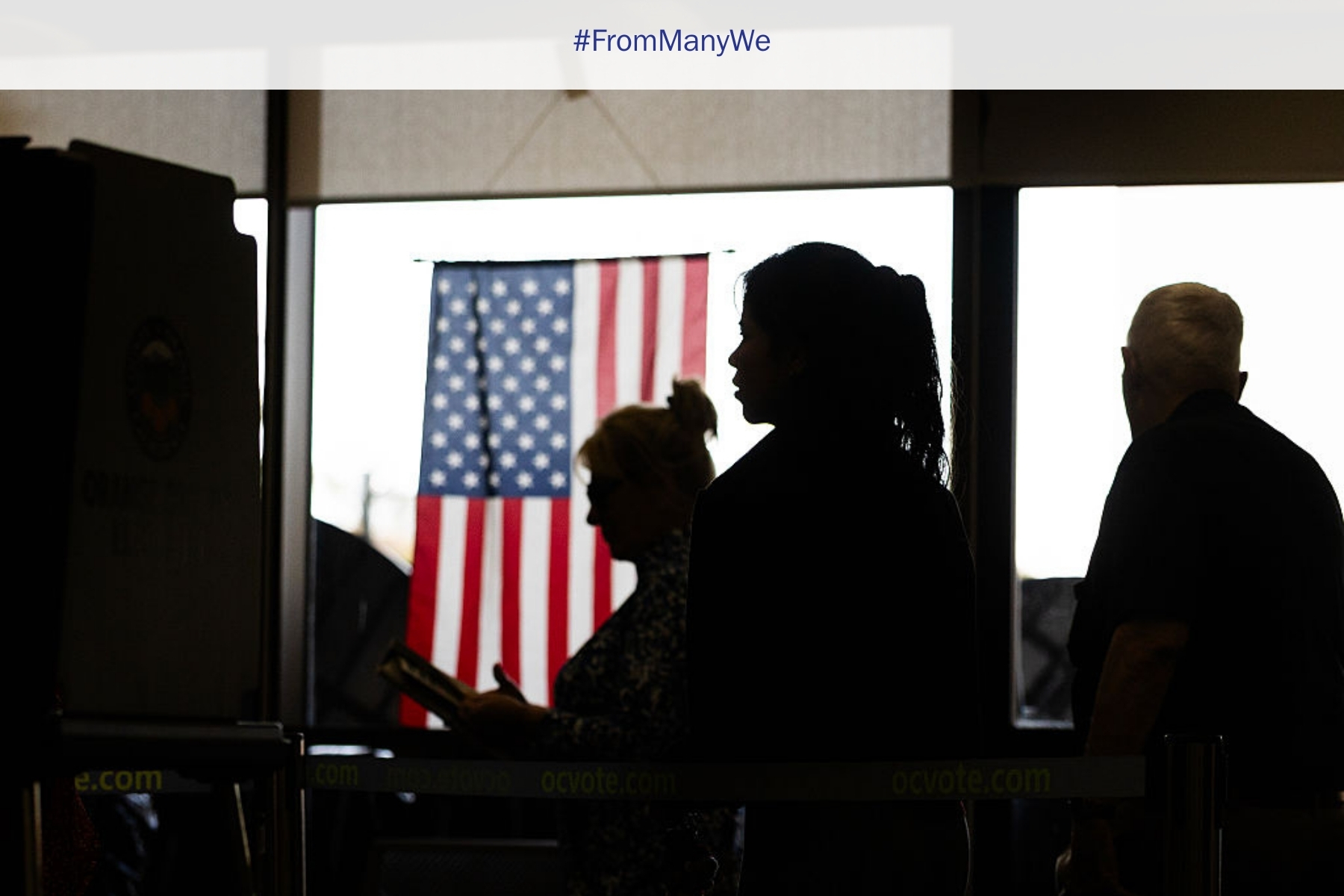
- What new approaches are needed to prepare for future attacks on the fairness and integrity of American elections?
- What existing pathways of voter mobilization remain viable and worth pursuing?
- What creative new ideas might yield unknown future efforts to defend academic freedom and other institutional independence?
- When is a check on strategy, operations, and risks necessary in an environment of increased attacks on nonprofits and philanthropy?
The democracy defenders in the US who most successfully answer these questions and adopt complexity-aware approaches are the ones who will best succeed in our own moment of American transition.
Daniel Tirrell is the cofounder and coexecutive director of The Ohio Democracy Project. Previously, he worked for 14 years on political transition and violence prevention programs at USAID’s Office of Transition Initiatives.
From Many, We is a Charles F. Kettering Foundation blog series that highlights the insights of thought leaders dedicated to the idea of inclusive democracy. Queries may be directed to fmw@kettering.org.
The views and opinions expressed by contributors to our digital communications are made independent of their affiliation with the Charles F. Kettering Foundation and without the foundation’s warranty of accuracy, authenticity, or completeness. Such statements do not reflect the views and opinions of the foundation which hereby disclaims liability to any party for direct, indirect, implied, punitive, special, incidental, or other consequential damages that may arise in connection with statements made by a contributor during their association with the foundation or independently.