Teaching Without Fear
I miss being a university professor in Colombia. I miss the students, their energy, their curiosity, and the way they kept the classroom alive. I miss how teaching pushed me to revisit old ideas and discover new perspectives. I miss the discussions that expanded my thinking and created a sense of community that would rise in the shared journey of a class where debates and conversations wove meaningful connections.
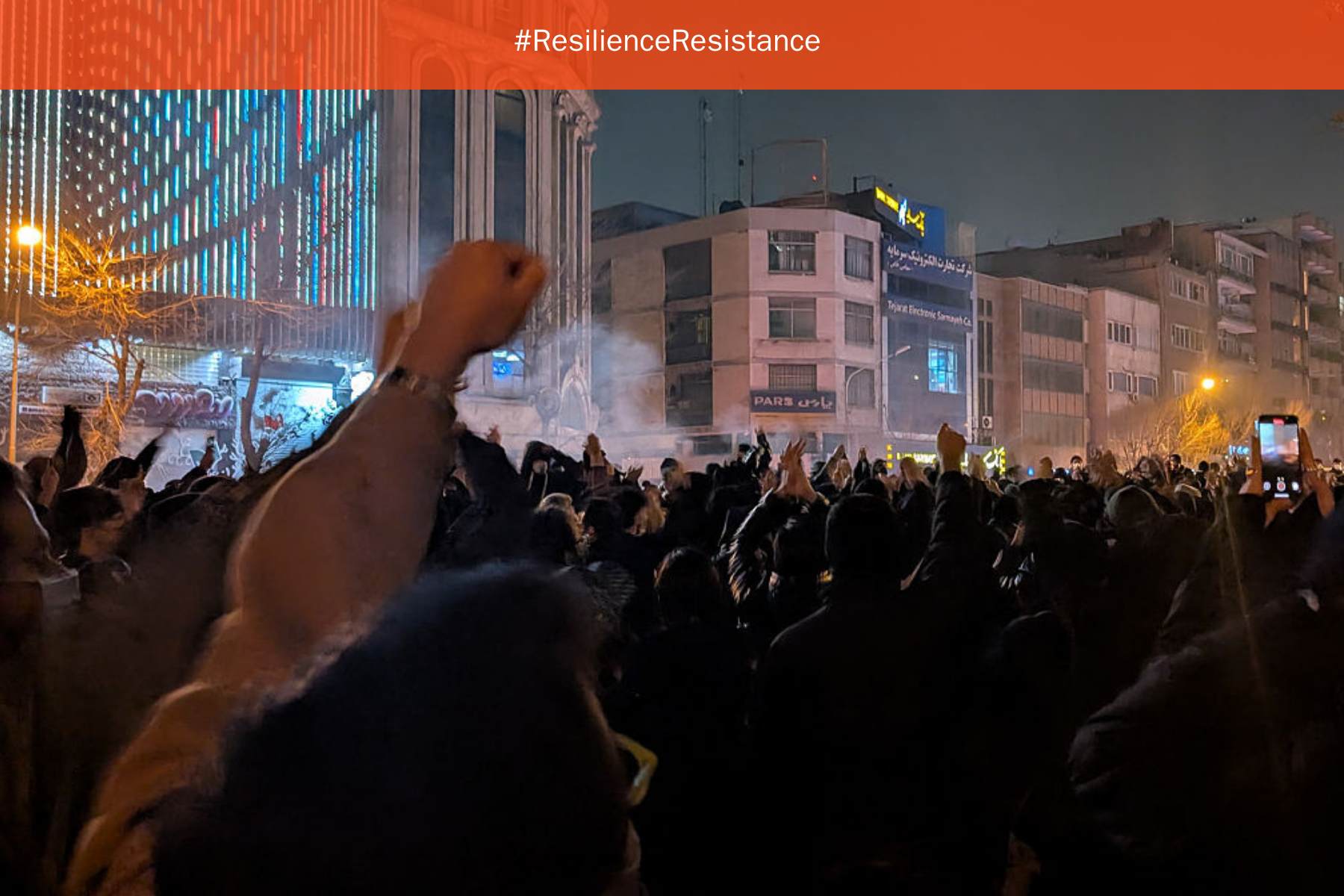
I do not miss the fear. On campus there were student protests that spiraled out of control with masked demonstrators, explosions, and deafening blasts rattling the walls. At those times, professors and students rushed to hide in classrooms and offices, away from windows. Outside, chanting filled the air; inside, the tension was suffocating. But this was Colombia, a country scarred by violence and inequality and with a deep suspicion of critical thought. Teaching, researching, or writing about certain topics carried real risks.
After migrating to Canada, I continued to follow events at Colombian universities. On June 8, 2023, during the commemoration of the “Day of the Fallen Student,” news outlets reported violent clashes between riot police and masked protesters outside the National University in Bogotá. In Ibagué, at the University of Tolima, demonstrators attempted to set fire to administrative offices, forcing classes to be suspended and the campus evacuated.
I was also shaken by reports from Eafit University in Medellín from 2021 to 2023, where several students and professors received threatening phone calls accompanied by funeral music and followed by harassment allegedly carried out by far-right groups. Some professors said that simply teaching about the social uprising against the government was enough to trigger death threats. A few students wore bulletproof vests to class. The sense of impunity continued to weigh heavily on those targeted even after the authorities were informed.
For a long time, I believed academic freedom was particularly fragile in countries like Colombia. However, I soon realized that even in Canada—a country that prides itself on constitutional rights and inclusive policies—tensions exist, though they manifest differently.
The Debate Over Academic Freedom in Québec
At the University of Ottawa in 2020, a professor was suspended for using a derogatory term while teaching. As a way to protect academic freedom in higher education, the Québec government passed Bill 32 in June 2022.
On the surface, the law seems like a step forward: it recognizes the right to teach and conduct research without ideological restrictions. Yet Article 6 of Bill 32 grants the Minister of Higher Education the authority to impose changes on university policies, which raises concerns about political interference in institutional autonomy. The law also requires universities to establish councils to oversee its implementation and handle complaints. While this framework provides students and professors with clearer guidelines, its punitive approach can also be interpreted as a mechanism of control that could limit free inquiry.
Several student unions have criticized the legislation, arguing that it misuses the banner of academic freedom to justify discriminatory speech. For them, true academic freedom is not the right to say anything at all but a commitment to rigorous knowledge acquisition, social justice, and the questioning of power. In their view, academic freedom is meaningful only when it strengthens democratic life, fosters informed debate, protects marginalized voices, and allows campuses to function as spaces where ideas can be challenged without fear. When policies restrict this openness, even unintentionally, they undermine not just university autonomy but the very democratic principles that rely on free inquiry to thrive.
Language as a Barrier
Alongside Bill 32, the Québec legislature passed Bill 96, which reinforces French as the official language of the province. The law requires anglophone students at the Colleges of General and Professional Education (CEGEP) to pass either three French language courses or three courses in French in order to graduate. This requirement can adversely affect a student’s GPA and reduce their chances for admission at a competitive university. For anglophones, like myself, this can make education difficult to access.
The measure also risks deterring international students and those from other provinces, while placing a particular burden on Indigenous students, who are required to learn yet another language while their own mother tongues remain marginalized.
Religion and Academic Space
Another law that has affected higher education is Bill 21, which prohibits public employees, including teachers, from wearing visible religious symbols. For Muslim, Jewish, or Sikh educators, this restricts the expression of identity. For universities, the law has sparked heated debates about neutrality, discrimination, and the balance between state authority and institutional autonomy. The irony is that Catholic symbols are often permitted because they are deemed “cultural” rather than religious—another blow to the hope of finding a truly safe and inclusive academic space.
Political Pressure and Research Funding
Canadian institutions are also not immune to political influence, even if the forms of interference are far less severe than those experienced in many Colombian universities. Research funding at times can collide with political interests, creating subtle but significant barriers for academic work. For example, studies critically examining Indigenous communities and the legacies of colonialism have faced obstacles in securing support, which has limited scholars’ ability to pursue essential research. Similarly, professors who critique government positions on issues like immigration or environmental policy have experienced indirect pressure, including reduced or withdrawn funding, canceled talks, or increased institutional scrutiny that discourages open debate. While these actions are not violent, they function as silencing mechanisms and narrow the space for diverse and critical voices in Canadian universities.
The Contrast
In Colombia, threats to academic freedom are often immediate—violence, censorship, intimidation. In Canada, the risks are more subtle in that they are embedded in laws, bureaucratic rules, or administrative decisions that appear neutral but that quietly limit critical thought. In both contexts, universities cease to be safe spaces for ideas.
So, how do we define academic freedom? For me, it is the ability to teach, research, and debate without fear of reprisals—overt or hidden. It is the freedom to address complex, and many times controversial, issues such as gender, race, language, history, and immigration without censorship. It is the ability to build knowledge without restraint.
As an educator, immigrant, and citizen, I have come to understand that academic freedom is never fully guaranteed—anywhere. It must be defended every day. When the freedom to question is lost, so too is the opportunity to transform and strengthen democracy.
For more on the importance of academic freedom, read Catalina Arango Patiño’s August 2025 Resilience & Resistance post, “Seven Crucial Reasons Academic Freedom Is Essential to Democracy.” For related videos, subscribe to her Academic Freedom in Mind channel on YouTube.
A Colombian social researcher living in Montréal, Catalina Arango Patiño holds a master’s in communications and media studies from the University of Ottawa. She has led research projects in the US, Canada, and Colombia on human rights and the role of information, communication, and technology in diaspora communities. Currently, she works as a consultant on academic freedom across the Americas.
Resilience & Resistance is a Charles F. Kettering Foundation blog series that features the insights of thought leaders and practitioners who are working to expand and support inclusive democracies around the globe. Direct any queries to globalteam@kettering.org.
The views and opinions expressed by contributors to our digital communications are made independent of their affiliation with the Charles F. Kettering Foundation and without the foundation’s warranty of accuracy, authenticity, or completeness. Such statements do not reflect the views and opinions of the foundation which hereby disclaims liability to any party for direct, indirect, implied, punitive, special, incidental, or other consequential damages that may arise in connection with statements made by a contributor during their association with the foundation or independently.