
The Country We Have, the Country We Want
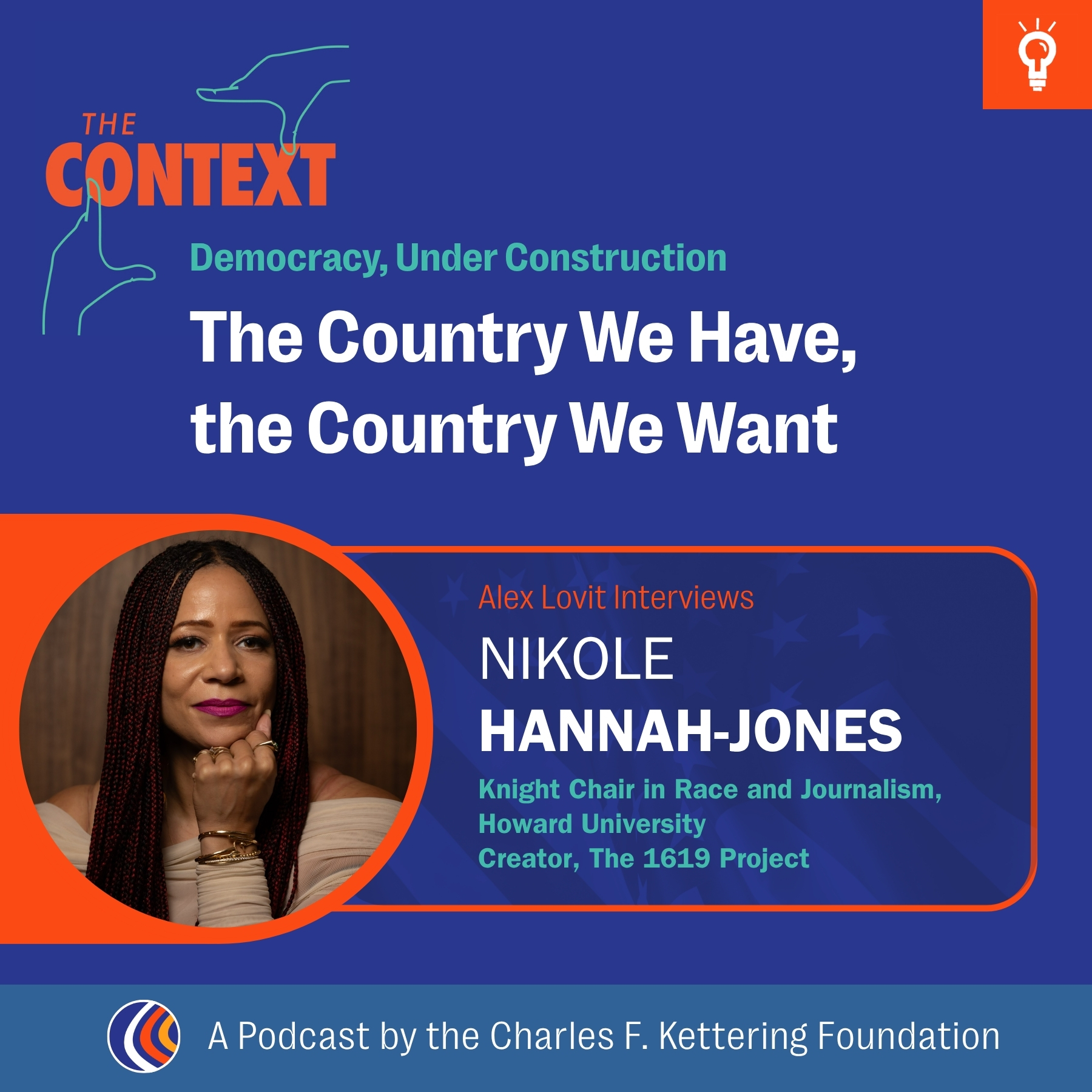
The history of the United States is littered with injustices. What should patriotism look like when our country does wrong? And how can we be patriotic, in spite of injustices? Can we hope for better? Nikole Hannah-Jones joins host Alex Lovit to talk about America’s history, our country’s truest historical heroes, and how we can push for a more inclusive democracy in the future.
Nikole Hannah-Jones is the Knight Chair in Race and Journalism and the founder of the Center for Journalism & Democracy at Howard University. As a staff writer for the New York Times Magazine, she created The 1619 Project, a collection of essays reflecting on 1619, the year that the first enslaved Africans landed in Virginia. Her own introductory essay won the Pulitzer Prize, and the project has been adapted into other forms, including a book and a docuseries.
This is the third and final episode in our series, “Democracy, Under Construction,” which commemorates America’s 250th anniversary by focusing on the moments when our country became a more inclusive democracy and celebrating the historical figures who pushed the country to live up to its ideals.
Share Episode
The Country We Have, the Country We Want
The history of the United States is littered with injustices. What should patriotism look like when our country does wrong? And how can we be patriotic, in spite of injustices? Can we hope for better? Nikole Hannah-Jones joins host Alex Lovit to talk about America’s history, our country’s truest historical heroes, and how we can push for a more inclusive democracy in the future.
Nikole Hannah-Jones is the Knight Chair in Race and Journalism and the founder of the Center for Journalism & Democracy at Howard University. As a staff writer for the New York Times Magazine, she created The 1619 Project, a collection of essays reflecting on 1619, the year that the first enslaved Africans landed in Virginia. Her own introductory essay won the Pulitzer Prize, and the project has been adapted into other forms, including a book and a docuseries.
This is the third and final episode in our series, “Democracy, Under Construction,” which commemorates America’s 250th anniversary by focusing on the moments when our country became a more inclusive democracy and celebrating the historical figures who pushed the country to live up to its ideals.
Share Episode
The Country We Have, the Country We Want
Listen & Subscribe
The history of the United States is littered with injustices. What should patriotism look like when our country does wrong? And how can we be patriotic, in spite of injustices? Can we hope for better? Nikole Hannah-Jones joins host Alex Lovit to talk about America’s history, our country’s truest historical heroes, and how we can push for a more inclusive democracy in the future.
Nikole Hannah-Jones is the Knight Chair in Race and Journalism and the founder of the Center for Journalism & Democracy at Howard University. As a staff writer for the New York Times Magazine, she created The 1619 Project, a collection of essays reflecting on 1619, the year that the first enslaved Africans landed in Virginia. Her own introductory essay won the Pulitzer Prize, and the project has been adapted into other forms, including a book and a docuseries.
This is the third and final episode in our series, “Democracy, Under Construction,” which commemorates America’s 250th anniversary by focusing on the moments when our country became a more inclusive democracy and celebrating the historical figures who pushed the country to live up to its ideals.
Alex Lovit: So it’s the 250th anniversary of America’s founding this year. This summer, there’ll be flags and fireworks and speeches and a UFC fight on the White House lawn for some reason. But behind all the spectacle, there’s an underlying question. What exactly are we celebrating? If you know the history of the United States, it’s hard to tell a simple story of enduring American greatness. We didn’t even really become a democracy until the passage of the Voting Rights Act in 1965. And as we’ve talked about on this show, there are a lot of problems that limit and threaten our democracy today, including the Supreme Court’s current dismantling of that very same Voting Rights Act.
So again, what are we celebrating when we celebrate America? Should we even be celebrating? Is patriotism a problem? You’re listening to The Context. It’s a show from the Charles F. Kettering Foundation about how to get democracy to work for everyone and why that’s so hard to do. I’m your host, Alex Lovit. Today is the conclusion of our three-part series called Democracy Under Construction. We’ve been commemorating America’s 250th by examining US history and asking where our patriotism should lie, who we should be lifting up as national heroes, and how history helps us find a path toward a more inclusive democracy. There’s no one I’d rather ask those questions than my guest today, Nikole Hannah-Jones. Nikole is the night chair in race and journalism at Howard University and the Pulitzer Prize-winning creator of the 1619 Project. The 1619 Project reframes our country’s history by putting slavery in its lasting consequences at the core of the American story. Black people often get left out of that story, but Nikole shows us the central role they played in shaping our nation.
Nikole Hannah-Jones, welcome to The Context.
Nikole Hannah-Jones: Thank you.
Alex Lovit: So I want to ask you about patriotism, and I’d like to be patriotic. I’d like to believe that my country stands for something, democracy, equality, justice. This country’s 250 years old now. So for 250 years, people have been using patriotic symbols and rhetoric to argue for all sorts of things. Do you think patriotism has been a positive force in this country’s history?
Nikole Hannah-Jones: I suppose it would depend on who we’re defining as the patriots and how we’re defining patriotism. If we are considering Black Americans as kind of the greatest democratizing force in the United States, then their patriotism certainly has been a force for good, but I think the more mainstream version of patriotism has been a very exclusionary one, one that’s been built on a dangerous mythology that includes a deifying of our founders and therefore a deifying of our founding as some divine act. And that’s justified all sorts of terrible hypocrisies. So I wouldn’t say overall in the general sweep of history that patriotism has been a positive force, at least not for the values that I hold.
Alex Lovit: Well, talk to me about some of those positive patriots in American history. You mentioned that African Americans have often been the truest Americans in terms of holding us to account for our values. Tell us a few of those stories. Who should we look up to as American patriots?
Nikole Hannah-Jones: Well, I do consider Frederick Douglass to be the greatest American this country has ever produced. And I think if you look at his example of patriotism, it is one of trying to force the country to live up to its own stated ideals of believing in expansive rights. He was a man who not only was an abolitionist, who believed in full equality for people regardless of race. He also was a suffragist. He believed that women should have full equality and the right to vote at a time where black Americans were defining what birthright citizenship looked like. And many white Americans were trying to exclude Asians as not being able to be assimilated into the United States. Frederick Douglass actually fought for Asian immigrants to also be considered full citizens of this country with full rights. So he was an exemplar of what someone who has a true love of country and a true belief in equality for all people and that this nation can contain all of our hopes and dreams, but that he constantly spoke truth to power, even in moments where it had to have been deeply uncomfortable.
And his version of patriotism was to say our country has not been a great country. It has not been a country that has lived up to its own stated values, but that it should and it could. Of course, another great picture to me would be Ida B. Wells, who I would place as kind of his female counterpart, even though she was younger than him. She was born right at the period of abolition. She also was a civil rights advocate. She fought for black American sap rights. She fought for women’s rights. She fought against classist politics and really had an expansive view of what freedom should look like. So we have lots of examples of people throughout the course of history who are on the right side of almost every issue that we can think of, but we seldom hold them up as the examples of what makes someone a patriot.
Or we would tend to treat someone like Frederick Douglass or Ida D. Wells as Black American heroes, but not as heroes that every American, if they actually believe in the values they say they do, should look up to.
Alex Lovit: Well, yeah, so I want to ask about exactly that. I am, and you may have noticed this, a white man, and I am a Frederick Douglass fan and a Ida D. Wells fan. How do you think about what they have contributed to me? What do I owe to these figures?
Nikole Hannah-Jones: These are American heroes. So when we talk about, for instance, the abolition of slavery, this was not a gift to Black Americans. The abolition of slavery was forcing us to end our participation in one of the most barbaric enterprises in the history of mankind. It civilizes us. It allows us to have freedom as a society, and that of course impacts everyone. There’s a reason why we try to downplay the role of slavery in the founding of our country as a foundational institution because it is shameful and we remain ashamed of that history. So people who fought for its abolition fought to free the entire country from its involvement in our barbaric system. And if we look at something like the civil rights that Ida B. Wells fought for, primarily, of course, her campaign against lynching. Again, when we had lynched law, we had a lawless society.
We had a society where anyone could be subject to extra judicial violence. What made us an advanced civilized society was this idea of due process of a legal system that everyone had to adhere to and that benefited everyone. So I think we have to understand, that’s why I frame Black Americans as a democratizing force, that these efforts were not just about helping Black Americans achieve rights. They were about democratizing our country. They were about ensuring rights for all marginalized people, but also ensuring rights of white men. As long as slavery existed, that meant that there was no threshold for how you could exploit laborers. And so, that also led to a lot of exploitation of poor white laborers. It meant there was no threshold for violence. White men were also lynched. They weren’t lynched in the numbers that black men were, but they were also therefore subject to this type of violence.
And I think one thing we’ve too often failed to understand is that when we allow a group to be marginalized and mistreated and to have their rights abridged, it also then fundamentally makes everyone else’s rights vulnerable. So I just wish we would think about these efforts to really perfect democracy and to bring equality into the Constitution and into the law as benefiting all Americans. When we think of white people as Americans, they are standing for all Americans. But when we think of Black people, we don’t think of them as a stand-in for all Americans, even though, of course, as my project points out, people of African descent have been here as long as people of European descent. They are just as fundamentally American, if not more so than anyone else. So it would do us well as a country to be able to see ourselves in that struggle, because that struggle is a struggle to democratize this country.
Alex Lovit: Yeah. So I agree with all that. And I think, as I said, I’d like to be patriotic. I’d like to believe that my country stands for something. And Frederick Douglass did a lot more to make that real than Thomas Jefferson did. Let me ask you, so again, you’ve looked at the full sweep of American history and the long push for civil rights and civil equality for African Americans and also other groups, women, other minority groups, there’s so many different ways to try to push for positive change. There’s cultural change, there’s political change, there’s building enduring organizations. Are there lessons that we can learn about what are the most effective ways to push for positive change in our country?
Nikole Hannah-Jones: The lessons about how to push for positive change is that there’s usually a necessity of a confluence of tactics and timing is also essential. So if we look, for instance, at the modern civil rights movement, that was a movement that took decades to bear fruit. It begins right at the end of the First World War, and yet we don’t see substantial legislation being passed into the 1960s. So you saw in the civil rights struggles, people using every lever they had at their disposal narrative, they were filing lawsuits, they were protesting, they were boycotting. Once television becomes a tool, they were harnessing the visual image. And even with all of that, what it really took was us being in the Cold War as America was trying to export this vision as America as this great democratizing force across the globe and fighting wars against other people of color to say, “We’re going to keep you free.
We’re going to make sure that you have freedom from communism that it was violently suppressing its own minority population at home.” And so those images of black people being fire hosed, of these political assassinations of children being bitten by dogs, of people being clunked, just marching for the right to vote, those images prove very, very powerful in kind of forcing the government’s hand because it was being used as a propaganda tool against the United States Bigger Aids. So I see all that to say there is and has never been a single tool and you can use all of those tools and you’re also going to need some luck, some timing, some outside influence to finally push. I think the greatest lesson from social movements for change is really persistence, that the idea that a society with deeply embedded inequalities and hierarchies is going to change overnight or respond quickly or not foment a backlash to ensure that it can remain, that’s naive.
These movements, the effort to abolish slavery, decades, again, right? And again, using every lever, newspapers, rallies, protest, violence, it took all of those things. So I think we have to just understand that transformative change in any society, but especially a society like the United States is extremely difficult. It requires constant coalition building and the maintenance of coalition of people who don’t necessarily have all the same aims and it can be exceedingly frustrating and it could take a very, very, very long time to bear fruit. And by the way, once that fruit is born, almost immediately we see a retrenchment. Coretta Scott King said, “Democracy is a battle that must be fought and won in every generation.” And I think that’s very true.
Alex Lovit: So the version of American history that I got in grade school was racism used to be a problem and then Martin Luther King came around and had fixed that. And it’s a positive story. It’s mostly a false story, but I have to believe in the possibility of progress. And in some ways there has been progress. I mean, as you mentioned, slavery is as brutal as system as ever existed on planet earth and as bad as things are now, and there’s plenty of things that are bad, we are no longer have slavery. So how do you think about progress? How should I think about progress?
Nikole Hannah-Jones: I think we should collectively think about progress as always possible, but not inevitable. And that to me is kind of a fundamental flaw of American ideology and our conception of ourselves is we are some of the most naively optimistic or willfully blindly optimistic people on the planet. And so, we really believe that we’re always moving forward. Society’s always progressing. Now we are always progressing, but not always in a positive direction. And so, I think it’s important.
And actually Ibram X. Kendi writes one of the last essays in the 1619 book and it’s called Progress. And it really talks about this idea that what the belief that progress is inevitable does for us is it doesn’t therefore require us to act. We can look to the past and say, “Well, things were really bad back then, but look how far we’ve come and things aren’t so great right now, but they’ll be better in the future.” Well, they won’t necessarily be better in the future.
And in fact, we’re living in a period now where we’re seeing a massive societal retrenchment where I’m as the first generation of black people born after the Civil Rights Movement, so the first generation of black people in the history of the United States born with full legal rights of citizenship, and now seeing a withdrawal and an attack on those rights that has not existed in my lifetime. We right now are waiting on the Supreme Court to decide whether something that is embedded in the Constitution, the idea of birthright citizenship, will stand. We’ve seen the loss of affirmative action. We’ve seen a administration that has weaponized Civil Rights now to try to reframe white Americans as the primary victims of discrimination. We’re seeing the closing of multicultural centers all across the country. We’re seeing the end of black studies. We’re seeing attacks on history.
So what that demonstrates is that progress can be negative or positive. We can make racial progress, we can make racist progress, right? We can make gender progress, we can make sexist progress. Look at what is happening with gay Americans and queer Americans where they achieved the greatest legal rights that they had also ever had in this country, and we’re seeing a systematic dismantling of that. My home state of Iowa had granted trans Americans as a group Civil Rights protections, and then became the first state in the United States to repeal the Civil Rights protections of a particular group. So I think it’s important for us to always guard against an innate optimism that makes it seem like we’re having a bit of a rough spot, but things will be okay.
Well, we determine that. We determine whether we make positive progress or not, whether we protect the rights of people, whether the gains that so many people died and bled for will remain, or whether those who wish to erode those gains will succeed. And I just fear that too often, because we can say, “Well, slavery and our racial apartheid is gone in this country and Trump is perhaps an outlier, that everything is going to be okay.” It may not. And if we don’t do something about it will not.
Alex Lovit: So how should people today, how should citizens of the United States living in 2026 think about their responsibility? You’re saying that progress is not inevitable, but it is possible. So how should we think about our responsibility to push towards that positive progress?
Nikole Hannah-Jones: I think we all have to decide what society do we want and what are we willing to sacrifice to ensure that we achieve that society? My entire life is a product of people who are willing to sacrifice everything, including their lives, in order to ensure that I could live the life that I have. But the truth is most people of any group are never willing to make that much of a sacrifice. So I think it’s up to each of us to decide what are we willing to put on the line, especially now. We are, and I don’t say this with hyperbole. As a journalist, I don’t like to use things like unprecedented or unparalleled, unless it’s actually accurate. And we are in my lifetime and in some ways in the history of the country, in an unprecedented time. And so that requires of us as citizens, unprecedented action, and yet I don’t see it.
I see people who largely think despite all the evidence that America cannot succumb to fascism, that our democracy will hold, that our systems of checks and balances might be battered, but ultimately they’re going to work. And there’s just no evidence that that’s true. And this is why I think studying history is so important. For people who are like, “Well, we’ve never lost democracy.” Well, we never had it until 1965. We’ve never had multiracial democracy. It’s always been contested. And in this country, we’ve had political coups, we have overthrown elected biracial governance, and we can do that again. So what’s required of all of us, honestly, is to wake up and be serious about the threats that we face and decide are we going to allow in the 250th year of the quest for American democracy, is that the year in which we allow it to end?
Alex Lovit: You said just now that unprecedented action is called for in this unprecedented moment. What would that look like? What should people be doing now to respond to this crisis?
Nikole Hannah-Jones: I mean, that’s a challenging question because I think it depends on where is your sear of influence, right? I’ve been studying a lot of scholars on autocracy, fascism, authoritarianism, and one of the things I recommend people to read Timothy Snyder’s little book called On Tyranny. And I say that one because it’s very digestible, it’s a very small book, but it gives you practical things you can do because the problems do seem so massive, so out of our control, and that’s strategy, like the chaos, the belief that everything that we’re experiencing is inevitable. We have no control over it. That’s part of the strategy. So one of the things that he says is, “Pick an institution and defend it. ” So what I ask people to do, everyone, I’m a journalist. So my role is to bear witness and to investigate the way that this administration is infringing on our democratic rights.
Someone else’s role might be to protest. Someone else’s role might be to file lawsuits. Someone else’s role might be to stand up for the librarians who are being fired in these book purges. Right? People who are engaging in ICE Watch and we’re protecting their neighbors. Everything doesn’t have to seem like this massive thing that is going to have a national effect. We each have some influence in our communities with some organizations, and we need to exercise that influence fearlessly right now. And then when the moment comes for bigger things, right? If the moment comes, for instance, at the elections this fall, then that may require that we do more. When I give talks all over the country, one of the things I always say usually at the end of my talk is, when we look backwards in history, we all imagine what side we would’ve been on.
Oh, I would’ve been the one marching with King, or I would’ve been the one on the Edmund Pettus Bridge. And the truth is, this is your moment. So it’s very easy when you have no skin in the game to imagine the risk you would have taken for democracy or for your fellow citizens or to preserve your own rights or the rights of someone else, but now is your moment. Now we get to see what side of history you would have been on. I strongly believe we’re all going to have to answer to our children, our grandchildren, to our society one day for what we’ve done in this unprecedented moment.
Alex Lovit: Well, that is inspiring and Terrifying. Yeah, a little terrifying. And I’m glad you mentioned Timothy Snyder. He’s a senior fellow here at the Kettering Foundation. And in addition to writing some very short, digestible books, he has written some very long books Yes, he has. … demonstrated how much wisdom went into those short books.
Nikole Hannah-Jones: Absolutely.
Alex Lovit: Nikole Hannah-Jones, thank you so much for taking the time and thank you for joining me here on the context.
Nikole Hannah-Jones: Thank you.
Alex Lovit: The context is a production of the Charles F. Kettering Foundation. Our producers are George Drake Jr. And Emily Vaughn. Melinda Gilmore is our director of communications. The rest of our team includes Jamal Bell, Tayo Clyburn, Jasmine Olaore, and Darla Minnich. We’ll be back in two weeks with another conversation about democracy. In the meantime, visit our website, kettering.org to learn more about the foundation or to sign up for our newsletter. If you have comments for the show, you can reach us at thecontext@kettering.org. If you like the show, leave us a rating or a review wherever you get your podcasts or just tell a friend about us. I’m Alex Lovit. I’m a senior program officer and historian here at Kettering. Thanks for listening. The views and opinions expressed in this podcast are those of the host and guests. They’re not the views and opinions of the Kettering Foundation.
The foundation’s support of this podcast is not an endorsement of its content.
Voiceover: This podcast is part of the Democracy Group.
Alex Lovit: In a time of polarization and media-driven outrage, how do we stay engaged without burning out? On Outrage Overload, host David Beckmeyer talks with experts on political polarization, media effects, and democratic resilience, bringing research, insight, and practical tools for navigating today’s divided world. Find Outrage Overload wherever you get your podcasts and learn more at outrageoverload.net.
More Episodes
 Published On: December 2, 2025
The news is full of stories of political crisis, and these stories are fed to us with speed and intensity through social...
 Published On: November 18, 2025
The Trump administration is trying to restrict who gets to be an American: who can be in the country, who has citizenship,...
 Published On: November 4, 2025
Recent advances in artificial intelligence have drawn a lot of media attention. But little of this has focused on how this new...
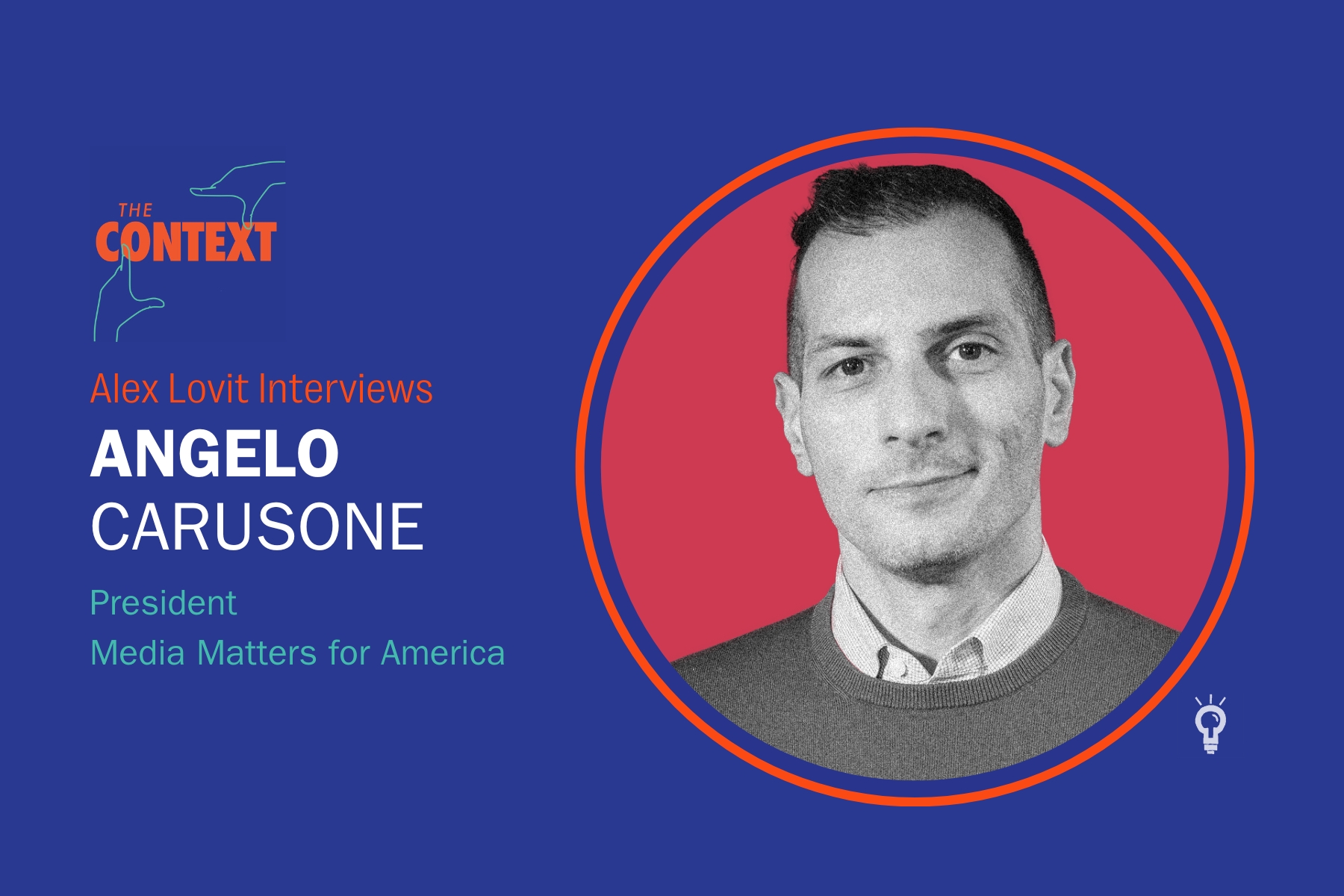 Published On: October 21, 2025
How did right wing voices take over podcasting? Media analyst Angelo Carusone joins host Alex Lovit to discuss how the online media...
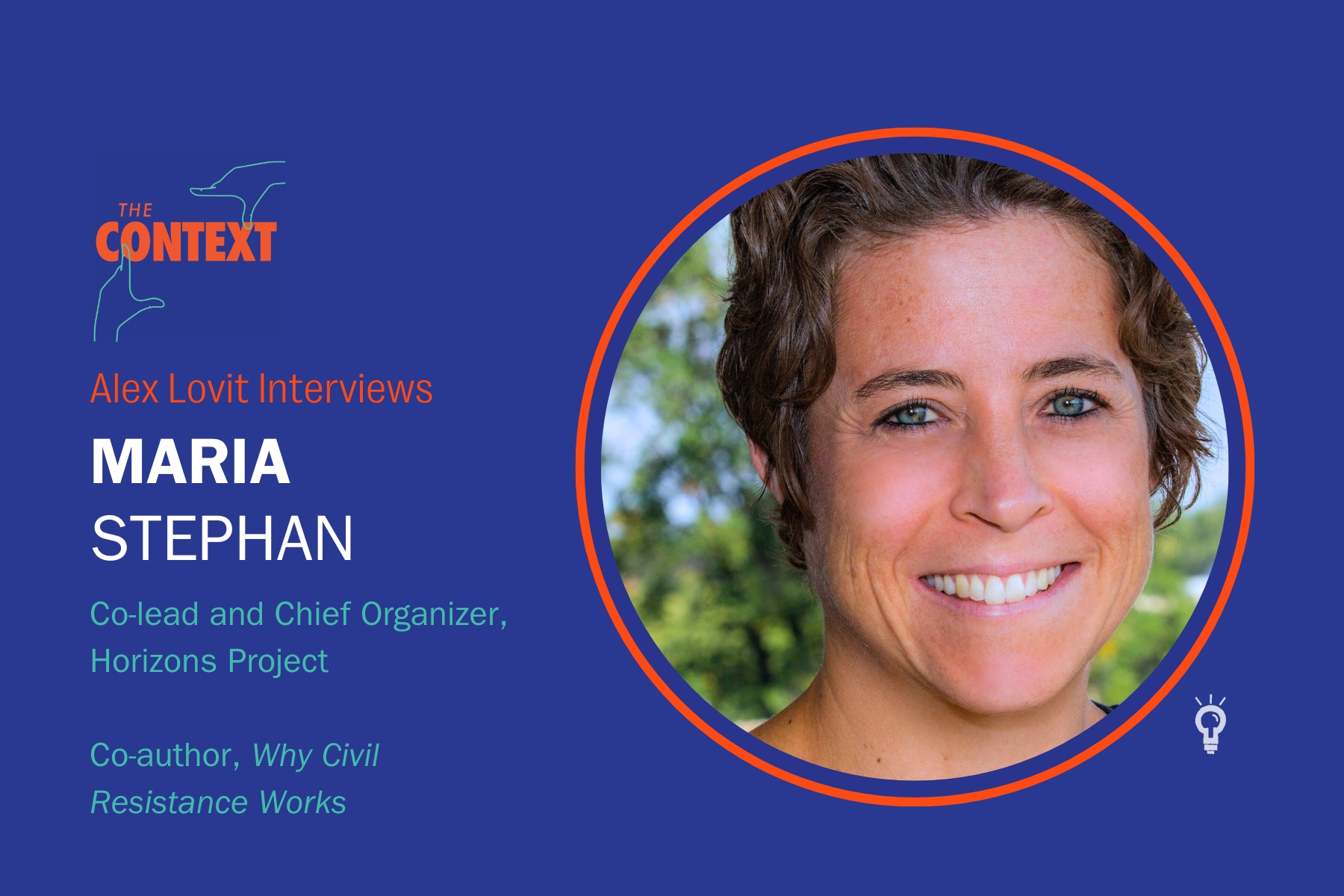 Published On: October 7, 2025
Nonviolent movements are more effective at combatting authoritarianism than violent resistance, according to research from today’s guest. Maria Stephan joins host Alex...
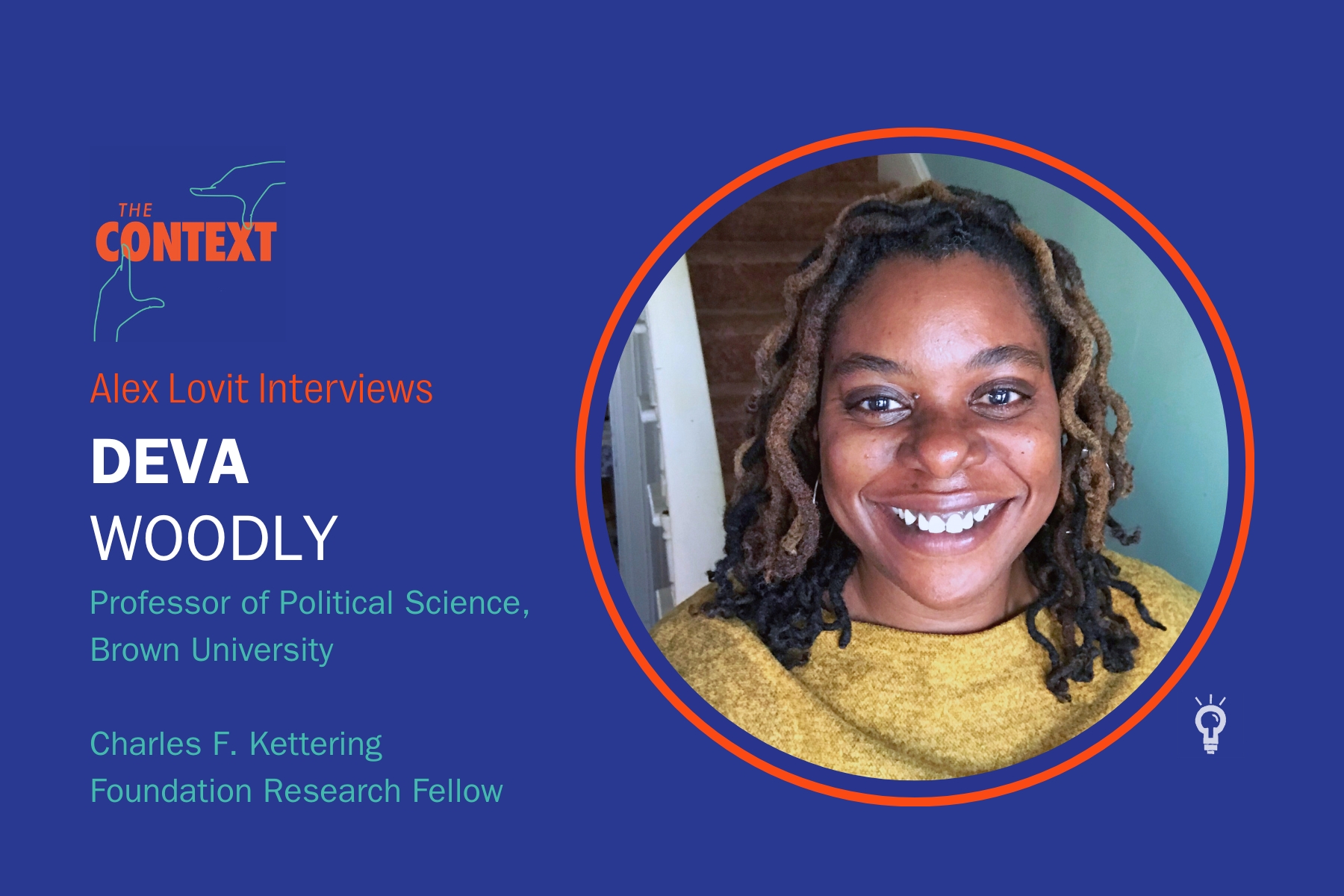 Published On: September 23, 2025
Deva Woodly joins host Alex Lovit to discuss the importance of social movements for American democracy and the role they can play...
