The Myth of Youth Apathy
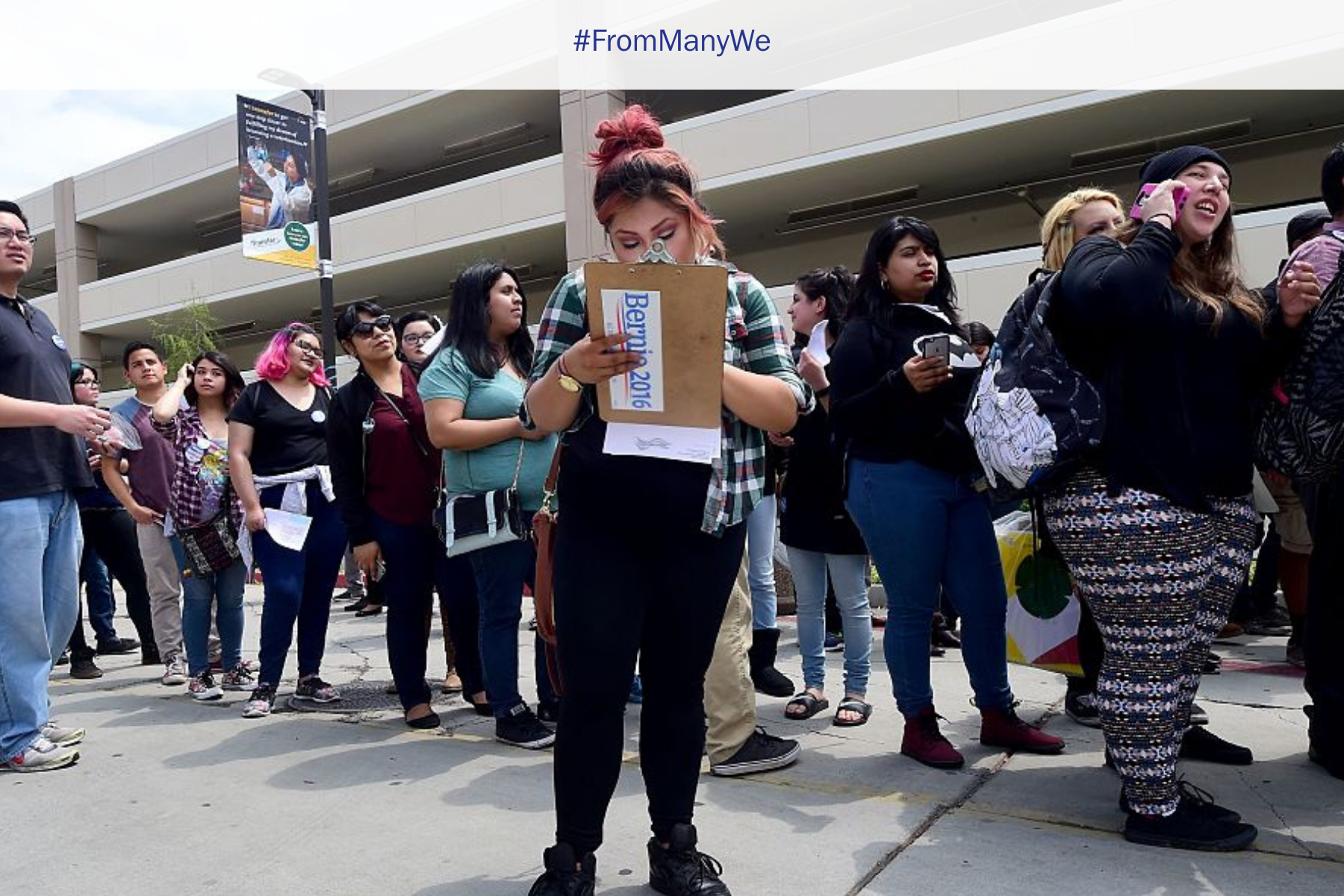
Every time I hear someone say, “Gen Z doesn’t care about democracy,” I wish I could have them spend a day in my shoes as a civically engaged college student. I’ve watched my fellow students negotiate with local election officials to open polling places on campus. Through my work with organizations like the Campus Vote Project, I’ve seen my peers at community colleges, research universities, and HBCUs build diverse coalitions across student government, cultural organizations, and service clubs to help get out the vote. Beyond campus, I’ve seen hundreds of my fellow Gen Zers choose public service careers, not because it’s easy, but because they’re tired of watching problems pile up in their community while our leaders do nothing.
According to Is Democracy Working? the first report from the Kettering-Gallup Democracy for All Project, young adults today are more skeptical of democracy than older generations. But we must not mistake skepticism for apathy. My lived experiences and a wealth of research show that the idea of Gen Z being apathetic about democracy is nothing more than a myth.
The Numbers Tell a Complicated Story
The data from the Kettering-Gallup Democracy for All Project is striking. Just 53% of adults aged 18 to 29 believe democracy is the best form of government compared to 80% of those 65 and older. Moreover, 52% of Gen Z survey respondents claimed that democracy is performing poorly, and only 19% stated that it was functioning well. Unfortunately, these findings are not outliers. Research from Gallup and the Walton Family Foundation found that Gen Zers had extremely low levels of trust in Congress, the news, the presidency, and other democratic institutions, while a recent Harvard Youth Poll revealed that only 13% of young Americans believed that the country was headed in the right direction.
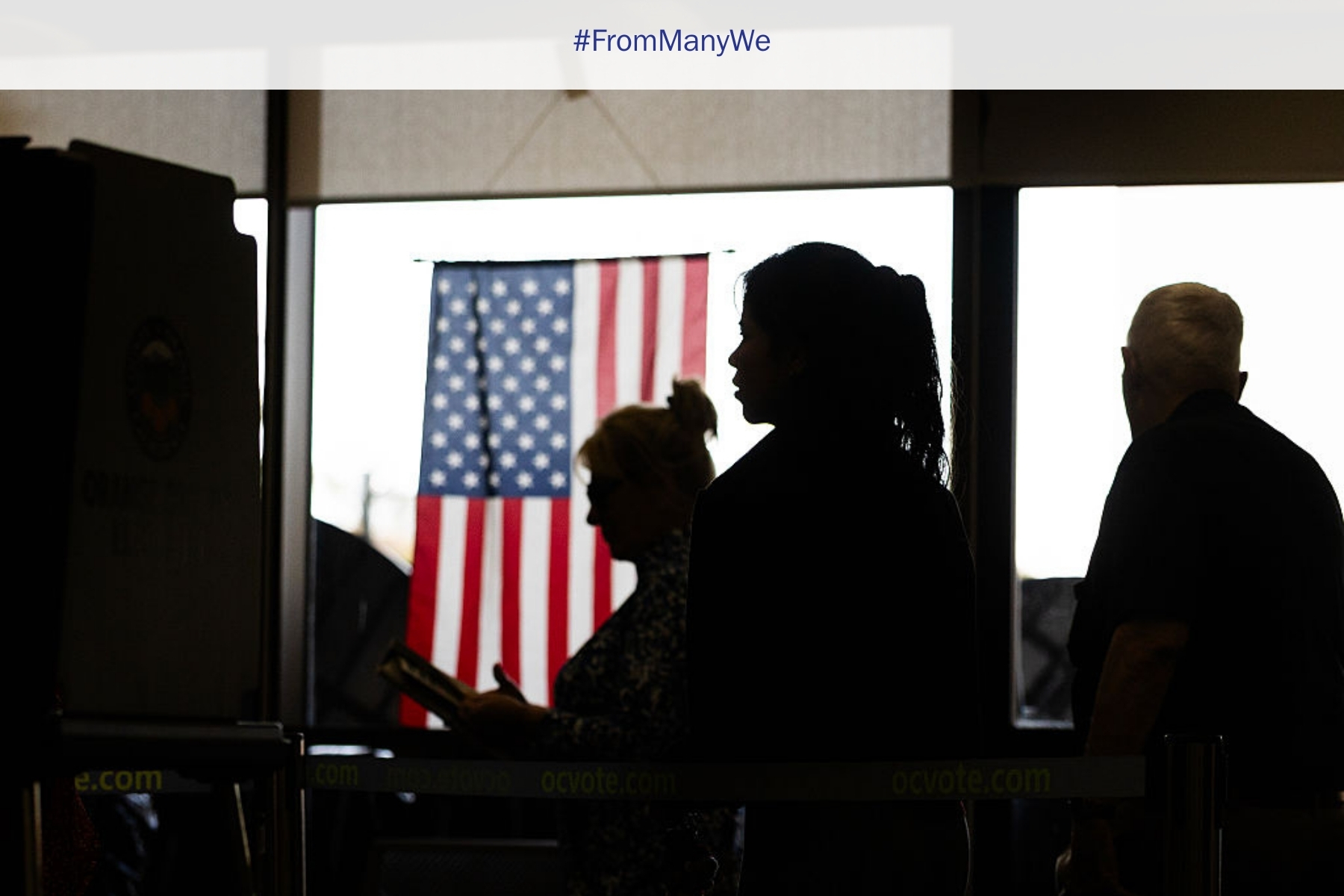
But while Gen Z may have detached or negative feelings toward the current state of American democracy, that does not mean they are disengaged. The Center for Information and Research on Civic Learning and Engagement (CIRCLE) at Tufts University has historically tracked youth voting trends and found that both 2020 and 2024 were historically high years for young adult turnout. As a student at Vanderbilt University, I’ve seen my peers volunteering at tables outside of dormitories, dining halls, and classrooms to register hundreds of fellow students to vote and encourage them to go to the polls. If young people truly didn’t care, they wouldn’t be showing up!
Gen Z’s Skepticism Is Rooted in Experience
So, what’s actually going on? The Democracy for All Project finds that Americans who feel they lack meaningful opportunities to participate in democracy tend to hold less favorable views of the system overall. Among the participation metrics measured, younger adults lag significantly: only 59% of 18- to-29-year-olds believe local voting laws make it easy for people like them to vote, compared to 84% of those 65 and older. Similarly, a recent report from Protect Democracy and CIRCLE found that young people are significantly more likely to feel disconnected from democratic institutions and processes and, as a result, lose trust in the system’s ability to meet their needs.
These perceptions don’t emerge from nowhere. Research from the Movement Advancement Project and The Civics Center documents ongoing barriers that disproportionately affect young and first-time voters, including information gaps driven by a lack of experience, more frequent address changes, less predictable work schedules, and disenfranchising voter ID laws. Meanwhile, many young adults feel that elected officials and other public political figures don’t adequately represent their views. When I talk to my classmates about politics, I often hear them say that today’s politicians and political parties don’t resonate with them, which is precisely why the majority of Gen Z identifies as independents.
Unsurprisingly, the Democracy for All Project also suggests that views of democratic performance are “strongly linked to people’s assessments of their own financial situation.” Young people have real material reasons to doubt that the current system is delivering for them as they face record levels of student debt, a housing affordability crisis, a job market reshaped by the advent of artificial intelligence, and a growing wealth gap.
While Institutions Fail, Our Values Remain Steadfast
Clearly, Gen Z’s skepticism about democracy is not imagined but is grounded in lived experiences. However, despite our widespread pessimism about democratic performance, we still agree on the importance of fundamental democratic values. The Democracy for All Project found that young adults, like most Americans, believe that political leaders should compromise to get things done; that a diversity of races, religions, and cultures makes our country stronger; that political violence is never acceptable; and that every citizen should have the right to vote regardless of their views.
These are not the beliefs of a generation that has given up on democracy. Instead, they are the reflection of a group that understands democracy’s potential but is legitimately frustrated by its current execution. Nearly 62% of young adults report that the design and structure of our nation’s government needs significant change no matter who is elected, and the vast majority still want elected leaders to be chosen in free and fair elections.
How Gen Z Is Responding
So, democracy is not working for young people. The question that remains is, What are we doing about it?
For starters, two-thirds of Gen Zers have volunteered in their community in the past year, exceeding every other generation except for Baby Boomers. A recent survey from the United Way found that a majority of young adults have attended a rally or protest in support of a specific cause or social issue, while around one-third are regularly involved in activism or social justice work. And 90% of young people indicate they care about and feel responsible for their community, while the vast majority of those who are not currently involved expect to take on future roles improving their local area. On an individual level, Gen Zers are making political change by serving in their state legislatures, founding nonprofits dedicated to social impact, and testifying in front of Congress.
As a part of Gen Z myself, I have witnessed many of these efforts firsthand. I’ve seen classmates stand in lines at the polls for nearly 11 hours just to cast their ballot. I’ve watched them launch community literacy programs designed to combat the school-to-prison pipeline. And I’ve joined groups of youth social impact organization founders addressing everything from marine conservation to the decline in local journalism.
Young people are not waiting for democracy to hand them something. They are demanding that democracy live up to the promises it made.
Gen Z’s relationship with the current state of our government is complicated. The data shows real warning signs about young people’s trust in political institutions and policymakers alike. Many members of my generation feel that their voice is unheard and that this system is broken. But that does not mean we have abandoned democratic values, or that we are not taking action to change the world.
Gen Z is still showing up, in communities, at protests, and at the polls. But there is a real danger if we continue to build and maintain systems that make young people feel unable to participate or be effectively represented. And a democracy that does not work for its youngest citizens is a democracy doomed to fail.
Jason Vadnos is an undergraduate at Vanderbilt University and a 2025–2027 Obama-Chesky Voyager Scholar. As a civic impact assistant for Project Pericles, he investigates youth civic engagement in higher education.
From Many, We is a Charles F. Kettering Foundation blog series that highlights the insights of thought leaders dedicated to the idea of inclusive democracy. Queries may be directed to fmw@kettering.org.
The views and opinions expressed by contributors to our digital communications are made independent of their affiliation with the Charles F. Kettering Foundation and without the foundation’s warranty of accuracy, authenticity, or completeness. Such statements do not reflect the views and opinions of the foundation which hereby disclaims liability to any party for direct, indirect, implied, punitive, special, incidental, or other consequential damages that may arise in connection with statements made by a contributor during their association with the foundation or independently. The views and opinions expressed by contributors are likewise made independent of their affiliation with Gallup and without Gallup’s warranty of accuracy, authenticity, or completeness. Such statements do not reflect the views and opinions of Gallup, which hereby disclaims any association with or endorsement of such content.