When Women in Public Life Are Not Safe, Democracy Is Not Safe
Record numbers of women, especially women of color, have stepped boldly into public life in the last decade, reshaping who leads our communities and how decisions get made. They are running for office, serving on school boards and senates, and organizing their neighbors in ways that would have been rare just a generation ago. But this progress has triggered fierce backlash. As more women step forward, coordinated harassment, intimidation, and violence have surged, forcing many to confront a question no person should ever have to ask: Is it safe to lead?
Vote Run Lead, Women’s Democracy Lab, and The Matriots Education Fund work with women at every stage of political leadership, from the moment they consider running to the years they spend governing. We see firsthand the courage it takes to step forward. We also see the threats rising, escalating, and shaping who feels able to participate in public life. When threats force women to leave office, silence their voices, or prevent them from running, democracy itself is diminished.
The political backlash and rising violence are shifting the daily realities and decisions of the women who choose to lead, and stripping communities of leaders who measurably strengthen how government works. Many of the women stepping up to run or raise their hands for appointments are educators, caregivers, organizers, and professionals whose expertise and experiences have long been missing from political decision-making. They often bring years of community involvement and an ear for unmet local concerns. Decades of research consistently demonstrates that when women serve, budgets reflect community needs more accurately, legislative output increases, and bipartisan problem-solving improves. Losing these leaders doesn’t just dampen representation; it weakens the very systems that make government effective.
But today, their service comes with a cost that few people outside politics fully see.
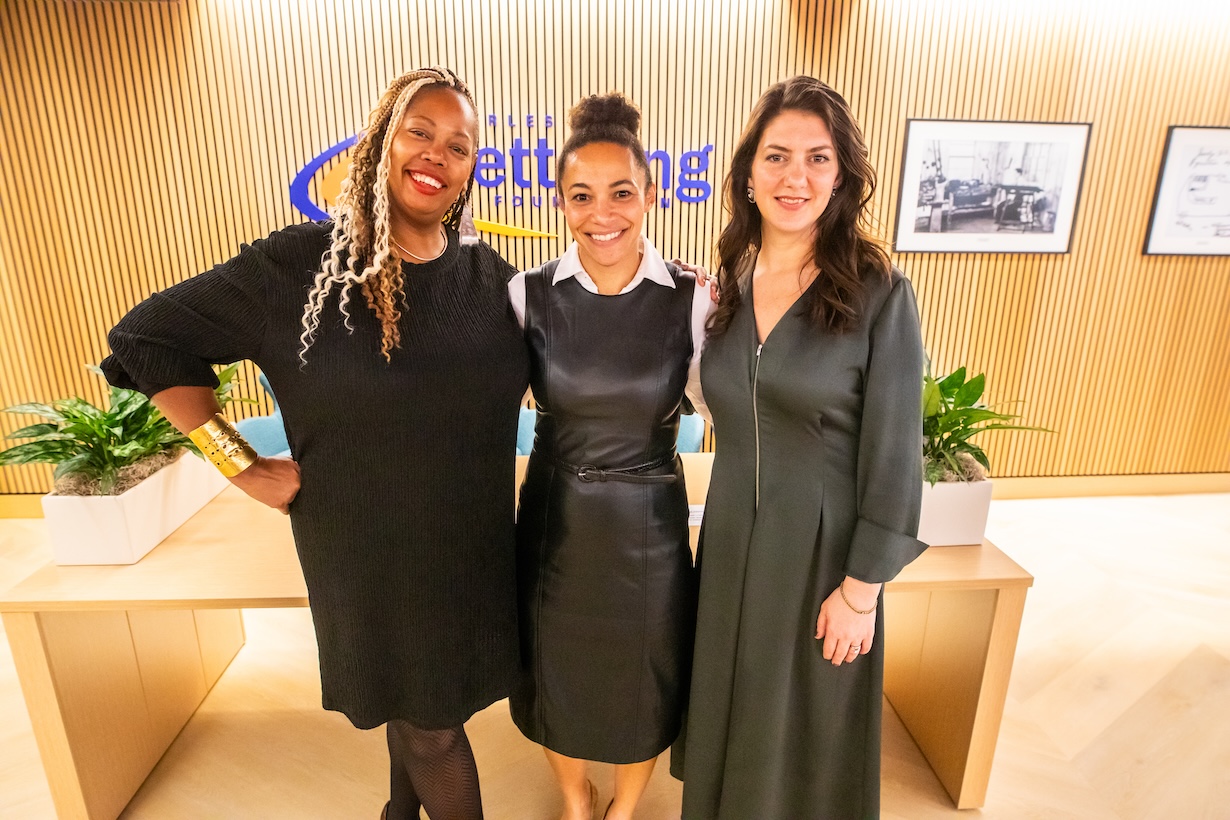
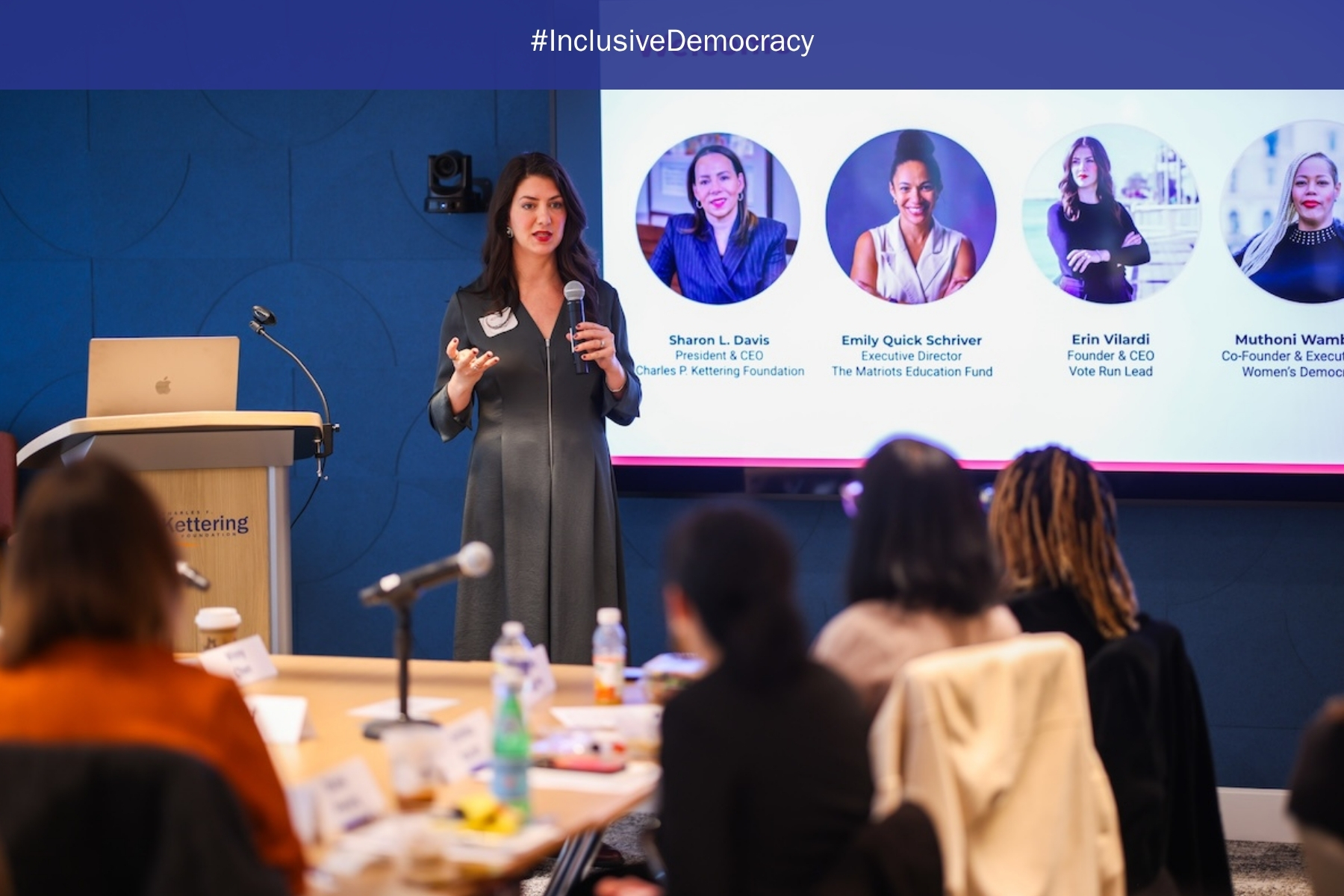
Left to right: Muthoni Wambu Kraal (Women’s Democracy Lab), Emily Quick Schriver (The Matriots Education Fund), and Erin Vilardi (Vote Run Lead) following a discussion on the safety of women in public service at the Kettering Foundation’s Washington, DC office.
At a recent gathering we convened with partners across the democracy ecosystem, hosted by the Charles F. Kettering Foundation, one story captured the reality many women now face. An Ohio school board member, a retired teacher who ran to improve public education, became the target of intense backlash after an online misunderstanding sparked outrage. What followed was not simply criticism. Hundreds of people packed a board meeting demanding her resignation. Emails and messages poured in, rife with vitriol. Threats were daily. She began taking security precautions in her own home. Eventually, the pressure became too much and she resigned from office. Soon, she will leave the state entirely.
Her story is not unique.
In pockets across the country, women are quietly considering stepping away from public leadership, not because they no longer believe in the work, but because the personal risk, frequently extending to the safety of their family members, has become too great. And while we don’t yet have all the data for 2026, our experiences and our peers report that this issue is making it harder to convince women to run than ever before.
Every time this happens, communities lose more than a leader. They lose the ideas, representation, and problem-solving that the leader brought with her.
This Is Not a “Women’s Issue.” It Is a Democracy Issue, Backed Up by Data.
Taken together, these stories reveal that threats women face are part of a coordinated political pattern. It begins online, spreads through coordinated narratives, escalates into threats and harassment in public spaces, and frequently targets women’s identities as much as their policy positions. Black women, trans women, and women at the intersections of race, gender identity, sexuality, and religion experience disproportionate levels of harassment and political targeting. Threats are sexualized, racialized, and increasingly target family. They are far from random. They are rooted in systems that authoritarian movements seek to restore by pushing women, especially women of color, out of candidacy and public office. The evidence is now overwhelming, with emerging data reflecting the scale of what women have long understood.
Political scientist Saskia Brechenmacher makes the connection even clearer in her 2024 Navigating Setbacks report, which maps how gender-based narratives, harassment, and intimidation are strategically deployed by antidemocratic movements to push women out of public life.
At the same time, research from the (En)Gendering Authoritarianism in Action Initiative, including online analysis by Miriam Juan-Torres at the University of California, Berkeley’s Othering & Belonging Institute and Over Zero, shows how gendered disinformation narratives are being used strategically to delegitimize women leaders. These narratives portray women as unfit for power, overly emotional, corrupt, or dangerous to social order with the intent of pushing them out of public life.
The goal is simple: Silence women, strike fear, give voters less choice, and restore older hierarchies of power.
The System around the Problem
One of the clearest insights from our convening is that women’s insecurity in public life cannot be solved by women alone. These gaps make one reality unavoidable: Safety must be treated as a core component of democratic infrastructure. Many institutional gaps exist because our political systems were built within patriarchal and White-dominant norms that never imagined women, let alone women of color, as political leaders.
So, it is not surprising that women facing threats often reach out first to the organizations and communities that encouraged them to run. Our convening showed that they don’t call party leaders, the press, or even police. They call mentors, trainers, and advocacy groups. They turn to the people who helped build their campaigns, and those networks have become first responders. But even these groups lack tools needed for today’s environment as broader systems supporting public servants are often missing or fragmented. Local governments lack clear reporting systems. Campaigns rarely have security infrastructure. Digital harassment spreads faster than institutions can respond.
The result is an ecosystem problem touching technology, law enforcement, philanthropy, political institutions, and civic culture.
Safety Must Be Treated as Democratic Infrastructure
If we want a democracy, women’s safety must be treated as core democratic infrastructure. But changing norms requires more than individual resolve. It demands coordinated action across the entire democracy ecosystem.
This means we must build and scale systems that document and address threats quickly, like Pirth.org, for the 500,000 elected offices in the US. It means ensuring candidates and elected officials have access to digital security tools, legal resources, and crisis support at a local, distributed level. It means new policy at the state and federal level, and new ways to deploy money, like using campaign funds for security, now available in 25 states.
It means supporting the organizations that help women run for office, so they are not left alone when the threats begin. It means the political parties must be held accountable, potentially through demands from the donor class or more representative party leadership. We must have better legal structures that outline how, when, and where harassment is illegal. Technology companies must be reined in, as they have both the research and resources to fix themselves but lack the regulatory accountability to do so.
And it means creating networks of solidarity so that women in public life do not face harassment in isolation because infrastructure alone will not solve the problem. Early-stage research from Vote Run Lead and Future Forward Women shows that women state legislators see being in community with other women as the number one way to increase their safety and security.
We must also confront the cultural norms that allow harassment and intimidation to become normalized in political life because too often, women are told that abuse is simply “part of the job.” That message discourages reporting and isolates those experiencing threats. We reject that framing. Participating in democracy should never require accepting intimidation as the price of leadership. Communities must speak out when women leaders are targeted. Institutions must enforce norms of respectful civic engagement. Political leaders must condemn harassment and violence directed at women, clearly and consistently. Silence enables intimidation. Accountability interrupts it.
A Call to the Democracy Ecosystem
This moment demands more from all of us. Protecting women in public life cannot remain the responsibility of women alone. It requires action from across the democracy ecosystem, including funders, technology platforms, civic institutions, policymakers, and community leaders.
If women cannot safely serve, democracy cannot fully function.
Vote Run Lead, Women’s Democracy Lab, and The Matriots Education Fund convened this conversation because the stakes are too high to ignore. The women stepping into leadership today are not only representing their communities; they are also strengthening democracy itself. They deserve systems that protect them, networks that support them, and a civic culture that values their leadership.
Our democracy depends on it.
Erin Vilardi is the founder and CEO of Vote Run Lead. Muthoni Wambu Kraal is the cofounder and executive director of Women’s Democracy Lab. Emily Quick Schriver is the president of The Matriots Education Fund.
The views and opinions expressed by contributors to our digital communications are made independent of their affiliation with the Charles F. Kettering Foundation and without the foundation’s warranty of accuracy, authenticity, or completeness. Such statements do not reflect the views and opinions of the foundation which hereby disclaims liability to any party for direct, indirect, implied, punitive, special, incidental, or other consequential damages that may arise in connection with statements made by a contributor during their association with the foundation or independently.