The Federal Reserve’s Independence Is Under Attack
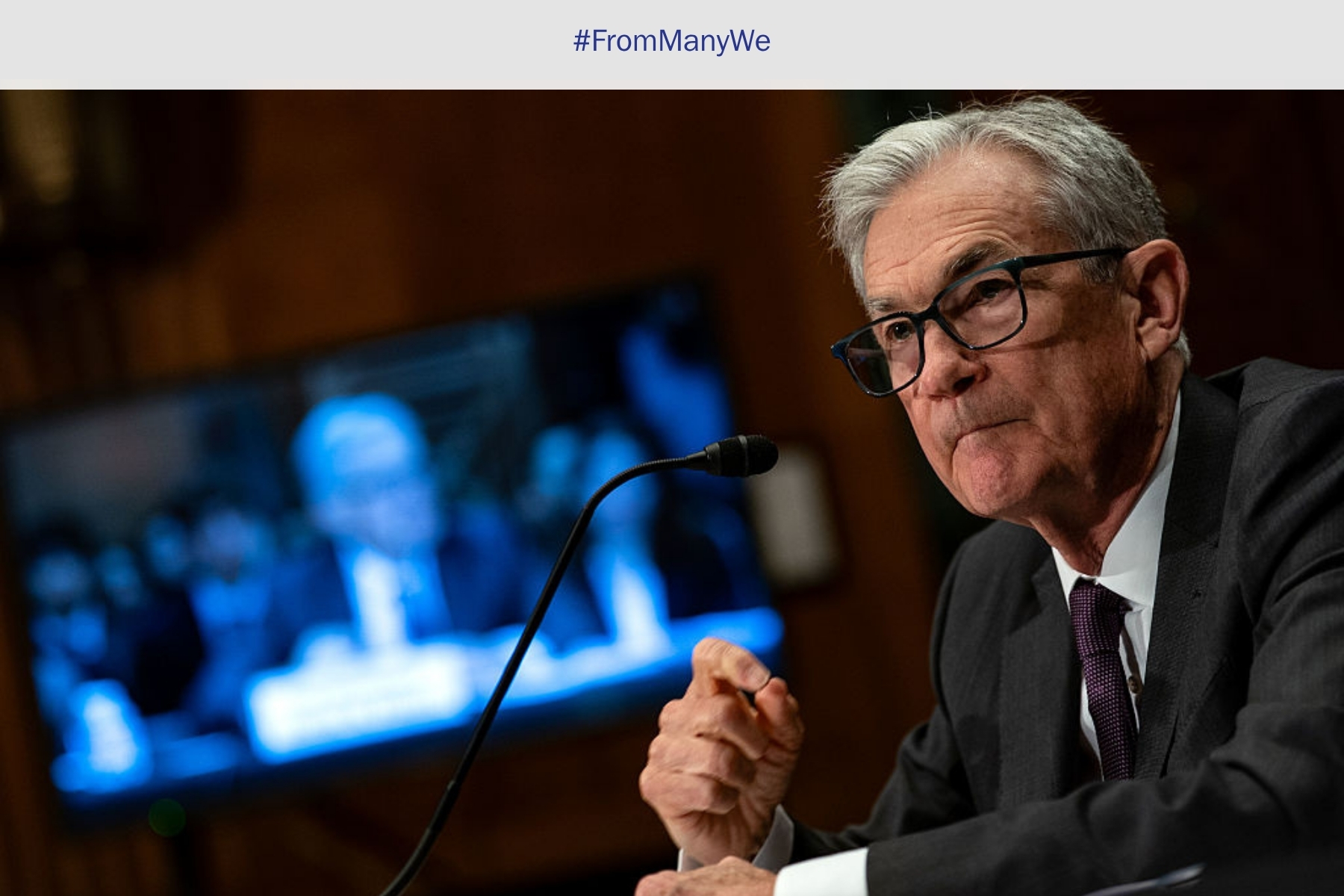
Photo by Kent Nishimura/Getty Images.
It’s been a turbulent time at the Federal Reserve since US President Donald Trump returned to power in 2025. Trump has regularly lashed out at Fed chair Jerome Powell for not lowering interest rates far enough, threatened to force Powell out of his position, and even launched a criminal investigation against Powell that many observers deem to be politically motivated. Despite Trump’s threats, as noted by Kettering Senior Fellow Judge Michael Luttig, Powell has been unwavering as he promises to pursue monetary policy absent political interference.
Should all go according to Trump’s plan, however, Trump loyalist Kevin Warsh will replace Powell as chair later this year, and Warsh’s monetary policy would likely reflect Trump’s preferences. This shift will be consequential for the economic outlook of the United States and the pocketbooks of ordinary Americans. With a loyalist at the helm of the Federal Reserve, the country’s central bank charged with steering monetary policy, we are likely to see a dramatic reduction in its independence.
A large body of research has firmly established that central bank independence is critical to ensuring lower and more stable inflation. Politicians tend to prioritize short-term economic growth over long-term price stability as a means of boosting their popularity. Independence is thus needed for the Fed to fulfill its statutory mandate of promoting “maximum employment, stable prices, and moderate long-term interest rates.” With the Fed no longer shielded from political pressure, higher and more unpredictable inflation in the US is likely in the years to come.
Republican Party elites have done little to push back against Trump’s efforts to control the Fed even though it runs against established practice and economic wisdom. Their acquiescence is unsurprising, however, given that the party has evolved into a vehicle to advance Trump’s career and interests rather than promoting a clear, conservative policy agenda.
The president’s attempt to assert control over the Fed is consistent with global patterns. Political personalism (where leaders hold disproportionate influence over their political party) leads to efforts to diminish the power of independent institutions, including central banks. With the rise of political personalism worldwide, this suggests that we are entering an era of inflation, volatility, and uncertainty.
How Central Banks Keep Inflation in Check
Most Americans have negative views on inflation, and with good reason. At the most basic level, inflation increases the cost of living and devalues savings. Absent comparable wage increases, your money is worth less. The negative effects of inflation are disproportionately worse for low-income households, which tend to be younger and are more likely to be racial minorities. As Powell recently noted, “The burdens of high inflation fall heaviest on those who are least able to bear them.” To be clear, not all inflation is harmful. Rather, the consensus among economists is that low and predictable inflation keep an economy healthy.
In most countries, the task of maintaining a healthy economy is delegated to the central bank. Central banks set monetary policy with an eye toward keeping inflation stable and in check. One way they do this is by adjusting interest rates: higher interest rates lead to less borrowing and spending and can thus lower inflation, whereas lower interest rates lead to more borrowing and spending and can thus increase inflation. As an example, people often rush to buy homes when mortgage rates are low, but hold off when mortgage rates are high.
Independence Is Critical
Political leaders, however, do not always share the same goals as their central banks. Seeking to win and maintain political office, leaders prioritize what is best for them in the short term and tend to care less about inflation and more about economic growth. One way to ensure commitment to low inflation is to protect central banks from the interference of political leaders and enact policies that ensure central bank independence.
A large and robust body of research shows that greater central bank independence helps governments credibly signal that they are committed to sound monetary policy, leading to both lower and more stable inflation. Independence enables central banks to fulfill their role as “guardians of stability.” It allows them to focus on what is best for the long-term health of the country’s economy rather than whatever is best right now for the popularity of the political leadership.
There is broad consensus among economists on the importance of central bank independence, and efforts to weaken it are uncommon in established democracies. That said, we do see attacks on the independence of central banks in backsliding contexts, such as Turkey and Venezuela, particularly when personalist leaders are at the helm.
How Personalism Harms Central Bank Independence
Personalist leaders seek to control all domains of the state, and the central bank is no exception. A more independent central bank means the leader has less power and influence over monetary policy. To ensure that the central bank cannot handcuff them, personalist leaders are willing to accept the negative economic consequences that come with politicizing monetary policy.
When leaders come to power backed by personalist parties—as with Nayib Bukele and his New Ideas Party in El Salvador and Bidzina Ivanishvili and the Georgian Dream Party in Georgia—elites get in line behind the leader’s choices, regardless of how foolish they may be. Because personalist parties are top-heavy organizations where leaders typically control party resources and candidate nominations, political careers rise and fall based on loyalty to the leader. For this reason, personalist leaders do not face pushback from their party elite when they pursue policies that run counter to economic wisdom, such as weakening central bank independence.
Looking at ruling party personalism in democracies around the globe from 1991 to 2020, the data show that greater personalism leads to more attacks on central bank independence. Personalist leaders are more likely to try to coerce their central bank to loosen monetary policy and implement changes that lower the bank’s independence or prevent its expansion.
In this way, the election of leaders backed by personalist parties is a red flag for economic stability, particularly with respect to patterns of inflation.
The Outlook for the US
With Trump likely to succeed in installing a loyalist to chair the Fed soon, the Fed could be less likely to operate as a politically independent body. This is transpiring even though the Fed’s independence is something that has traditionally had strong bipartisan support.
To be clear, this is not the first time Trump has sought to bend the bank to his will, nor is he the first president to do so. Trump has long seen the Fed’s control over interest rates as an obstacle to his influence. And administrations ranging from Truman to Reagan have tried to exert substantial pressure on the Fed to shift monetary policy amid dire economic times, though the ability to do so was limited by staunch Fed leadership. That said, much has changed since Trump’s first term, particularly his control over the Republican Party.
This personalist shift in the Republican Party explains why Trump’s efforts to secure control over the Fed are apt to succeed the second time around. Higher and unpredictable patterns of inflation in the US are therefore likely on the horizon and will have negative economic repercussions for ordinary Americans. In this way, Trump’s battle with the Fed, and his broader expansion of executive power, directly harms the people he serves.
Erica Frantz is an associate professor of political science at Michigan State University and is a Charles F. Kettering Foundation research fellow.
From Many, We is a Charles F. Kettering Foundation blog series that highlights the insights of thought leaders dedicated to the idea of inclusive democracy. Queries may be directed to fmw@kettering.org.
The views and opinions expressed by contributors to our digital communications are made independent of their affiliation with the Charles F. Kettering Foundation and without the foundation’s warranty of accuracy, authenticity, or completeness. Such statements do not reflect the views and opinions of the foundation which hereby disclaims liability to any party for direct, indirect, implied, punitive, special, incidental, or other consequential damages that may arise in connection with statements made by a contributor during their association with the foundation or independently.