Why Is There Silence in Caracas?
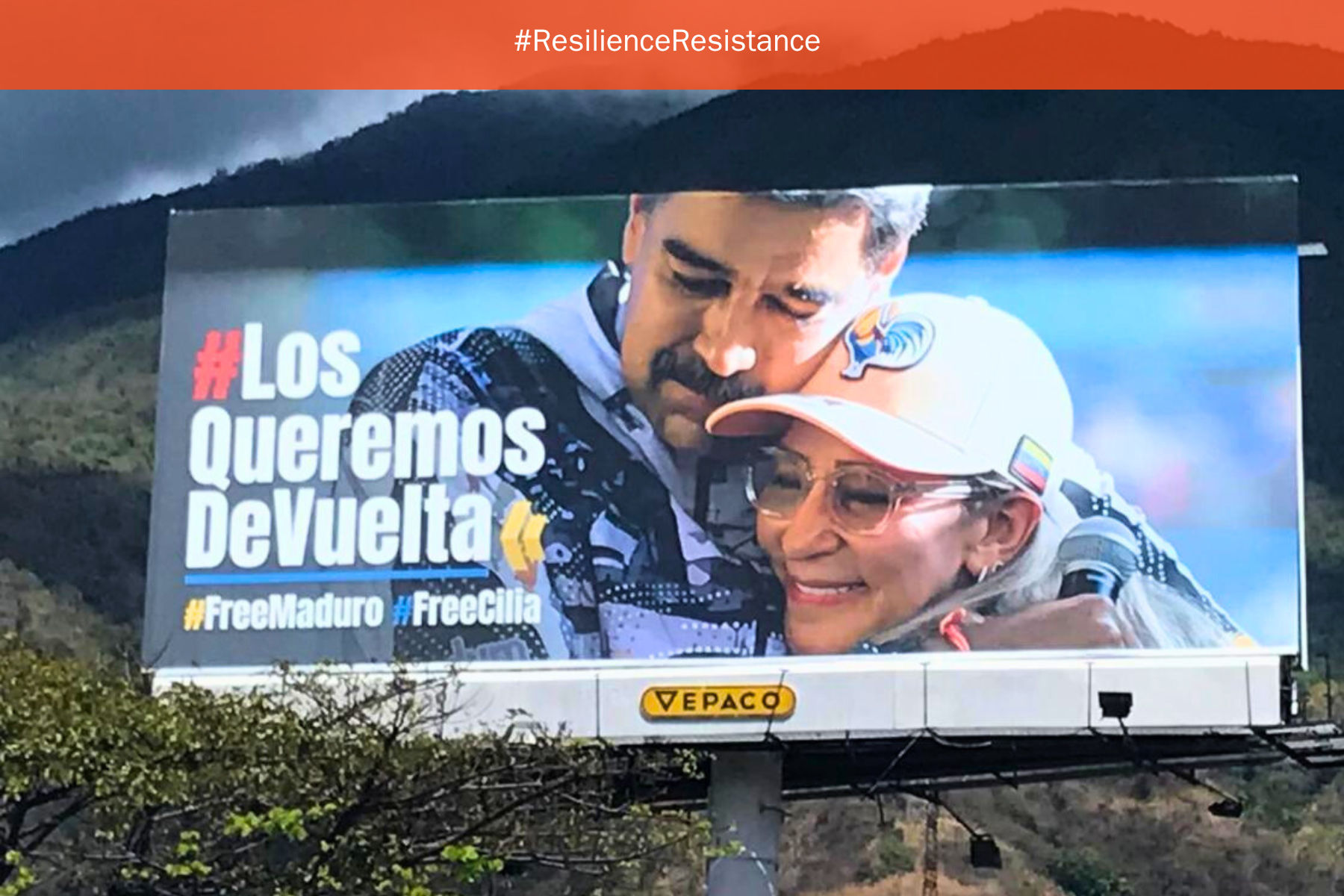
Since January 3, 2026, billboards like this one calling for the return of Nicolás Maduro and his wife Cilia Flores have gone up around Caracas.
Desde enero 3, 2026, están apareciendo vallas como ésta alrededor de la ciudad de Caracas, pidiendo que traigan de vuelta a Nicolás Maduro y Cilia Flores.
The author’s identity has been withheld to protect their safety.
The January 3, 2026, capture of dictator Nicolás Maduro by the United States marked a decisive moment in Venezuela’s recent history. The show of force generated a wide range of reactions across South America and in the Venezuelan diaspora. There were lively street celebrations among Venezuelans living in Buenos Aires and Madrid, while concerns about international law were expressed in capitals such as Bogotá and Brasília. In the United States, “Operation Absolute Resolve” seems to have widened the gap between Democrats and Republicans.
However, within Venezuela there has been neither unbridled euphoria nor sharp denunciation. There weren’t even massive demonstrations of rejection or anger. How the events were experienced and interpreted within the country differs greatly from what has been reported elsewhere. This silence contrasts not only with what was reported outside the country, but also with past demonstrations inside the country for or against the regime.
A Fragmented Reality
After years of censorship, forced acquisition or bankruptcy of independent media, and the imprisonment and persecution of journalists, the Venezuelan government, like those in many other authoritarian countries, has exercised tight control over traditional media (TV, press, radio). In addition, the Venezuelan regime has established effective mechanisms for information and propaganda through its own official media.
However, technological development and the evolution of the media have hampered the dictatorship’s absolutist aspirations for media and narrative control. The decentralized, immediate, asynchronous, transnational, and easily accessible nature of digital platforms has made it difficult for the Venezuelan state to control them. The regime has tried various strategies to control the media, but many efforts have had limited success:
- Blocking certain platforms to limit access, but many of these blocks can be circumvented through the use of VPNs.
- Using content creators who use bots and fake accounts to spread rumors, orchestrate intimidation campaigns against opponents, and disseminate information favorable to the regime, however this approach has had limited results due to the algorithms that isolate such accounts.
- Criminalizing of the most critical expressions through instruments such as the “Anti-Hate Law,” which has been used to pass sentences against opponents and ordinary citizens who try to defend their rights.
These efforts have not silenced people who are reporting from outside the country or who use aliases. What has emerged is an eclectic digital space made up of YouTubers, X and Instagram influencers, streaming channels, and podcasters who offer alternative narratives and information not found in traditional media. WhatsApp messages further serve as a communication thread of viral but discreet messages. These efforts continue despite the government’s attempts to control the app, including by imprisoning people who use the app to disseminate information.
Repression has also silenced the voices of protest in the streets. Not only were the large demonstrations of 2001, 2004, 2014, and 2017 shut down but also Venezuelans who remained in the country have shifted from confrontation to a more cautious and discreet form of protest. Forced disappearances, torture, neighborhood patrols, and the use of mobile apps to identify those who oppose the government have changed their tactics.
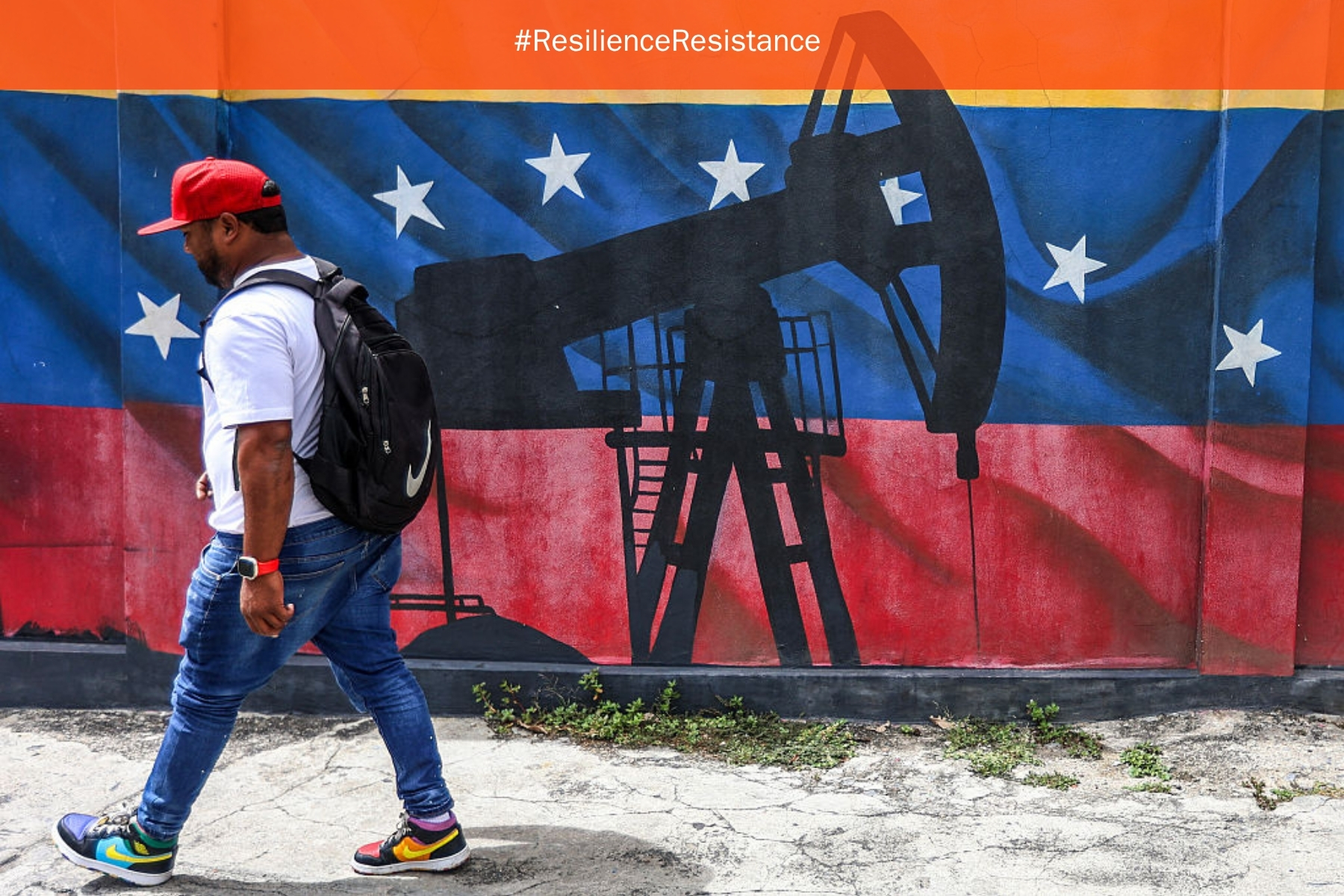
Today, the streets of Venezuela are peaceful, with no visible political upheaval. Billboards with images of Nicolás Maduro and Hugo Chávez have been recently installed and confirm the official narrative control that the government exercises over the country. Now, the counter and contrasting narratives are limited to the most intimate sphere—the home.
The result is that Venezuelans live in a fragmented reality in which everyone knows what is happening, but no one says anything. This disconnect between what is perceived and what is communicated has created a language of signs and silences. A typical conversation on the street between two acquaintances might go something like this:
—Did you see what happened to…?
—Oh, yes!
—How was it? It happened, it happened!
Such an exchange, laden with pauses and unspoken observations, reflects the survival instinct of a population that has learned that stating aloud what is happening can be dangerous. Mutual understanding does not require explicit details; a vague confirmation is enough to validate that both parties inhabit the same uncertainty.
These dynamics help explain the deafening silence in response to the events of January 3. Just weeks earlier a similar situation occurred when opposition leader María Corina Machado was awarded the Nobel Peace Prize. In Venezuela, government officials avoided references to Machado, or they branded her a “promoter of wars” and claimed that the prize had been bought. The national media echoed these narratives, and the few journalists who dared mention her or the prize were taken off the air.
Inside homes and offices, people listened with hope and surprise to the speeches of Jørgen Watne Frydnes, the chair of the Nobel Committee, and to Machado’s daughter, Ana Corina Sosa. But no one applauded. In the streets, people appeared oblivious. It was just another day. No one even seemed worried that she had not attended the award ceremony, as they knew she would arrive in Oslo at some point. Venezuelans are sometimes like that: we arrive late, but we arrive.
January 3: A Report from the Field
To understand the silence within Venezuela, it is necessary to recount what happened on the ground, where the three realities intermingled during the early hours of January 3.
The first explosion was heard around 2:00 a.m. in Caracas. I jumped up and saw a column of fire rising from La Carlota Air Base. In a fraction of a second, more explosions could be heard in the distance, and several columns of smoke rose above the horizon. I was paralyzed, not by fear, but by doubt. The effect of so much official denial made me doubt my senses. It wasn’t until a neighbor shouted that La Carlota was being bombed that I understood what was happening. We were in the midst of a “Yankee” attack.
Weeks earlier, social media had been filled with explosions of boats in the Caribbean and the capture of oil tankers. There was talk online of aircraft carriers and submarines, but inside the country we were told nothing. What’s more, the government denied that attacks the US president claimed to have carried out were happening. As weeks went by, we Venezuelans stopped taking the threat of ground attacks seriously. We thought that if they did happen, they would blow up something distant and insignificant.
Thanks to past coups d’état, Venezuelans have vivid memories of military confrontations. We know that when there is conflict in Caracas, the sounds of long guns, artillery, explosions, and shouting can be heard. We can distinguish between FAL (light automatic rifle) shots, machine guns, and grenade launchers. We remember that warplanes break the sound barrier with a loud roar. We are not surprised by seeing military personnel and tanks can be seen in the streets. We instantly recognize the sound of the dreaded swarms of motorcycles belonging to the colectivos, or pro-government paramilitary groups, as they travel through the city. Military violence is not foreign to us.
On January 3, there was none of that. That night, apart from the detonations of a limited number of bombs whose fires seemed to extinguish themselves, nothing could be heard or seen. No one was shouting; there were no sirens or tanks. The streets were silent. Days later, word spread of shots fired at Fuerte Tiuna, a military installation in Caracas, and the Minister of Defense Padrino López spoke of casualties. But that dawn, everything was quiet.
After the first explosions, calls and videos began to arrive via WhatsApp. Videos that were posted on Instagram or X were recorded by YouTubers broadcasting live and, the next day, were seen on international news programs. The platforms explained the reality to us: we relived the explosions we had witnessed as well as those we had not been able to see. We watched the helicopters crossing the Caracas sky and we learned that other locations had also been bombed.
There were also rumors that were difficult to verify. Here is an important detail: the “real time” of digital platforms is not so real. There is a delay in the dissemination of information that creates uncertainty. Recording, uploading, and sharing takes time. That night we learned that those minutes can seem like years. We discovered that, sometimes, social media moves slower than reality. This was evident because while we were watching the explosions on our cell phones, calm had already returned outside our window; the silence was only interrupted by distant, invisible planes.
About 4:00 a.m., Donald Trump publicly announced Nicolás Maduro’s capture with a photograph. While that announcement was dramatic enough to elicit a reaction, no one reacted, either positively or negatively, at least not publicly. This is not just a numbing of the senses; it is pure survival instinct. The Venezuelan people have often been deceived or betrayed. For example, on April 11, 2002, President Hugo Chávez was overthrown only to return triumphantly on April 13. In 2015, the opposition won a majority of seats in the National Assembly, but leaders of the ruling party convened a National Constituent Assembly to overturn the opposition’s victory. And more recently, on July 28, 2024, Maduro’s regime was defeated at the polls, but the opposition’s victory was ignored by the National Electoral Council. In all of these circumstances, premature celebrations ended as traps, killing all hope for the rest of us.
Partial clarification came in the morning when Padrino López appeared on television and confirmed that Maduro had been taken. Hours later, Diosdado Cabello, the Minister of Interior, Justice and Peace, activated the decree for the State of External Commotion, which eradicated all constitutional guarantees. From that point on, things continued on their paradoxical course: in the official media, the “Rodrigato” (siblings Delcy and Jorge Rodríguez) spoke of success in defending Venezuela’s sovereignty. Then, in a solemn ceremony, Vice President Delcy Rodríguez was named interim president and the “campaign” to bring Maduro back began.
On social media, Trump said he was ruling Venezuela.
In the streets, little or nothing happened. There were lines at supermarkets for a day or two. But for the average Venezuelan, nothing had changed: the same unemployment, failures in basic services, high inflation, and an increasing fear of being arbitrarily detained by repressive forces.
What Does This Mean?
The silence in Caracas is a symptom of the continued stifling of public space, including efforts to dominate digital spaces. The fear of repression remains. Added to this is the revelation that Venezuelans have only been spectators to a geopolitical plot decided in foreign offices. This has inhibited citizens from demanding the determinism that they deserve, or at least from openly celebrating the possible changes that they are witnessing.
Ultimately, the capture of Nicolás Maduro has not brought about the immediate institutional transformation that many had hoped for. The country finds itself caught between Washington’s pragmatism and the resilience of a Venezuelan political elite that adapts to preserve its existence. Venezuela’s future does not depend solely on the fall of one individual but on civil society’s ability to claim its place in negotiations to which it has not been invited. True democratization will begin when stability ceases to be an agreement of convenience among elites and becomes a guarantee of rights for all citizens.
¿Por qué hay tanto silencio en Caracas?
El nombre del autor ha sido ocultado para proteger su seguridad.
La captura del dictador Nicolás Maduro, ocurrida el pasado 3 de enero, significó una coyuntura decisiva en la historia reciente de Venezuela. El evento de fuerza generó las más diversas reacciones en todo el continente y en la diáspora venezolana. Se registraron, por ejemplo, celebraciones callejeras en Buenos Aires y Madrid, mientras se leía sobre preocupaciones por el derecho internacional en capitales como Bogotá o Brasilia. Incluso en los propios Estados Unidos, la operación “Determinación Absoluta” parece haber incrementado la brecha entre demócratas y republicanos.
Sin embargo, no hay registros de euforia desbordada o rechazo extremo dentro de Venezuela. Ni siquiera hay grandes manifestaciones de repudio o dolor. Este silencio contrasta no solo con lo registrado fuera del país, sino incluso con manifestaciones pasadas a favor o en contra del régimen.
La realidad fragmentada
Tras años de censura, la adquisición forzosa o bancarrota de medios independientes, el encarcelamiento y persecución de periodistas, el gobierno venezolano como muchos otros países autoritarios, presenta un férreo control de los medios de información tradicionales (TV, prensa, radio). Además, el régimen venezolano ha establecido un mecanismo efectivo de información y propaganda a través de sus propios medios oficiales.
Pero el desarrollo tecnológico y la evolución de los medios han dificultado las aspiraciones absolutistas de control mediático y narrativo de la dictadura. La naturaleza descentralizada, inmediata, asincrónica, transnacional y de fácil acceso de las plataformas digitales ha dificultado su control por parte del Estado venezolano. Distintas estrategias han sido probadas con éxito limitado:
- El bloqueo de ciertas plataformas para limitar su acceso, que ha sido burlado por la población mediante el uso de VPN.
- La conformación de grupos de creadores de contenido que usan bots y cuentas falsas para diseminar rumores, articular campañas de amedrentamiento contra opositores y difundir información favorable al régimen, con resultados limitados gracias a la naturaleza de los algoritmos que aíslan dichas cuentas.
- La criminalización de las expresiones más críticas mediante instrumentos como la “Ley contra el Odio”, que ha servido para dictar sentencias contra opositores y ciudadanos comunes que intentan defender sus derechos.
Estos esfuerzos no han silenciado a quienes informan desde fuera del país o quienes usan alias desde dentro. Se cuenta, entonces, con un espacio discursivo digital más ecléctico confomado por youtubers, influencers de X e Instagram, canales de streaming y podcasts que ofrecen narrativas alternativas e información que no se encuentra en otros medios. Además, los mensajes de WhatsApp sirven para la comunicación “boca a boca” y generan mensajes virales pero discretos, aun cuando el gobierno ha intentado controlar también esta aplicación y ha encarcelado a personas por difundir mensajes en ella.
La represión también ha acallado las voces de protesta en las calles. No solo se apagaron las grandes manifestaciones de 2001, 2004, 2014 y 2017. El venezolano que se quedó en el país ha pasado de una actitud confrontativa a una más cautelosa y discreta en sus protestas. Las desapariciones forzosas, las torturas, pero también las patrullas vecinales y el uso de aplicaciones móviles para identificar a quienes se oponen al gobierno, han contribuido a este apaciguamiento.
Las calles en Venezuela hoy son apacibles, calmadas y sin mayores sobresaltos políticos visibles. Además, la presencia visual a través de vallas con imágenes de Maduro y Chávez ratifica en el mundo físico el control narrativo que el gobierno ejerce sobre el país, reduciendo contra-narrativas y otros discursos alternativos a lo más íntimo de los hogares.
El resultado es que en Venezuela se vive en una realidad fragmentada, donde todo el mundo sabe qué sucede, pero nadie dice nada. Esta desconexión entre lo que se percibe y lo que se comunica ha creado un lenguaje de señas y silencios, donde una típica conversación en la calle entre dos conocidos puede transcurrir de la siguiente manera:
—¿Viste lo de…?
—¡Ah, sí!
—¿Qué tal? ¡Y pasó, pasó!
Este intercambio, cargado de elipsis, refleja el instinto de supervivencia de una población que ha aprendido que nombrar los hechos puede ser peligroso. El entendimiento mutuo no requiere de nombres propios ni de detalles explícitos; basta con una confirmación vaga para validar que ambos habitan la misma incertidumbre.
Estas dinámicas pueden explicar el silencio ante los eventos del 3 de enero. Un antecedente inmediato se vivió semanas antes, cuando se le entregó el premio Nobel a la líder opositora María Corina Machado en Noruega, los personeros del gobierno evitaron referirse al evento o la tildaron de “promotora de guerras”, afirmando que el premio había sido comprado. Los medios nacionales replicaron estas versiones o evitaron mencionar el tema, y los pocos periodistas que se atrevieron a hacerlo fueron sacados del aire.
En las casas u oficinas, se oyeron los discursos del presidente del Comité Noruego del Nobel, Jørgen Watne Frydnes y a la hija de María Corina, Ana Corina Sosa, con sorpresa y esperanza. Pero nadie aplaudió. En las calles, nadie se dio por enterado. Fue otro día normal. Ni siquiera preocupó que María Corina no hubiese asistido a la ceremonia de entrega, pues se sabía que llegaría a Oslo en algún momento. Los venezolanos a veces somos así: llegamos tarde, pero llegamos.
3 de enero: relato desde el terreno
Para comprender el silencio dentro de Venezuela, es necesario relatar lo ocurrido desde el terreno, donde las tres “realidades” se entremezclaron durante la madrugada del evento y las horas siguientes.
Cerca de las 2:00 a. m., se escuchó la primera explosión en Caracas. Me levanté de un salto y pude ver una columna de fuego elevarse desde la base aérea La Carlota. En fracciones de segundo se oyeron más explosiones lejanas y varias columnas de humo emergieron sobre el horizonte. Me quedé paralizado; no de miedo, sino por la duda. El efecto de tanta negación oficial hacía que dudase de mis sentidos. No fue hasta que un vecino gritó que estaban bombardeando La Carlota que comprendí qué estaba pasando. Ahí entendimos que estábamos en medio del anunciado ataque yanqui.
Semanas atrás, las redes mostraban explosiones de lanchas en el Caribe y capturas de buques petroleros. Se hablaba de portaaviones y submarinos, pero adentro no se nos decía nada. Es más, se negaban ataques que el presidente de EE. UU. afirmaba haber realizado. Con el paso de las semanas, los venezolanos dejamos de tomarnos en serio la amenaza de ataques terrestres. Pensábamos que, de ocurrir, volarían algo lejano e intrascendente.
Además, los venezolanos tenemos recuerdos muy vívidos de enfrentamientos militares gracias a los golpes de Estado pasados. Sabemos que cuando hay conflicto en Caracas hay mucho ruido de armas largas, artillería, explosiones y gritos. Sabemos distinguir entre disparos de FAL, ametralladoras y lanzagranadas. También recordamos que los aviones de guerra rompen la barrera del sonido con un gran estruendo. No nos sorprende ver efectivos militares en las calles y reconocemos en seguida los temidos enjambres de motorizados de los “colectivos” recorriendo la ciudad. La violencia militar no nos es ajena.
El 3 de enero no hubo nada de eso. Esa noche, más allá de las detonaciones de un limitado número de bombas cuyo fuego parecía extinguirse por sí mismo, no se escuchaba ni se veía nada. Nadie gritaba; no hubo sirenas ni tanques. Las calles estaban en silencio. Días después se regaría la voz de disparos en Fuerte Tiuna y el Ministro de la Defensa habló de bajas. Pero esa madrugada todo fue inusual.
Lo que no se veía en las calles se registró por el celular. Tras las primeras explosiones, comenzaron a recibirse llamadas y videos por WhatsApp. Videos que luego vimos en Instagram o X, citados por youtubers que transmitían en vivo y, al día siguiente, en noticieros internacionales. Las plataformas nos explicaban la realidad: revivimos las explosiones que atestiguamos minutos antes y aquellas que no pudimos ver. Miramos los helicópteros cruzando el cielo caraqueño que muchos no pudimos distinguir con nuestros ojos. Supimos que los ataques no fueron solo en Caracas, sino que otras localidades también fueron bombardeadas.
También corrían rumores difíciles de verificar. Un detalle importante es que el “tiempo real” de las plataformas digitales no es tan real. Hay un retraso en la diseminación de la información y una persistencia post-evento que genera incertidumbre. Grabar, subir y compartir lleva tiempo. Esa noche aprendimos que esos minutos pueden parecer años. Descubrimos que, en ocasiones, las redes sociales van más lento que la realidad. Esto se evidenció porque mientras veíamos las explosiones en nuestros móviles, en la ventana ya había vuelto la calma y el silencio solo era interrumpido por aviones lejanos e invisibles.
Cerca de las 4:00 a. m., Donald Trump publicó el anuncio de la captura de Nicolás Maduro con una fotografía. Si este ataque no se parecía a nada vivido, ese anuncio era lo suficientemente contundente como para reaccionar. Pero nadie reaccionó, ni para bien ni para mal, al menos en público. No es solo la enajenación de los sentidos; es instinto de supervivencia puro. Muchas veces la población venezolana ha sido engañada o traicionada. El 11 de abril de 2002 se derrocó a Chávez y este volvió triunfante el 13 de abril siguiente. En 2015, la oposición ganó la mayoría de escaños en la Asamblea Nacional y Maduro convocó a una Asamblea Nacional Constituyente para anular el triunfo opositor. Y más recientemente, el 28 de julio de 2024, la oposición derrotó en las urnas al régimen de Maduro, pero su triunfo fue desconocido por el Consejo Nacional Electoral. En todas esas circunstancias, las celebraciones adelantadas terminan siendo una trampa “cazabobos” que matan toda esperanza.
La aclaratoria parcial llegaría en la mañana cuando se vio a Padrino López en la televisión confirmando que se habían llevado a Maduro. Horas más tarde aparecería Diosdado Cabello activando el Decreto de Conmoción Exterior, que erradicaba todas las garantías constitucionales. A partir de entonces, las cosas continuaron su cauce paradójico: en los medios oficiales, el “Rodrigato” (el poder de los hermanos Delcy y Jorge Rodríguez) hablaba de éxito en la defensa de la soberanía. En un acto solemne, nombraron a la vicepresidenta como “Presidenta interina” y se declararon en campaña para lograr la vuelta de Maduro.
En las redes, Trump decía que gobernaba Venezuela.
En las calles, poco o nada pasaba. Se registraon filas en los supermercados por un día o dos. Pero para el venezolano promedio nada había cambiado: el mismo desempleo, fallas en servicios básicos, alta inflación y un incremento en el miedo a ser detenido arbitrariamente por las fuerzas represivas.
¿Qué significa todo esto?
El silencio de Caracas es un síntoma de la asfixia continuada del espacio público, así como de los intentos de dominar los espacios digitales, clausurando todo debate. Se mantiene el miedo a la represión. A esto se suma la revelación de que los venezolanos no hemos sido parte real del proceso; la sensación de ser simples espectadores de una trama geopolítica decidida en despachos ajenos ha inhibido a la ciudadanía de exigir el protagonismo que le corresponde, o al menos de celebrar abiertamente los cambios que se comienzan a atestiguar.
En definitiva, la captura de Nicolás Maduro no ha traído la transformación institucional inmediata que muchos esperaban. Venezuela se encuentra atrapada entre el pragmatismo de Washington y la resiliencia de una élite interna que cambia sus formas para preservar su esencia. El futuro del país no dependerá únicamente de la caída de un individuo, sino de la capacidad de la sociedad civil para reclamar su lugar en una negociación donde, hasta el momento, no ha sido invitada. La verdadera democratización comenzará cuando la “estabilidad” deje de ser un acuerdo de conveniencia entre cúpulas y se convierta en una garantía de derechos para todos los ciudadanos.
The author’s identity has been withheld to protect their safety.
Resilience & Resistance is a Charles F. Kettering Foundation blog series that features the insights of thought leaders and practitioners who are working to expand and support inclusive democracies around the globe. Direct any queries to globalteam@kettering.org.
The views and opinions expressed by contributors to our digital communications are made independent of their affiliation with the Charles F. Kettering Foundation and without the foundation’s warranty of accuracy, authenticity, or completeness. Such statements do not reflect the views and opinions of the foundation which hereby disclaims liability to any party for direct, indirect, implied, punitive, special, incidental, or other consequential damages that may arise in connection with statements made by a contributor during their association with the foundation or independently.