As the International Order Collapses, Emerging Democracies Have an Opportunity
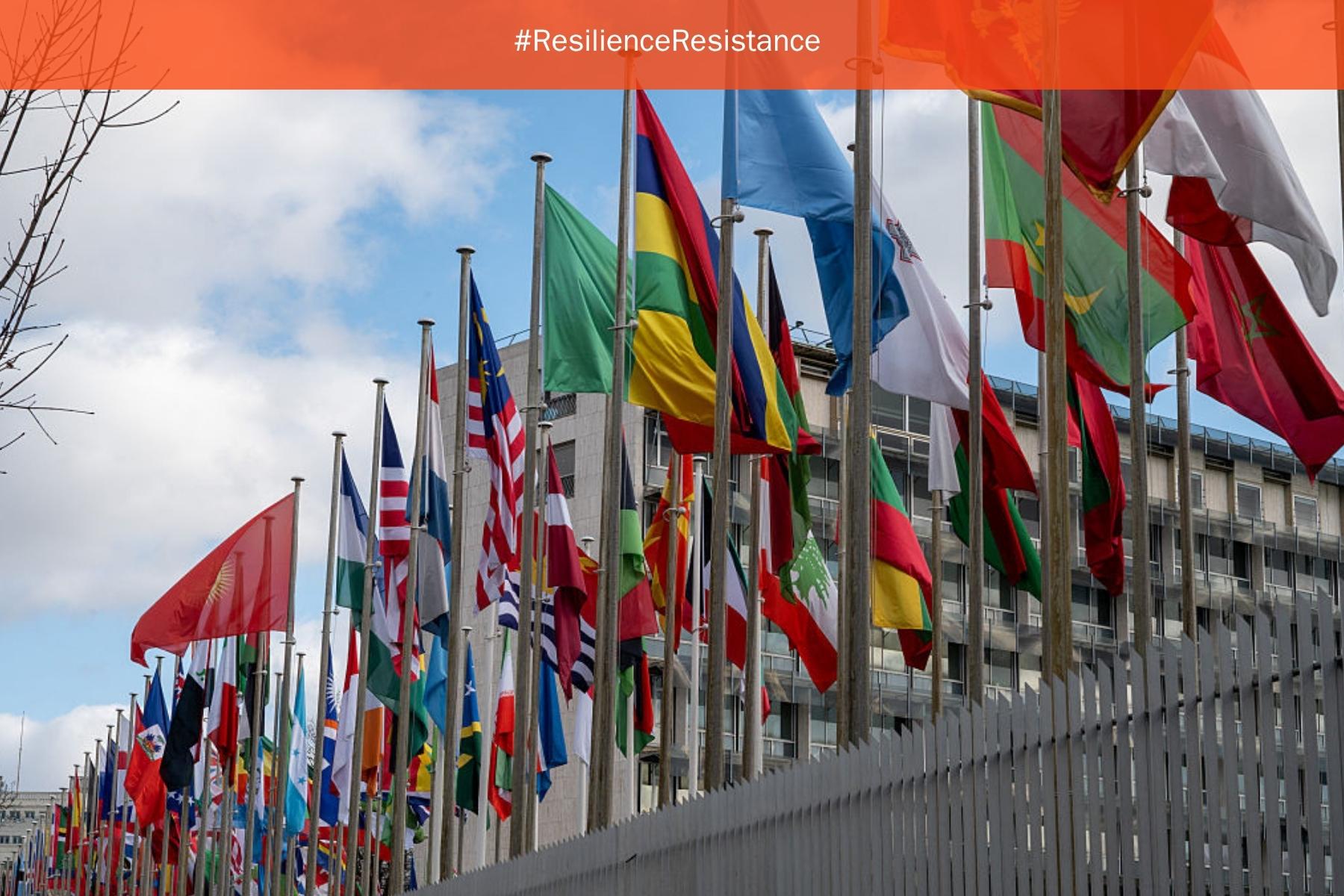
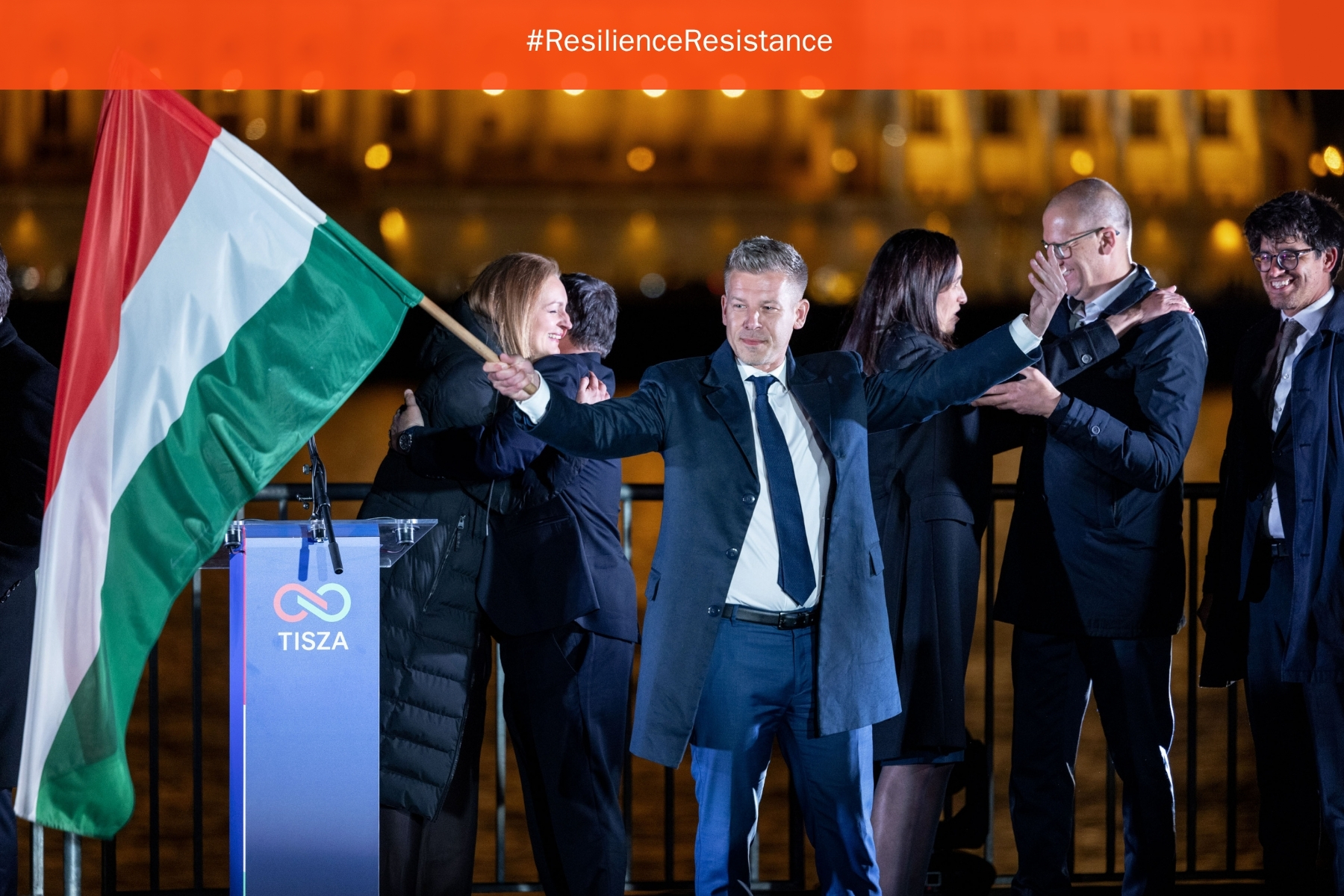
Photo by Riccardo Milani/Hans Lucas/AFP via Getty Images.
The old rules-based, global order has been pronounced dead, according to some analysts. For emerging democracies, the question is not whether the old order can be brought back but whether those countries will adapt strategically—or drift into negotiated constraints that will gradually erode their autonomy. Yet even in this shifting order, emerging democracies are not merely subjects of change. Those that act with strategic clarity, political coherence, and institutional discipline can still shape the terms of their engagement rather than simply absorb the consequences.
The recent shift in US foreign policy strategy has accelerated the steady erosion of the rules-based order. Multilateral institutions—from the United Nations to the World Trade Organization—have expanded in scope but still struggle to effect meaningful change. And competing interests among their member states have created a widening gap between rhetoric and practice. In many capitals, the politicization of international forums has become evident even in votes on distant crises or seemingly peripheral issues, where rival powers test alignments and signal leverage.
The architecture of multilateralism was uneven and at times exclusionary, but it also generated measurable reductions in poverty, diffused legal standards, and created channels through which weaker states could exercise voice and strategy. Even fragile states were able to leverage peacebuilding and development programs to strengthen local capacities. To dismiss that era as entirely meritless is analytically careless.
The return to overt power politics means that authority now operates less through universal rule enforcement and more through strategic dependencies and control. Whoever shapes access to capital markets, energy corridors, digital platforms, or minerals shapes the bargaining space. In comparison, rules are activated selectively, suspended strategically, and instrumentalized against competitors. The established system is not descending into chaos; however, it is transitioning from universal constraint to negotiated hierarchy.
What stands out today is not a clear ideological contest among great powers over competing models of the future but their striking behavioral convergence as elements of authoritarian capitalism have gained ground across systems. Across regime types, major actors increasingly securitize economic policy, weaponize financial systems, normalize sanctions, and treat technology and infrastructure as instruments of strategic competition. Some analysts have framed this transition as an emerging “third Cold War.” In this new dynamic, electoral interference and information operations are no longer isolated events; they are embedded features of geopolitical contestation. Interdependence has not disappeared; it has been converted into leverage.
Where Does This Lead?
For smaller states, one plausible trajectory of this shift is the consolidation of a protection-for-access hierarchy—an empire-like order in which gains in governance and economic reform are gradually traded for short-term stability and patronage. Authoritarian consolidation would then be reframed as a source of stability for investments, with the proliferation of resource-backed loans and opaque infrastructure deals proliferating, and political violence and shrinking civic space being absorbed into the cost structure of global supply chains.
Yet the picture is more complex than simple subordination. Transactional systems are harsher, but they are also, paradoxically, more negotiable for those prepared to engage strategically. Agency does not disappear, it becomes conditional, uneven, and more expensive to exercise.
Middle powers have a pivotal role in this transition. Once custodians of multilateralism who expanded the space for smaller states, countries such as Canada, Australia, Germany, South Korea, and Brazil are recalibrating and leaving their stance ambiguous. Under internal political pressure, diplomatic ambitions might shrink, favoring selective coalitions, strategic hedging, and development aid tied to national returns. For developing countries, middle powers are neither principled referees by default, nor replicas of great powers, but intermediaries who may buffer ripple effects or reinforce them.
This shift unsettles fragile states accustomed to outsourcing strategy to donors or regional bodies. They need to awaken their dormant agency and begin to strategize. In a post-universal order, waiting for principled intervention is not a strategy.
Strategic Adaptation Options
As universal norms weaken, exposure to coercion grows. Transactional environments, however, can also widen the room for disciplined and coordinated states to maneuver. The following adaptations to the current context require discipline, coordination, and institutional resilience sustained across political cycles.
- Institutional hardening. This is arguably the highest priority. In a leverage-based system, pressure moves through ministries, regulators, state-owned enterprises, procurement bodies, and courts. When these nodes are captured, external leverage converts into internal control. Hard-to-capture institutions have transparent procurement, enforceable beneficial ownership registries, digitized revenue systems, and independent audits. Without these lines of defense, every deal risks becoming a dependency trap.
- Domestic consensus-building. The greatest threat to sovereignty often comes from within. Fragmented politics allow external actors to play factions against each other and turn urgency into leverage. Cross-partisan discipline on major decisions, such as borrowing, concessions, and security agreements, signals durability and reduces the incentive for foreign patrons to intervene.
- Hedging as de-risking. Diversifying trade and finance partners, avoiding single-vendor dependence in strategic sectors, and embedding review and arbitration clauses in contracts are not signs of indecision; they are exposure management. Smart hedging compartmentalizes dependencies so pressure in one domain does not cascade across the system.
- Shock-absorption capacity. Food and fuel security, foreign-exchange buffers, debt transparency, and energy diversification create room to maneuver. Coercion often begins with balance-of-payments stress or energy shortages, not military confrontation. Even modest buffers can alter bargaining dynamics.
- Defend political and electoral processes. Information operations shape internal consent and normalize unfavorable terms. Political capture often precedes economic capture. Protecting electoral integrity and party finance transparency is therefore defensive statecraft, not democratic idealism.
- Turn domestic assets into leverage. Monetization of assets like minerals, carbon sinks, maritime routes, and migration pathways must be competitive, transparent, and institutionally disciplined. Otherwise, short-term revenue accelerates elite capture and locks in long-term dependency.
- Consider minilateral coalitions. Small, issue-focused bargaining groups can amplify leverage, while internal discipline provides protection from harmful or irrevocable concessions.
- Strategic communication. States must clearly signal that they are open for business, not for capture. Clear boundaries and standardized terms reduce ambiguity and discourage opportunistic deals masquerading as partnerships.
It should be noted that the sequencing of these adaptations is critical. Many failures occur because states monetize assets before building institutions, signal openness before securing buffers, or hedge rhetorically without operational coherence. Agency in a negotiated hierarchy is cumulative. It is built slowly but can be lost quickly.
The emerging international system is not eliminating agency for developing and emerging democracies. States that consolidate good governance and disciplined statecraft retain room to maneuver, even under pressure. Those states that remain deal-dependent, internally fragmented, and institutionally hollow risk being shaped by bargains they do not control, which could gradually erode their sovereignty.
This edit was added to clarify that the source was an opinion piece.
Ancuța (Anna) Hansen is the director of Perseveras Consulting, based in Australia, and an international expert in democracy, foreign affairs, and international development. For more than two decades, she has led programs that strengthen political and electoral processes, peacebuilding, and civic engagement in Africa, Central America, Eastern Europe, the Middle East, and the Asia-Pacific and has authored and edited numerous articles and research reports.
Resilience & Resistance is a Charles F. Kettering Foundation blog series that features the insights of thought leaders and practitioners who are working to expand and support inclusive democracies around the globe. Direct any queries to globalteam@kettering.org.
The views and opinions expressed by contributors to our digital communications are made independent of their affiliation with the Charles F. Kettering Foundation and without the foundation’s warranty of accuracy, authenticity, or completeness. Such statements do not reflect the views and opinions of the foundation which hereby disclaims liability to any party for direct, indirect, implied, punitive, special, incidental, or other consequential damages that may arise in connection with statements made by a contributor during their association with the foundation or independently.