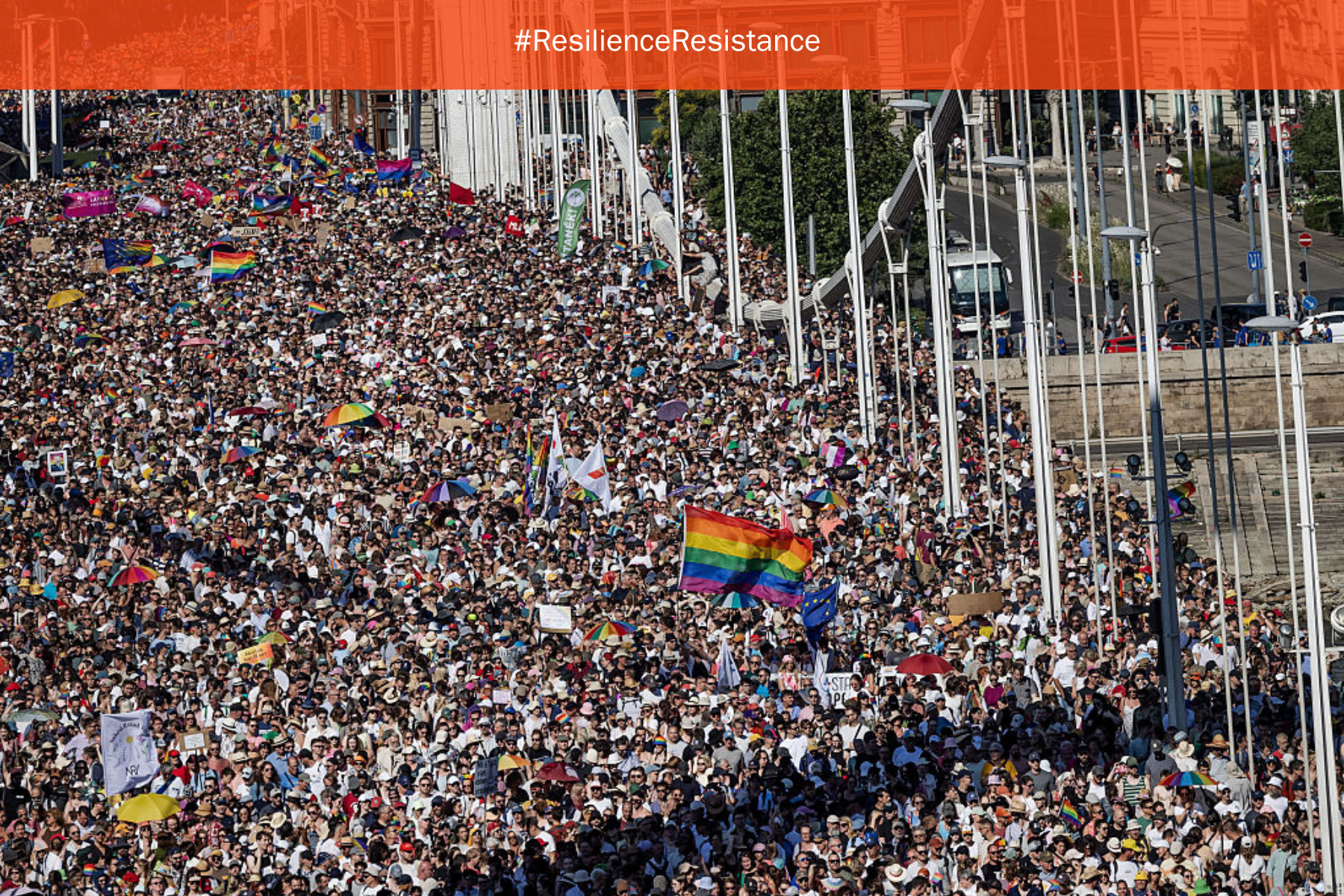
Anti-LGBTQ+ Laws in Africa: A New Form of Colonization
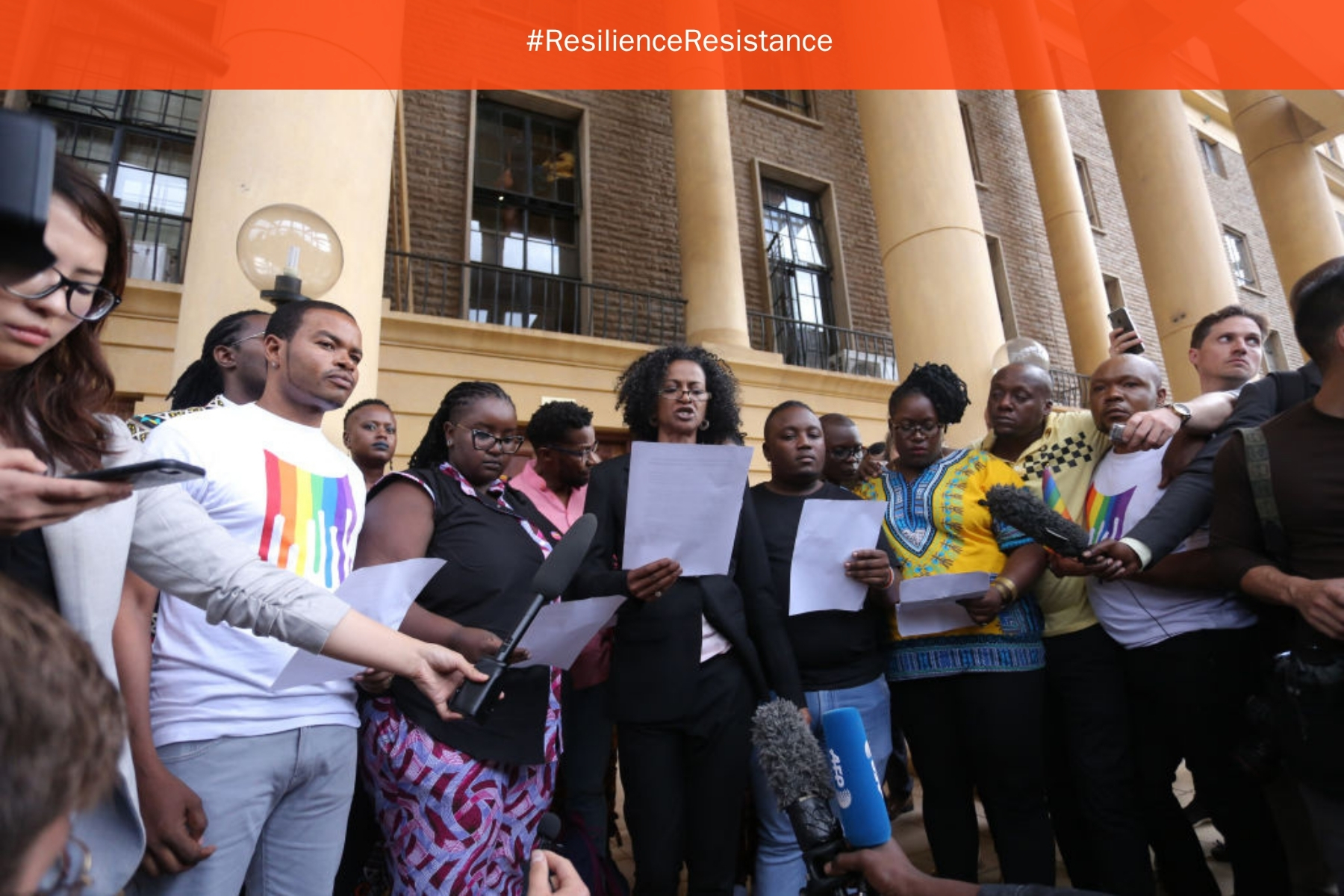
Photo by Billy Mutai/SOPA Images/LightRocket via Getty Images.
The recent push in Senegal to increase the jail term on LGBTQ+ citizens has me tossing and turning in my sleep. As a queer African, it is difficult for myself and others like me to see our own soil turning against us once again. Across Africa, debates around LGBTQ+ rights are increasingly framed as a defense of “African values” and are often presented as a struggle between tradition and foreign influence. Yet this framing obscures a deeper and more complex reality, one that speaks directly to questions of democracy, identity, and self-determination.
For organizations like Bold Network Africa that center their work around public deliberation and inclusive democracy, this moment raises a critical question: Whose voices are shaping these debates, and whose are being silenced?
The criminalization of queerness in Africa is not indigenous, it is inherited.
Colonial Legacies and Legal Frameworks
Many of the laws currently used to criminalize LGBTQ+ people in African countries originate from colonial penal codes. These laws, introduced by European administrations hundreds of years ago, reshaped local understandings of morality and legality.
Rather than dismantling these systems after independence, many countries retained them. Today, these laws are being expanded and reinforced, often under the banner of cultural authenticity.
What is presented as cultural protection often rests on colonial foundations.
External Influence and Democratic Tensions
Recent years have seen the growing influence of transnational advocacy networks. These actors are often conservative religious organizations from the United States that have worked to shape public discourse, fund campaigns, and influence policy on the African continent.
This interference raises important democratic concerns. When external actors shape national debates, the space for authentic, locally grounded deliberation becomes constrained. The result is not simply policy change but a reconfiguration of public conversation itself.
When outside actors shape the debate, sovereignty becomes a performance, not a reality.
Reclaiming African Histories of Diversity
Historical evidence challenges the narrative that LGBTQ+ identities are un-African. Across the continent, diverse expressions of gender and sexuality existed long before colonial rule.
From the alternative genders of the mudoko dako of Uganda to the mugawe of Kenya to the ashtime of Ethiopia, African societies have long sat with complexity in gender and social roles. While these histories do not map neatly onto modern identity categories, they do demonstrate that such diversity was recognized, negotiated, and embedded within social life. Prior to recent contrary rhetoric, African gender and marriage have always been fluid.
Long before colonial laws tried to define marriage, the Kamba community (and others like the Nandi and Igbo) practiced Iweto. In this custom, an older woman (the female husband) would pay a bride price and marry a younger woman. This wasn’t just about survival—it was about agency. The female husband assumed the social and legal role of a man, managing property and continuing the family lineage.
Practices such as these allowed women to build lives, homes, and futures together, governed by their own indigenous laws. In these homes, the spirit of the family was more important than the genders of the couple.
Queerness is not un-African, but its erasure is.
African Voices for African Democracy
For democratic societies, the challenge is not simply legal but deliberative. How can citizens engage in meaningful dialogue about identity, rights, and belonging when the overarching narratives are shaped by external influence and historical distortion?
The role of civic institutions is crucial. Creating spaces where diverse voices, especially those most affected, can be heard is essential to sustaining democratic legitimacy.
The current wave of anti-LGBTQ+ legislation in Africa reflects more than a cultural debate. It reveals the enduring influence of colonial systems and the emergence of new forms of external intervention.
For Africa’s democratic future, the task is not to choose between tradition and modernity, but for Africans to reclaim the ability to define both on our own terms. This reclamation requires centering historical truth, amplifying marginalized voices, and fostering public deliberation that is genuinely inclusive.
Decolonization is not only about land or governance, but also about who gets to define humanity.
Chris Muriithi is an LGBTQ+ activist and the founder of Bold Network Africa. Muriithi was a 2025 Charles F. Kettering Global Fellow.
Resilience & Resistance is a Charles F. Kettering Foundation blog series that features the insights of thought leaders and practitioners who are working to expand and support inclusive democracies around the globe. Direct any queries to globalteam@kettering.org.
The views and opinions expressed by contributors to our digital communications are made independent of their affiliation with the Charles F. Kettering Foundation and without the foundation’s warranty of accuracy, authenticity, or completeness. Such statements do not reflect the views and opinions of the foundation which hereby disclaims liability to any party for direct, indirect, implied, punitive, special, incidental, or other consequential damages that may arise in connection with statements made by a contributor during their association with the foundation or independently.