When Civil Society Imagines New Futures
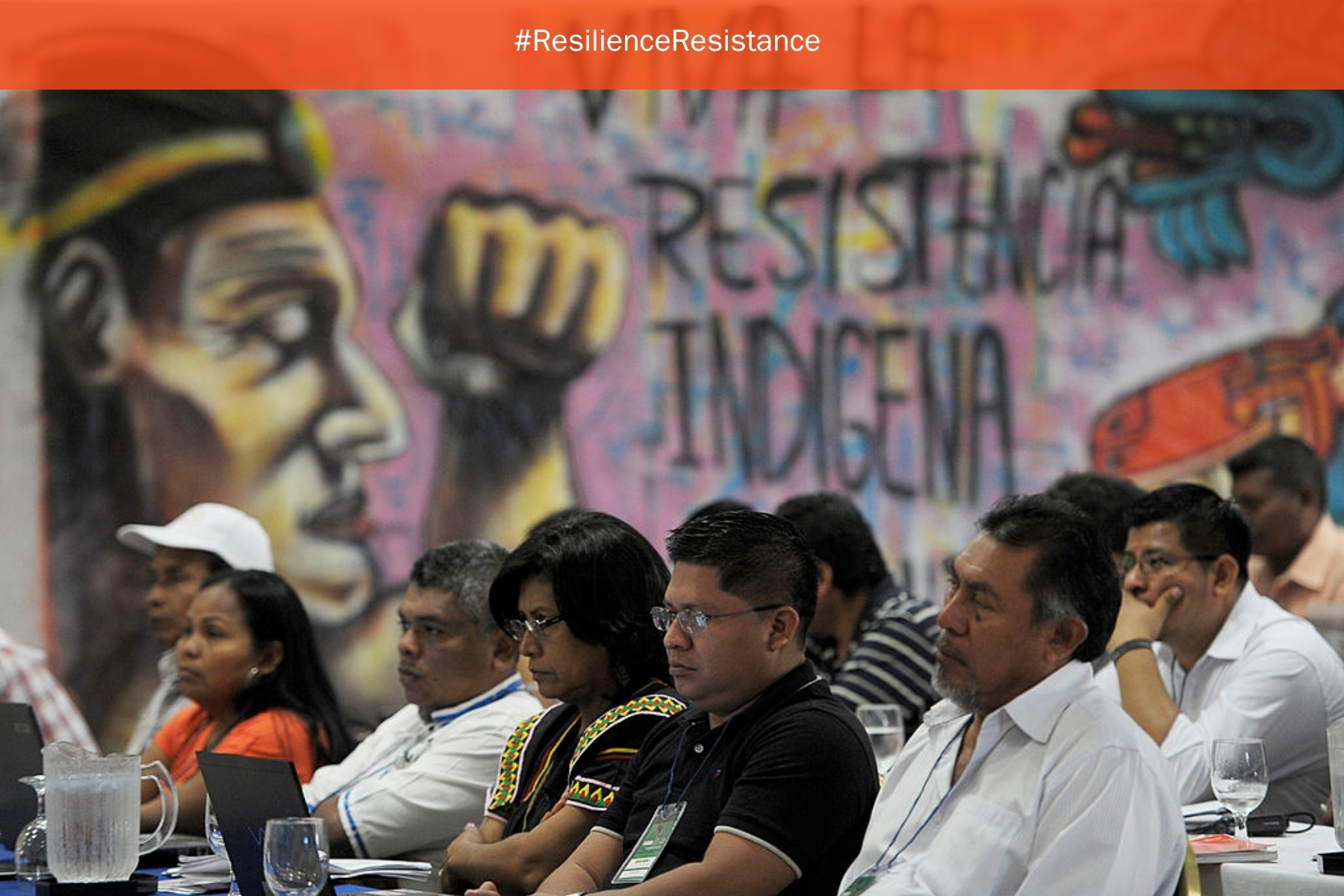
Photo by Jose Cabezas/AFP via Getty Images.
This post is the third perspective from RACI on the role of civil society organizations. Previous articles include “Narratives in Motion: How Civil Society Is Redefining Its Place in the World” and “We Are Called to Build.”
Latin America is going through a moment of profound uncertainty. Inequality is deepening, hard-won rights are being rolled back, and civic space is narrowing under the weight of authoritarian narratives and polarized politics. At the same time, shrinking international funding threatens the sustainability of thousands of organizations that have long worked on the frontlines of democracy, human rights, and the environment.
Amid these challenges, civil society continues to stand and to reinvent itself. With creativity, collaboration, and unwavering conviction, it keeps defending what is essential: human dignity, justice, and the belief that a fairer world is still possible.
In this spirit, the Transformative Dialogues for Civil Society were born. This series of conversations, organized by RACI, CONNECTAS, and Red Comuá together with regional allies, consisted of four discussions on: diversity and inclusion, the environmental crisis, migration and displacement, and democracy and governance. In 2025, voices from across Latin America came together to reflect on current challenges and imagine pathways toward a more just, sustainable, and inclusive future.
More than a cycle of panels, this gathering was a collective act of imagination. It invited all to reimagine what we have in common when everything around us seems to be falling apart.
Diversity and Inclusion: Blooming Amid Adversity
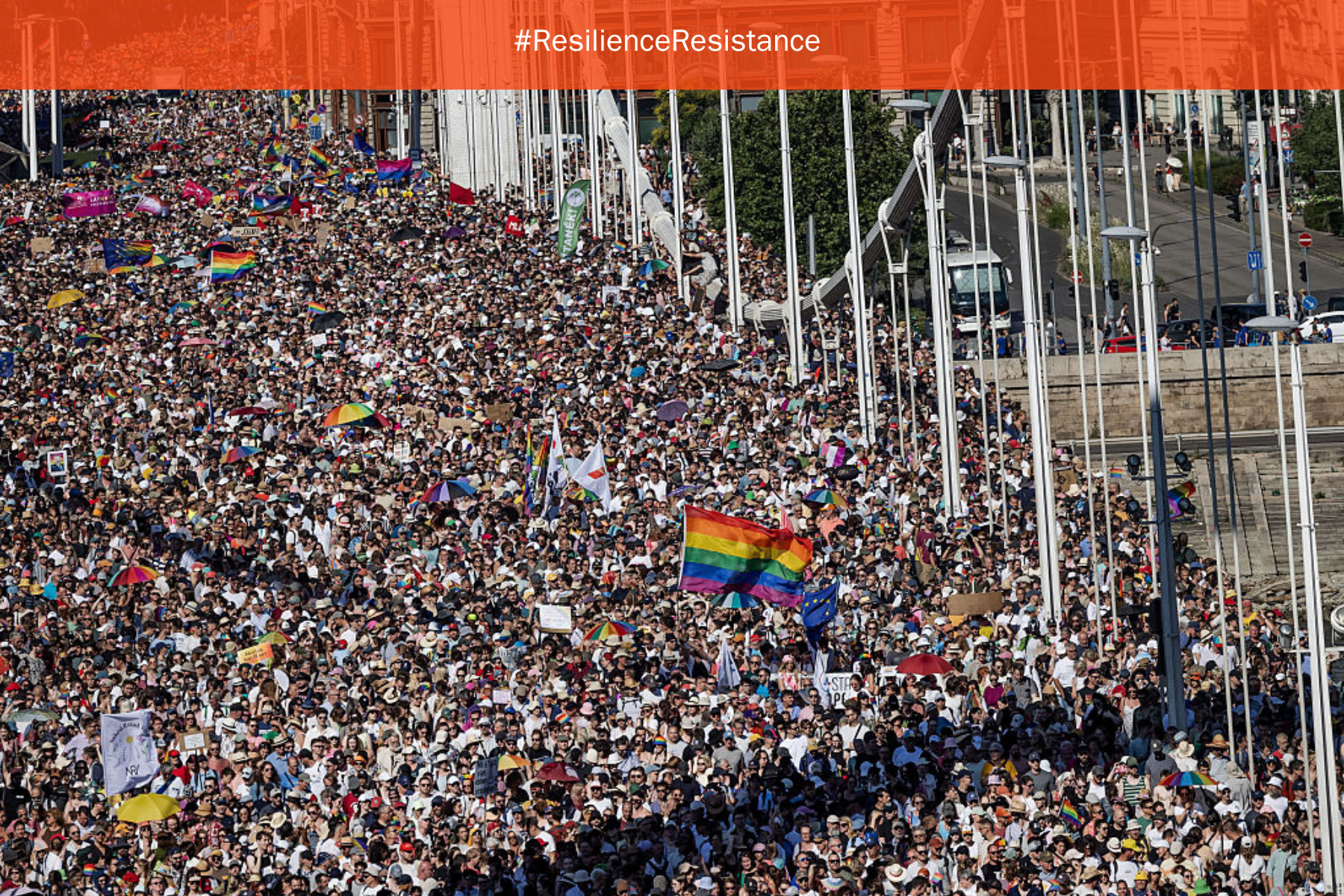
The first dialogue was a declaration of resilience in the face of setbacks to human rights. While movements for equality have achieved remarkable progress in recent decades, the rise of conservative and anti-rights discourse is putting those gains at risk.
Civil society’s response has been clear and courageous: weaving stronger networks, building broader narratives, and reclaiming public space for diverse voices. Visibility is not just communication but an act of survival and dignity.
Inclusion cannot be treated as an isolated issue. The struggle for equality is deeply connected to economic justice, education, housing, and health. Defending diversity is a way of defending democracy because a society that fears its differences slowly loses its freedom.
Environmental Crisis: The Power of Collective Care
The second dialogue discussed the environmental crisis, which is one of the most urgent and unequal challenges of our time. Climate change is not only an ecological issue but also a crisis of rights, participation, and meaning.
Because overly technical text and alarmist language distances people from the issue, environmental communications must relate to daily life: to the food we eat, the air we breathe, the water we drink, and the future of our communities.
Transforming despair into action requires humanizing the message, showing that caring for the planet is also caring for people. Communities defending their territories, often under threat, embody this link between ecology and democracy.
Protecting ecosystems is inseparable from protecting human rights and local participation. The path forward lies in alliances, transparency, and regional cooperation; moving from environmental discourse to a lasting commitment to care for the Earth because it is home to all.
Migration and Displacement: Seeing the Human Story
The third dialogue focused on migration, not as a “problem” to be solved, but as a structural reality of our time. Restrictive border policies and deportations have only deepened the crisis, pushing thousands of displaced persons into more dangerous routes in order to stay hidden.
This issue must be understood through a human-rights lens, not a security one. In the absence of adequate state responses, civil society organizations have become lifelines, providing health services, documentation, and protection to people on the move.
Yet this work is increasingly under threat due to severe funding reductions, making cross-sector alliances more urgent than ever. It is imperative for partnerships among civil society organizations, governments, the private sector, and the media to replace fear-based narratives with empathy-driven ones, highlighting the social, cultural, and economic contributions of migrants. You cannot talk about migration without talking about humanity itself.
Democracy and Governance: Returning to the Care of Life
The final dialogue turned to democracy: its cracks, its fatigue, but also its possibilities for renewal. We must remember that democracy cannot be confined to elections or institutions; it must exist in everyday life—in neighborhoods, in collective care, in the ways people organize to protect one another.
Because many regions are struggling with polarization, corruption, and declining trust in institutions, citizens often feel that politics has grown distant from their real needs. To rebuild faith in the collective, democracy must recover its ethical foundation of human dignity and care of the planet.
Democracy is revitalized when it touches the everyday lives of people and when it becomes tangible through policies that guarantee well-being, education, health, and justice for all.
A Common Thread
Across all four dialogues, a common thread emerged: cooperation is an ethical principle, not merely a funding mechanism. In times of scarcity and uncertainty, civil society organizations continue to find strength in solidarity, creativity, and unexpected partnerships.
Another central theme was the power of narratives. In an era dominated by disinformation and hate speech, reclaiming the story becomes a form of resistance. Telling stories grounded in empathy, evidence, and hope can transform perceptions, open dialogue, and build bridges.
What stands out above all is the deeply Latin American ability to rebuild, reinvent, and keep imagining the possible even amid crisis.
Imagining What Is Possible
The Transformative Dialogues for Civil Society served as a reminder that even in times of regression, there are communities that continue to believe in the power of the collective. Each conversation was a testament to those who refuse to give up, who innovate with limited resources, and who defend life with conviction and care.
In a world that too often rewards indifference, these dialogues reaffirmed the importance of organizing, collaborating, and sustaining hope. Transformation does not always mean starting over; sometimes it means looking again, listening again, and believing again.
The Argentine Network for International Cooperation (RACI) is a civil society network based in Argentina. Much of its work focuses on strengthening organizations, fostering collaboration across sectors, and promoting a more enabling environment for civil society, both locally and globally, through research, capacity building, dialogue, and international cooperation.
Resilience & Resistance is a Charles F. Kettering Foundation blog series that features the insights of thought leaders and practitioners working to expand and support inclusive democracy around the globe. Direct any queries to globalteam@kettering.org.
The views and opinions expressed by contributors to our digital communications are made independent of their affiliation with the Charles F. Kettering Foundation and without the foundation’s warranty of accuracy, authenticity, or completeness. Such statements do not reflect the views and opinions of the foundation which hereby disclaims liability to any party for direct, indirect, implied, punitive, special, incidental, or other consequential damages that may arise in connection with statements made by a contributor during their association with the foundation or independently.