How Orbán Fell and What Democratic Renewal Would Actually Require
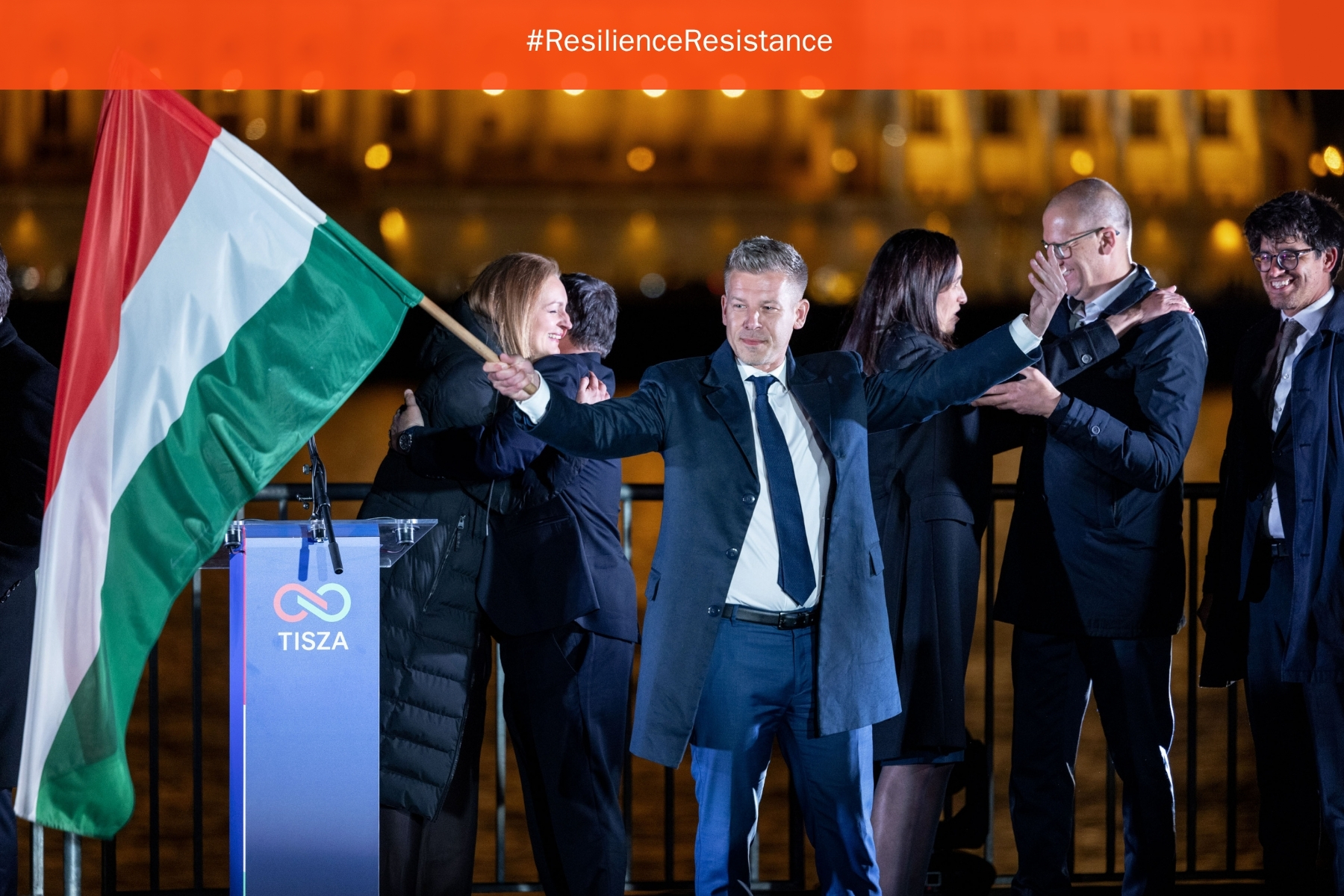
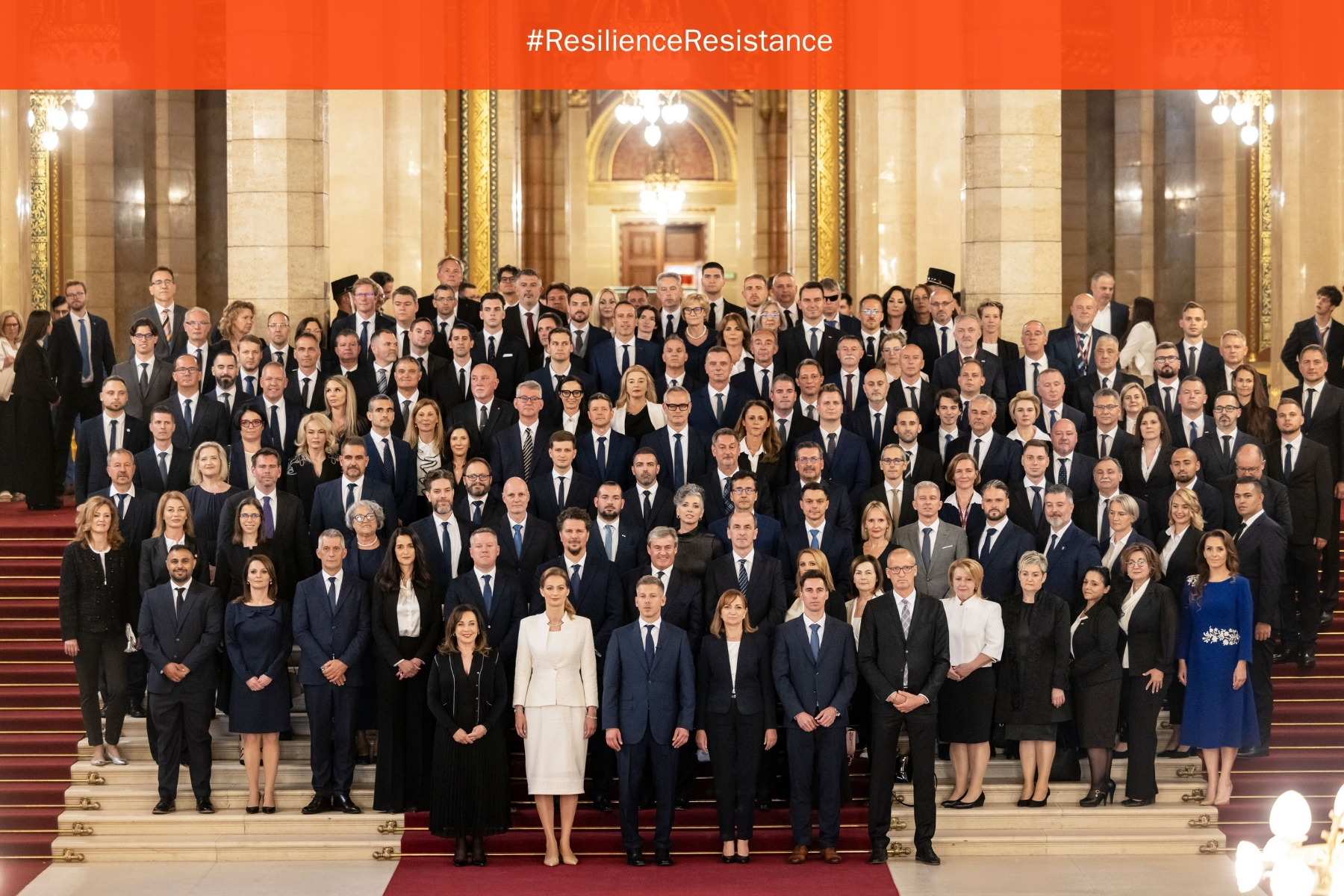
Photo by Janos Kummer/Getty Images.
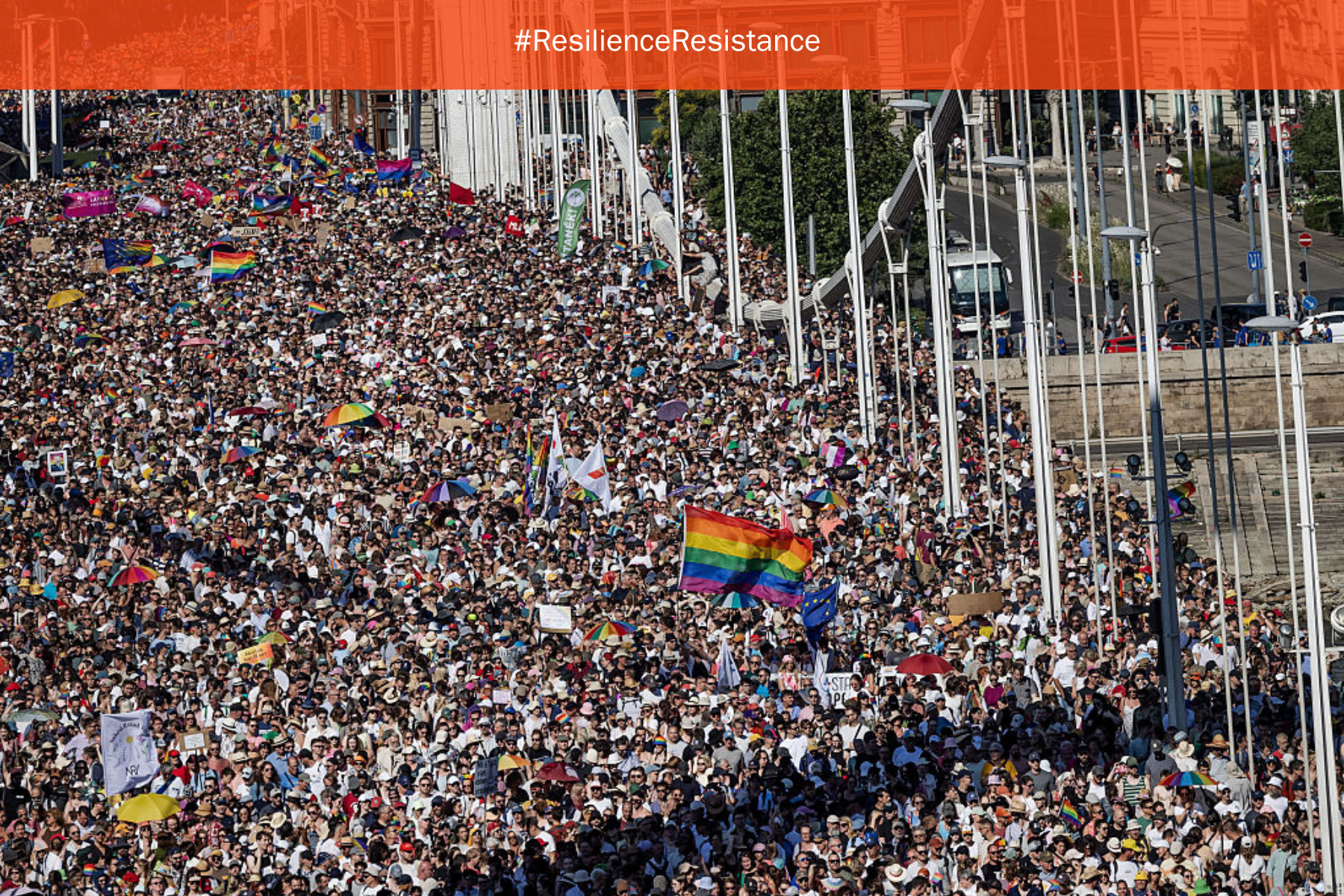
On April 12, 2026, Hungarian voters handed Péter Magyar’s Tisza Party a parliamentary supermajority and ended the 16-year rule of Viktor Orbán and Fidesz. Within hours of the count reaching 45 percent, Orbán phoned Magyar to concede. By the standards of recent fears in the Hungarian opposition—postponement, last-minute electoral redesign, and refusal to recognize defeat—the handover has so far been remarkable for its banality. That matters. But for those concerned with democratic renewal, the more important question is not whether an autocrat can lose an election, but rather it is knowing what exactly has to break for a system like Orbán’s to become vulnerable, and what remains to be rebuilt after the incumbent is gone.
The most misleading interpretation of April 12 is the easiest one: democracy corrected itself. Orbán lost, conceded, and power changed hands without post-electoral violence. By that account, Hungary’s illiberal period now looks less exceptional and less durable than many feared. But that interpretation mistakes the surface event for the deeper process. What broke on April 12 was not simply a leader, or even a regime label in the abstract. What broke was a political settlement that had seemed, until recently, both electorally durable and socially entrenched.
That settlement was how Orbánism organized consent across a broad social bloc for 16 years. Its material core combined cheap and disciplined labor with regressive redistribution dressed as family policy. Clientelism in rural and small-town Hungary secured the acquiescence of constituencies battered by the post-1989 transition from communism. The costs of stagnate production, accelerating outmigration, and the visible deterioration of health care, education, and public infrastructure were absorbed for years through EU transfers, ideological compensation, and the construction of a symbolic order.
That symbolic order mattered. Orbán’s system was never sustained by material incentives alone. It also rested on a form of moral leadership. The regime dignified the “hard-working Hungarian,” celebrated family discipline and national rootedness, and cast its opponents as morally suspect globalists. In that sense, the “work-based society” was not just an economic slogan, it was a language of worth. For many voters, especially outside the capital, it gave symbolic recognition to lives that had long felt socially devalued. This is one reason the system proved more durable than many urban critics understood.
Why Orbánism Became Vulnerable
By 2022–2023, the conditions that had stabilized this settlement were no longer functioning in the same way. On rule-of-law grounds, the EU had suspended major cohesion funding and withheld access to Hungary’s recovery funds. The wage premium that disciplined workers had come to expect was being eroded by inflation and a stagnating productivity. The state apparatus that had executed the settlement so effectively for more than a decade began to show stress fractures. The result was a broader loosening of the bloc on which Orbánism had relied. As I have argued elsewhere, what broke on April 12 was Orbánism’s capacity to organize consent across classes, regions, and above all, generations. Fidesz’s surviving support remained concentrated in rural and small-town Hungary, but the system had lost its hold over younger voters, midsize towns, and parts of the working and lower-middle class that had once seen it as a source of stability. Magyar’s rise was not the cause of this erosion. It was its political form.
That is why the key question is not simply how Orbán lost, but why the social bloc that maintained his rule became unsustainable. In Hungary, some analysts have read April 12 through the lens of “plebiscitary leader democracy,” while others interpret the change as a kind of “electoral revolution” that confirms how insulated the system had become from ordinary citizens. Both framings capture something real. Both treat the regime form as the central object, but what made Orbánism durable was the political settlement embedded in everyday life. It was this settlement that unraveled under the pressure of both domestic contradictions and transnational conditions.
The first transnational dimension was material. The regime’s settlement was never purely domestic. Throughout the 2010s, EU development funds helped sustain the clientelist machinery and the modest improvements that kept broad constituencies acquiescent. Once the EU froze these funds on rule of law grounds, one of the regime’s central compensatory mechanisms weakened. EU conditionality did not simply weaken the regime; it impaired the channels through which Orbánism financed acquiescence, patronage, and selective redistribution.
The second transnational dimension operated through ideological legitimacy. Publicly available reporting indicates that European security and intelligence channels were among the routes through which damaging information about Foreign Minister Péter Szijjártó’s ties to Russia entered the Hungarian public sphere during the campaign. The significance of those disclosures lay not only in what they revealed, but also in what they symbolized. They sharpened the perception, especially among urban anti-Fidesz voters, that their government, which claimed to defend Hungarian sovereignty against Brussels, had in fact tolerated subordination to Moscow at the highest levels of its foreign policy establishment. The election-night chants of “Ruszkik haza!” (“Russians, go home!”) in central Budapest reflected the erosion of one of Fidesz’s core moral-political claims: that it alone stood for national independence against foreign tutelage.
Operating on these two registers, these transnational pressures were not external scenery to a domestic correction. The absence of a Maidan in Hungary is not evidence that nothing transnational was decisive. It is evidence that long-running external pressure had already done much of the work that post-electoral street mobilization had to do in earlier post-communist breakthroughs.
Why Defeat Is Not Yet Renewal
None of this means democratic renewal can be treated as automatic. Replacing an incumbent is not the same as reorganizing the conditions that made his rule durable. Hungary’s new government inherits not only a hollowed-out state but also a society marked by deep inequalities, weak countervailing institutions, and a political field in which much of the old opposition has disappeared without being replaced by strong structures of participation. Tisza’s victory was real and historic. But it is also a highly centralized formation built around a leader, a promise of meritocratic restoration, and a coalition whose breadth may prove difficult to sustain. What holds that coalition together is not yet a shared social project.
Democratic renewal cannot be reduced to alternation in office. If the underlying settlement has broken, renewal requires more than institutional repair. It requires rebuilding material credibility among abandoned constituencies, restoring public services as sites of common provision rather than partisan control, and creating channels of participation through which citizens are not merely mobilized behind a leader but incorporated into political life in substantive ways. It also requires confronting a problem that outlasts Orbán himself: political alienation. Until steps are taken to remedy the problems above, citizens will continue to feel that they are not heard, not represented, and are only visible when elites need their vote.
Without that deeper work, disappointment will remain available for remobilization by the right. For years, Orbán’s system was able to compensate for a painful low-wage model by valorizing labor and offering symbolic dignity to those who felt abandoned by the 1989 liberal democratic transition. That combination has now weakened, but it has not disappeared. If the new order cannot offer a more convincing answer, materially, politically, and culturally, the nationalist right will have a ready-made path back, whether through Fidesz, the neo-fascist Our Homeland Party, or some future formation better adapted to the next cycle of disillusionment.
Hungary’s case offers a lens on global democratic renewal and shows that autocrats can be defeated. But it also shows that defeating one means that only the political surface has moved, not that the underlying settlement has been reorganized. Democratic renewal begins there: not with the comforting belief that democracy’s immune system has kicked in, but with the more difficult recognition that the social, institutional, and symbolic conditions that made illiberalism durable must themselves also be transformed. April 12, 2026, deserves to be celebrated as an opening. The old settlement has cracked. Whether something more democratic, more durable, and more socially credible can be built in its place remains an open question.
Kristóf Szombati is a political anthropologist and analyst based in Berlin. He cofounded Hungary’s Green Party (LMP) and spent years working in Hungarian politics and civil society before turning to research on far-right politics and the political economy of illiberalism in Central Europe. He is cohost of the podcast This Authoritarian Life and a 2026 CFK Global Fellow.
Resilience & Resistance is a Charles F. Kettering Foundation blog series that features the insights of thought leaders and practitioners who are working to expand and support inclusive democracies around the globe. Direct any queries to globalteam@kettering.org.
The views and opinions expressed by contributors to our digital communications are made independent of their affiliation with the Charles F. Kettering Foundation and without the foundation’s warranty of accuracy, authenticity, or completeness. Such statements do not reflect the views and opinions of the foundation which hereby disclaims liability to any party for direct, indirect, implied, punitive, special, incidental, or other consequential damages that may arise in connection with statements made by a contributor during their association with the foundation or independently.