Hungary and the Triple Trap of Post-Illiberal Democracy
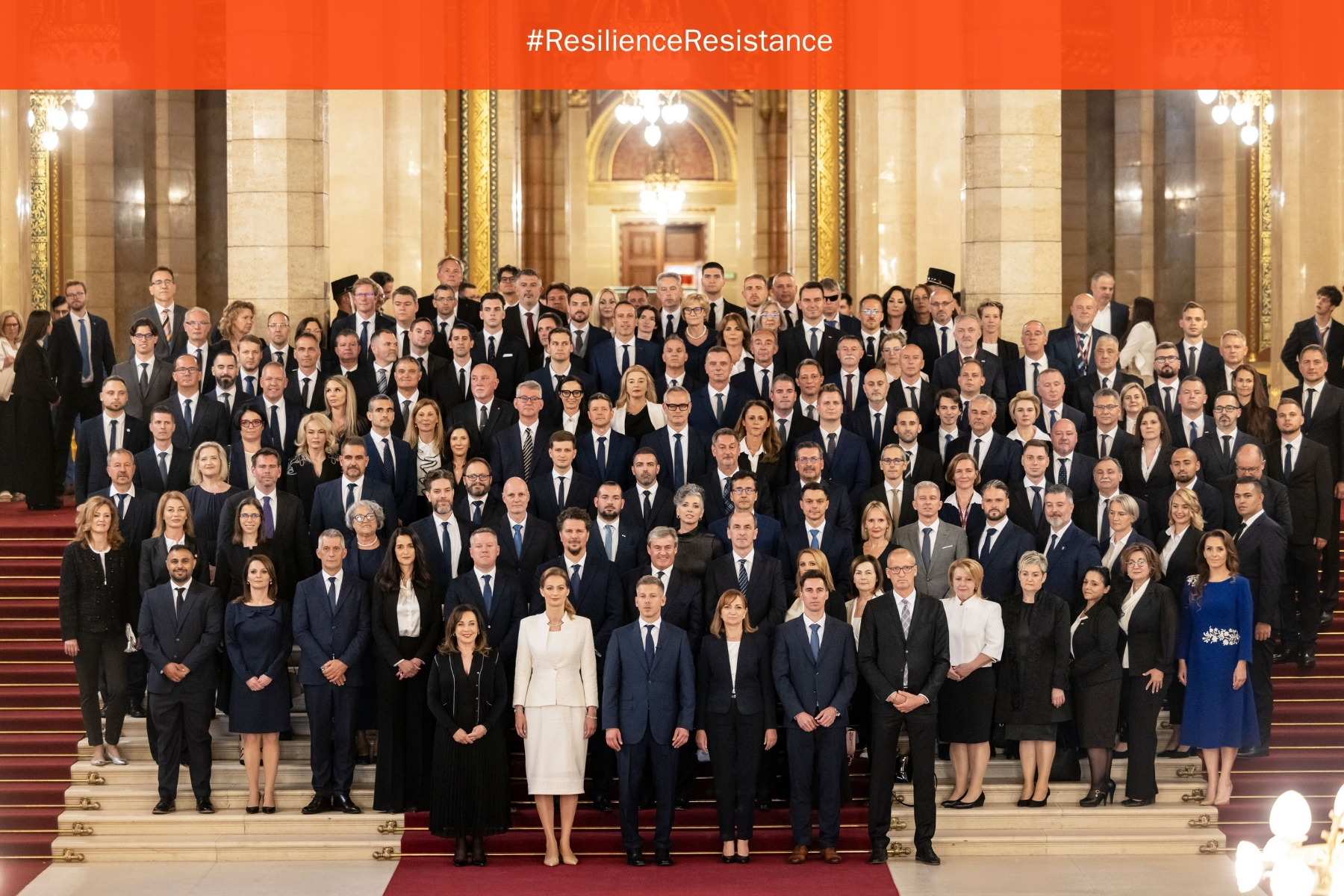
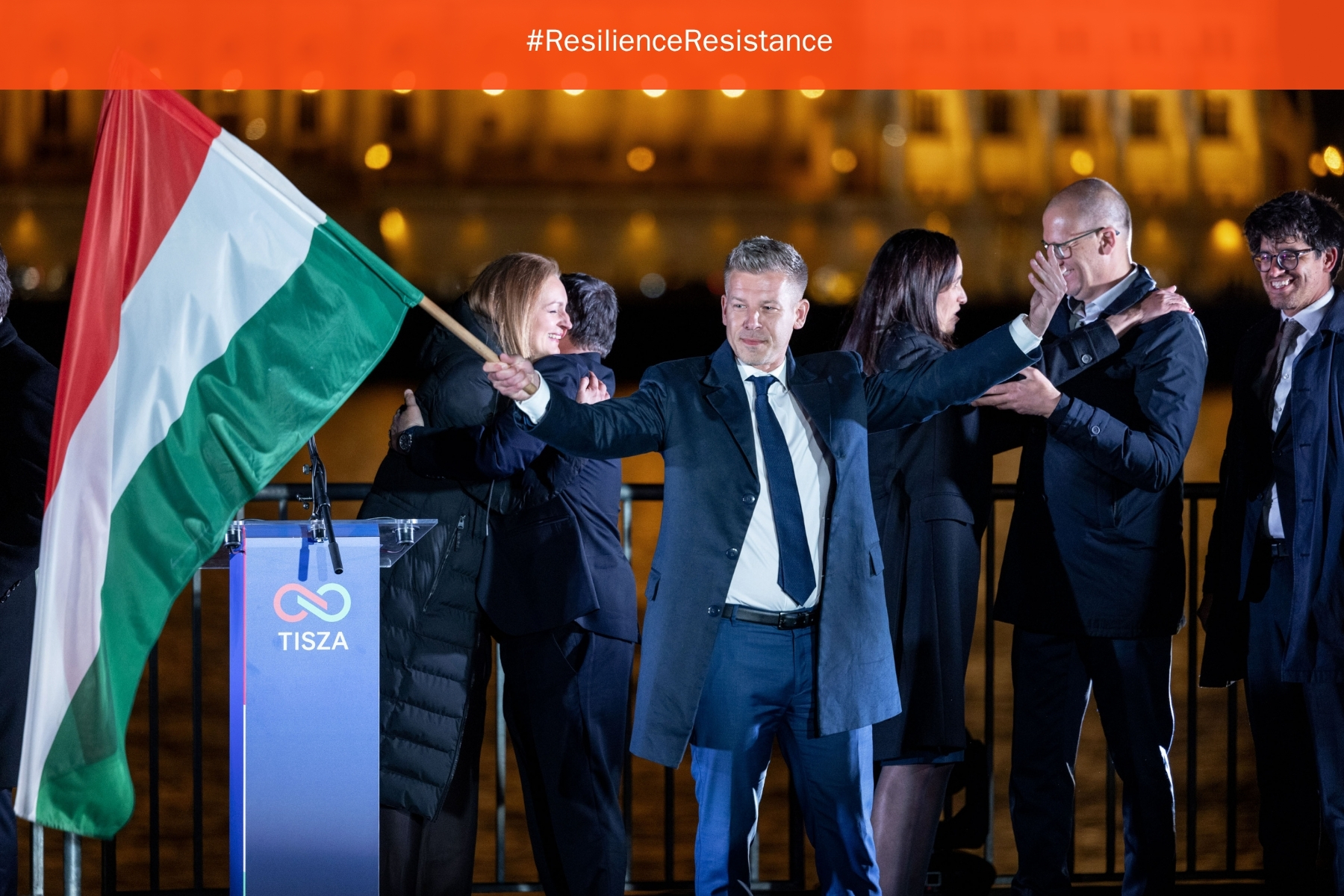
Photo by Janos Kummer/Getty Images.
This post is the second article relating to the results of the April 12, 2026, elections in Hungary. For another perspective on the defeat of Viktor Orbán, read “How Orbán Fell and What Democratic Renewal Would Actually Require.”
Péter Magyar was sworn in as Hungary’s prime minister on May 9, 2026, ending 16 years of Viktor Orbán’s illiberal stranglehold and the myth of the far right’s inevitability. The new cabinet, drawn largely from technocrats, is a sharp contrast to the ever-more clownish regime it replaces. Its identity rests on a trifecta of Westernization, expertise, and bourgeois-civic modernization: an unimaginative platform, but in the shadows of Orbán and Donald Trump it shines as revolutionary.
It is a stunning reversal. As the initial celebrations of this “Hungarian spring” of democracy subside, the new administration faces a historic burden of responsibility. Neither illiberalism nor the liberal end of history is inevitable. The magical thinking that the far-right dominoes will now automatically fall could lead us to the next illiberal cycle—and not just in Hungary.
Orbán did not fall because Hungarian shopkeepers, truck drivers, and healthcare workers suddenly started reading John Locke. He lost because the economy tanked, and everyone could see his cronies getting rich. His regime was exhausted morally and economically. Cumulative inflation since 2020 reached 50%. The gamble on East Asian battery factories underdelivered. Frozen EU funds cut the regime’s patronage cycle.
When the material delivery failed, the nationalist movie built on moral panics about minorities and external enemies lost its audience. The old opposition had chances before, but unifying without innovating only reproduced the failures that brought Orbán to power. Magyar broke the pattern by rejecting their playbook. As a Fidesz insider with the credibility and energy to channel disgust into hope and the pragmatism to avoid alienating voters with liberal orthodoxies, he was the right person at the right time.
Centrist Restoration Often Fails
When taking the next steps, Hungary needs to be mindful of past centrist mistakes. For example, in the US, Democrats passed ambitious legislation after Trump’s first term, but they retreated halfway and failed to turn policy into a story voters believed in. Trump returned. In Britain, Keir Starmer won by a landslide, which most thought promised normalcy. Less than two years later, Reform UK leads the polls, and the Labour Party has collapsed.
In Slovakia, the pro-European coalition that replaced Vladimír Mečiar’s illiberal rule ran a textbook stabilization package that destroyed its own social base. Within a decade, Robert Fico and the far right was back. In Tunisia, the democratic parties of the 2011 Arab Spring perpetuated the dependent development inherited from the authoritarian era, fattening export enclaves on the coast and leaving the interior regions and precarious youths behind. Within a decade, autocracy returned.
The pattern is telling: the defeat of an illiberal leader does not resolve the underlying drivers of voter discontent. Like others who are attempting to revive democracy, Péter Magyar must confront three stubborn obstacles or traps.
Three Traps
The first trap is economic. Hungary’s economy remains a low-wage assembly platform for transnational corporations, with chronic brain drain and a domestic business sector lacking the capability to innovate. The new administration’s heavyweight portfolios (finance, economy, foreign affairs) signal a market-liberal, fiscally orthodox reorientation, paired with a welcome half-turn toward fairness. This includes a small income-tax cut at the bottom and a symbolic wealth tax at the top. More substantively, public health care and education are slated for serious reinvestment. For families who have spent a decade dreading a trip to the local hospital and watching teachers leave the profession, this promises a critical improvement.
Magyar can spur short-term recovery by ticking a few anti-corruption and rule-of-law boxes and reorienting toward Brussels and the European Union. This would allow roughly 18 billion euros in frozen EU funds to start flowing again. The economy will likely purr. But only for a while. EU structural funds are a sugar rush not a growth model. Without transformative social and economic policies, the frustrations that feed illiberalism will return.
The second trap is political. Almost every other opposition party dissolved itself to clear Magyar’s path. Unions are weak, and the NGO sector was gutted by 16 years of Orbán’s rule. The Tisza Party is barely two years old, with no meaningfully organized party base. Magyar, a textbook influencer politician, floats above Hungarian society on immense symbolic capital but thin institutional roots. Meanwhile, Orbán’s regime was built to outlast any single government with endowed foundations, loyal business networks, and captured institutions designed as extra-governmental fortifications of illiberalism.
The new constitutional supermajority provides the legal tools to dismantle these fortifications. Magyar has granted the new prime minister’s office significant operational leverage to uproot Orbán’s crony networks. These are reasons for hope. But pulling down Orbán’s fortifications, however welcome, still falls short of opening democratic institutions to citizens. The countervailing power to keep economic and political elites in check is weak. If democracy remains a formal institutional shell without new channels of representation, participation, and deliberation, people will feel alienated again.
The third trap is cultural. Magyar was right not to double down on the liberal hard talk of constitutions and symbolic identities that alienated voters from the old opposition. His softer nationalism worked amid Orbán’s spectacular exhaustion. But singing the far-right’s songs at lower volume is not an alternative identity because voters tend to prefer the original to the copy.
Tisza’s new techno-pop narratives are pitched at the educated, urban, professional middle class. But for the working class in rural Hungary, Magyar continues to offer nationalism as a source of symbolic attachment. However, without a compelling social vision that speaks to dignity and belonging, cultural grievances remain ripe for exploitation by far-right actors. More than half (60%) of the Hungarian population works in lower-end services or production jobs; integrating them in ways that seal off the channels of far-right mobilization has to become the new government’s ambition.
Winning the Long-Term Battle
There is a structural reason these traps are difficult to escape: addressing them requires the kind of organized social force that centrist governments rarely generate on their own. For the first time since the First World War, the Hungarian parliament stands without left-wing representation. Comparative experience is unforgiving here. Democracies that confront the far right without a credible progressive pole tend to oscillate between technocratic correction and reactionary backlash, and the corrective phase rarely lasts. Without inclusive foundations, Hungary’s new, hard-won democracy may prove unsustainable.
Magyar has time to avoid these traps. His first task is to clear the rubble Orbán left behind. With a two-thirds majority, a record mandate, and genuine goodwill, he has the political capital to lay the groundwork for a long-term plan. But grace periods end. What Hungary faces, what every country confronting the far right must reckon with, is a triple devaluation: the erosion of economic security, political voice, and cultural standing that drives the waves of the far right.
Until democrats confront all three traps, they can win occasional elections but will continue to lose the long-term battle.
Gábor Scheiring is an assistant professor at Georgetown University in Qatar, where he researches why and how the crisis of liberal globalism becomes embodied in individual suffering, the unraveling of everyday life, and social disintegration across peripheralizing economies, asking why this polycrisis leads to decline and illiberalism in some contexts and renewal in others. He is the author of The Retreat of Liberal Democracy and a former member of Parliament in Hungary. Scheiring was also a member of the 2025 cohort of CFK Global Fellows.
Resilience & Resistance is a Charles F. Kettering Foundation blog series that features the insights of thought leaders and practitioners who are working to expand and support inclusive democracies around the globe. Direct any queries to globalteam@kettering.org.
The views and opinions expressed by contributors to our digital communications are made independent of their affiliation with the Charles F. Kettering Foundation and without the foundation’s warranty of accuracy, authenticity, or completeness. Such statements do not reflect the views and opinions of the foundation which hereby disclaims liability to any party for direct, indirect, implied, punitive, special, incidental, or other consequential damages that may arise in connection with statements made by a contributor during their association with the foundation or independently.