Reclaiming Patriotism: Between Nationalism and Pessimism
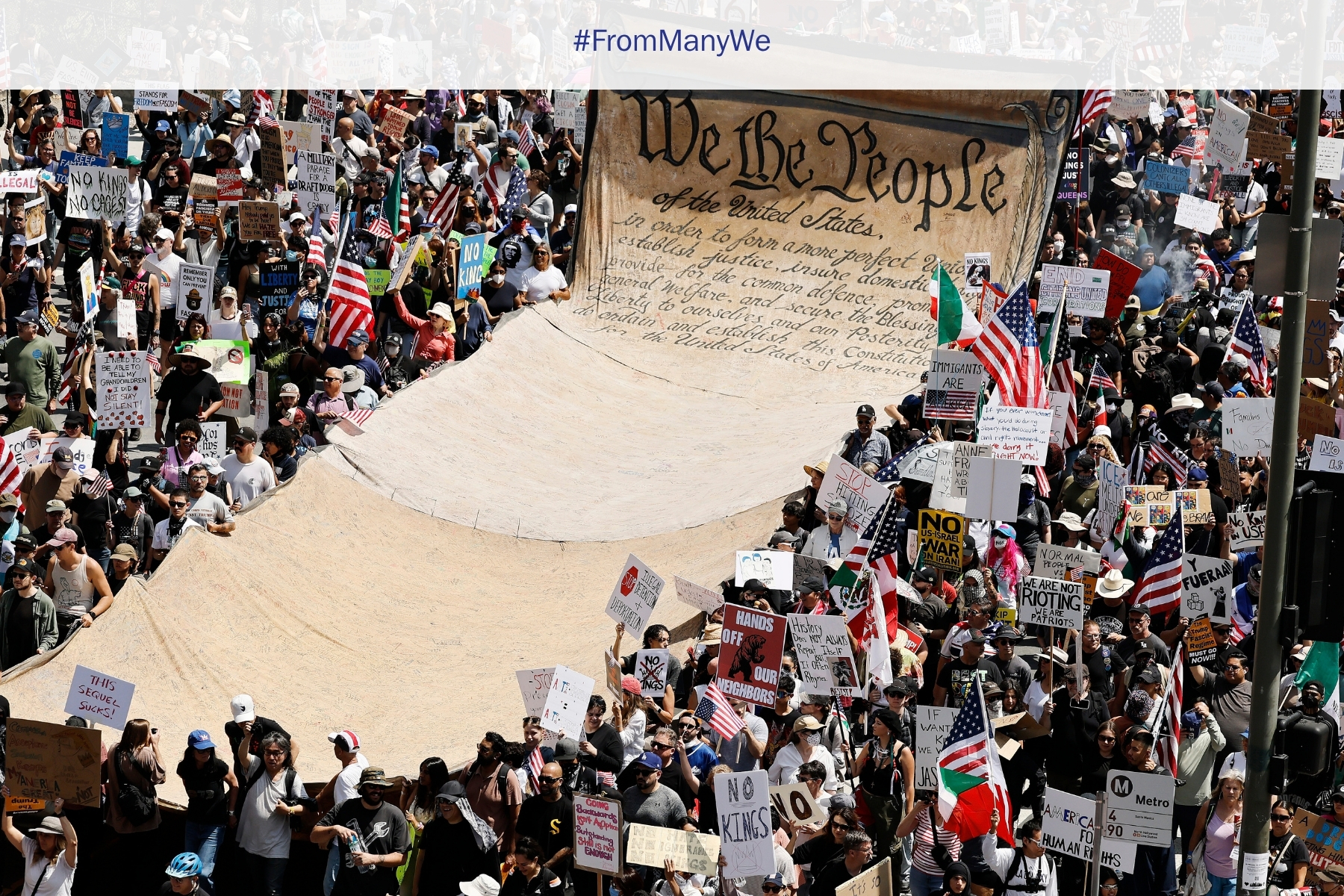
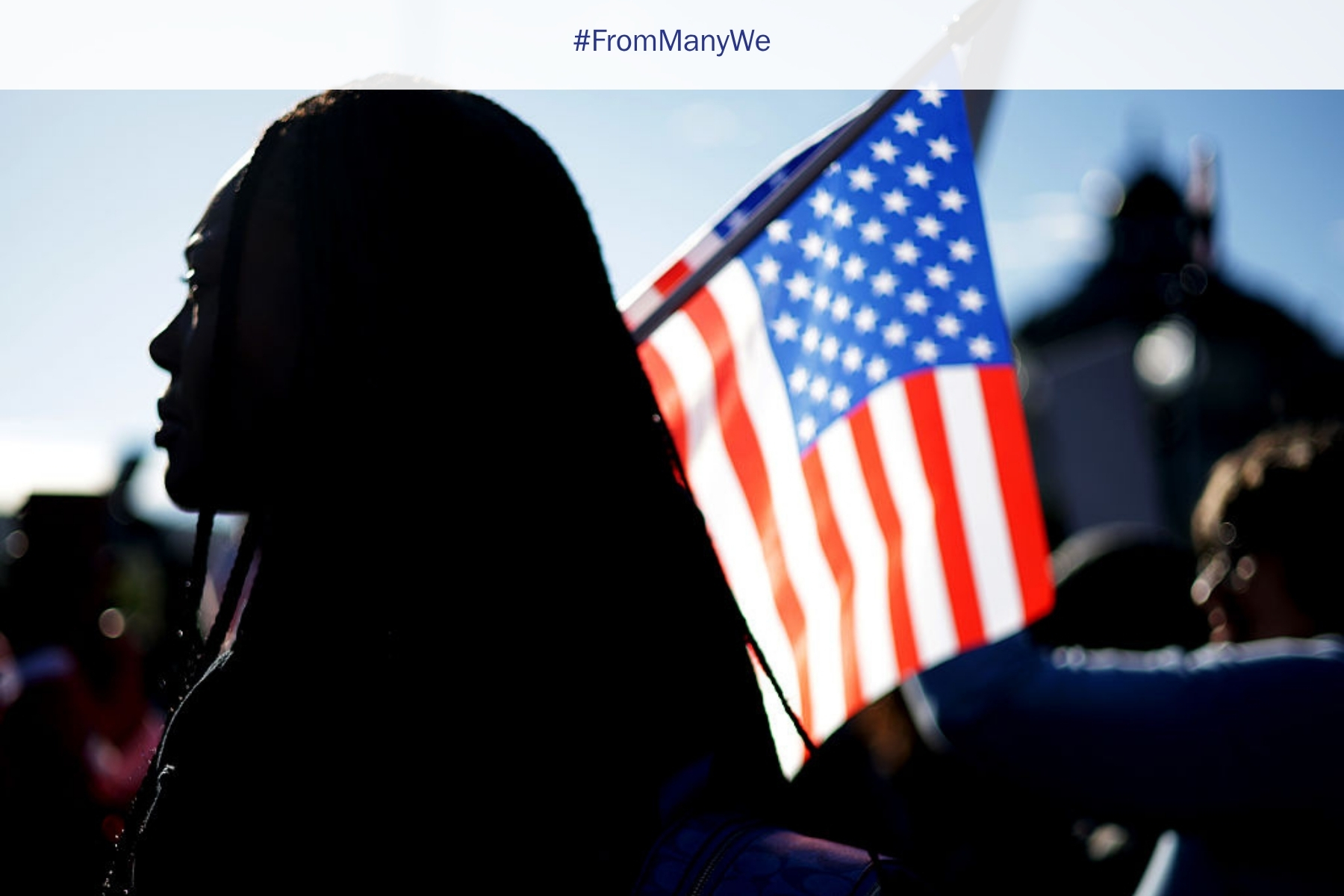
Photo by Mario Tama/Getty Images.
As America approaches the 250th anniversary of its independence, I am more in the mood to protest than to celebrate. Does that make me unpatriotic? The answer depends on how we understand “patriotism.” For a nation that is founded in revolution, let’s affirm a deeper and more profound love of country, a civic patriotism celebrative of our larger ideals including pluralism, dissent, and a commitment to social change.
Two Types of Patriotism
Patriotism is often understood as demanding complete loyalty with no sign of dissent or critique, as in the saying, “America, right or wrong.” This commonly reflects a nationalistic or absolutist understanding of patriotism. At the other extreme, a person might feel so ashamed of America’s actions that democracy is perceived as being beyond repair. This could be called “democracy pessimism.” Despite some different perspectives, both reactions assume patriotism is incompatible with recognizing a nation’s flaws.
At its essence, patriotism means love of country. Absolutist patriotism is just one particular approach to patriotism. Within the nationalist paradigm, love is equated with unquestioning support and obedience, while dissent is equated with hatred. Critically, this absolutist understanding of patriotism extends far beyond the nation’s core ideals and traditions to include all of its actions, past or present. But love of country can take many forms beyond nationalistic patriotism.
Another type of patriotism is both possible and urgently needed. Rather than blind obedience, we can express love of country through commitment to social change and difficult conversations about the nation’s past. This patriotism equally affirms love of country, but in a way that includes and necessitates critique, dissent, protest, and even civil disobedience. In our personal relationships, we can support our friends and family members unconditionally while acknowledging their mistakes and holding them accountable for their actions. We can have very different moral, religious, and political beliefs. The strongest relationships are the ones that survive conflicts and mistakes. Nations are no different. They are not held together by blind obedience but by civic bonds that run across diverse viewpoints and identities.
When Dissent Is Patriotic
A common tactic in the authoritarian playbook is to weaponize patriotism and portray dissent as a form of hatred of country. This has been a frequent theme in President Trump’s description of his political opponents, such as when he described the left as “the enemy from within . . . more dangerous than China, Russia, all these countries.” Following last fall’s No Kings protests, President Trump said, “I looked at the people—they’re not representative of the country . . . I guess it was paid for by [George] Soros and other radical left lunatics.” The implication is that Americanness is determined by support for the president, protestors are less American than the president’s supporters, and dissent is a threat to America itself.
Dissent is built into America’s national DNA. July 4th commemorates the American spirit of rebellion against monarchy and independence from an imperial power. America has become stronger and more inclusive through successive periods of dissent and social change. The right to freedom of expression is enshrined in the First Amendment. Dissenting from a party in power or even from the majority opinion should not be confused with dissent from the idea of America itself. The exercise of such a fundamental right cannot possibly be anti-American when it is in fact central to America. As James Baldwin has written, “I love America more than any other country in the world, and, exactly for this reason, I insist on the right to criticize her perpetually.”
In the tradition of patriotic dissent, Martin Luther King Jr.’s “I Have a Dream” speech refers to America’s founding documents as “promissory notes” that have yet to be cashed. His call is for civil disobedience on behalf of American democratic ideals, not for their betrayal. Indeed, according to King, the Jim Crow South represents the perversion of America, while the movement for civil rights more truly represents the nation’s core values and ideals as stated in its founding documents. Avoiding the trap of pessimism, King expresses righteous indignation at America’s crimes and injustices but also great pride in its ideals and cautious hope for its future.
Pessimism, Patriotism, and History
The nationalist understanding of patriotism is perhaps most evident in debates around race and US history, including the teaching of the nation’s past in public schools and universities and the holdings of public libraries. Beginning in 2021, right-wing media exploded with constant mentions of “critical race theory.” An NBC article on the topic asked, “Can critical race theory and patriotism coexist in classrooms?” In all of these debates, the idea of patriotism is being weaponized to pressure public institutions from teaching or providing information regarding the nation’s past, as if recognizing structural racial inequality and the centrality of race in US history is incompatible with loving one’s country.
Focusing exclusively on the nation’s wrongs can produce an equally totalizing democratic pessimism, as if America is defined only by its historical crimes and injustices. From the point of view of excluded and marginalized groups, such pessimism is completely understandable. According to the 2025 Kettering-Gallup Democracy for All Project annual survey, only 15% of Black Americans believe American democracy is performing well (the lowest of any group), compared to 26% of White Americans (the highest of any group). How can groups experiencing discrimination and colonization have faith in an egalitarian, multiracial democracy that works for all when they have been under-served and disappointed at every turn throughout American history?
Critical patriotism can celebrate the nation’s ideals while acknowledging and reckoning with its crimes and injustices. In his 1852 speech “What to the Slave Is the Fourth of July,” Frederick Douglass charges America with being a “sham” due to the practice of slavery, a deep indictment of the hypocrisy and injustice of slavery. However, his issue is not with American principles in themselves, but the failure to apply them fully for everyone: “Are the great principles of political freedom and of natural justice, embodied in that Declaration of Independence, extended to us?” He further praises the Constitution as a “glorious freedom document” and predicts the end of slavery. The speech by Douglass is simultaneously a brilliant affirmation of America’s founding ideals and a harsh indictment of its practice. When we acknowledge the failings of our loved ones, or insist on accountability for their mistakes, our unconditional love for them does not change. Similarly, far from being less American or patriotic, Douglass expresses his patriotism as complex and authentic, and that’s what makes it compelling.
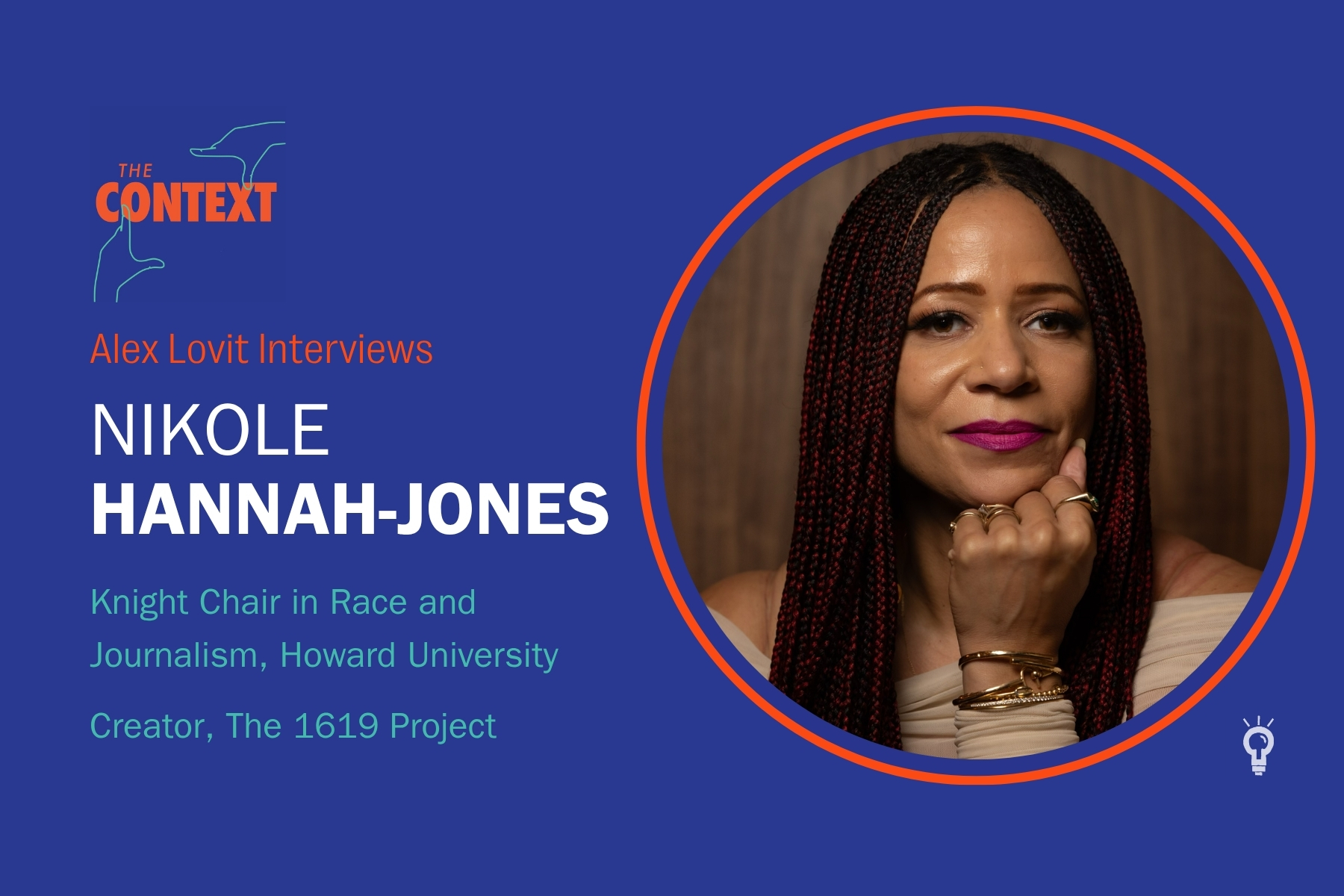
Patriotism, then, depends not only on affection for the nation but also on how the nation is understood. The nationalist view assumes that America is the sum of its actions, so anything it does must be affirmed, even injustice and hypocrisy. But if America is its ideals and principles, then patriots are those who have fought and sacrificed for the faithful application of freedom, equality, and the rule of law. In that spirit, as Nikole Hannah-Jones argued in a discussion of patriotism on The Context podcast, Black Americans have been, “the greatest democratizing force in the United States.” Patriotism is standing for America’s ideals, whether the threat is the British Empire, Nazi Germany, or American slavery, segregation, and structural inequality. And those who would weaponize the symbols and language of American democracy in the suppression of dissent are not patriots but the opposite.
As we approach the nation’s historic milestone, I am struck that Douglass, Baldwin, King, and pro-democracy dissenters today exemplify faith in America’s core democratic principles, even as they contest the harsh reality that many Americans experience. True patriotism like theirs embraces complexity and imperfection, while strengthening democracy in the process. America’s milestone is an occasion to reclaim patriotism as a force for democracy and inclusion.
Derek W. M. Barker is senior program officer for research initiatives at the Charles F. Kettering Foundation, a political theorist, and the lead editor of the foundation’s blog series From Many, We.
From Many, We is a Charles F. Kettering Foundation blog series that highlights the insights of thought leaders dedicated to the idea of inclusive democracy. Queries may be directed to fmw@kettering.org.
The views and opinions expressed by contributors to our digital communications are made independent of their affiliation with the Charles F. Kettering Foundation and without the foundation’s warranty of accuracy, authenticity, or completeness. Such statements do not reflect the views and opinions of the foundation which hereby disclaims liability to any party for direct, indirect, implied, punitive, special, incidental, or other consequential damages that may arise in connection with statements made by a contributor during their association with the foundation or independently.