The Digital Awakening of African Youth: Building a New Table
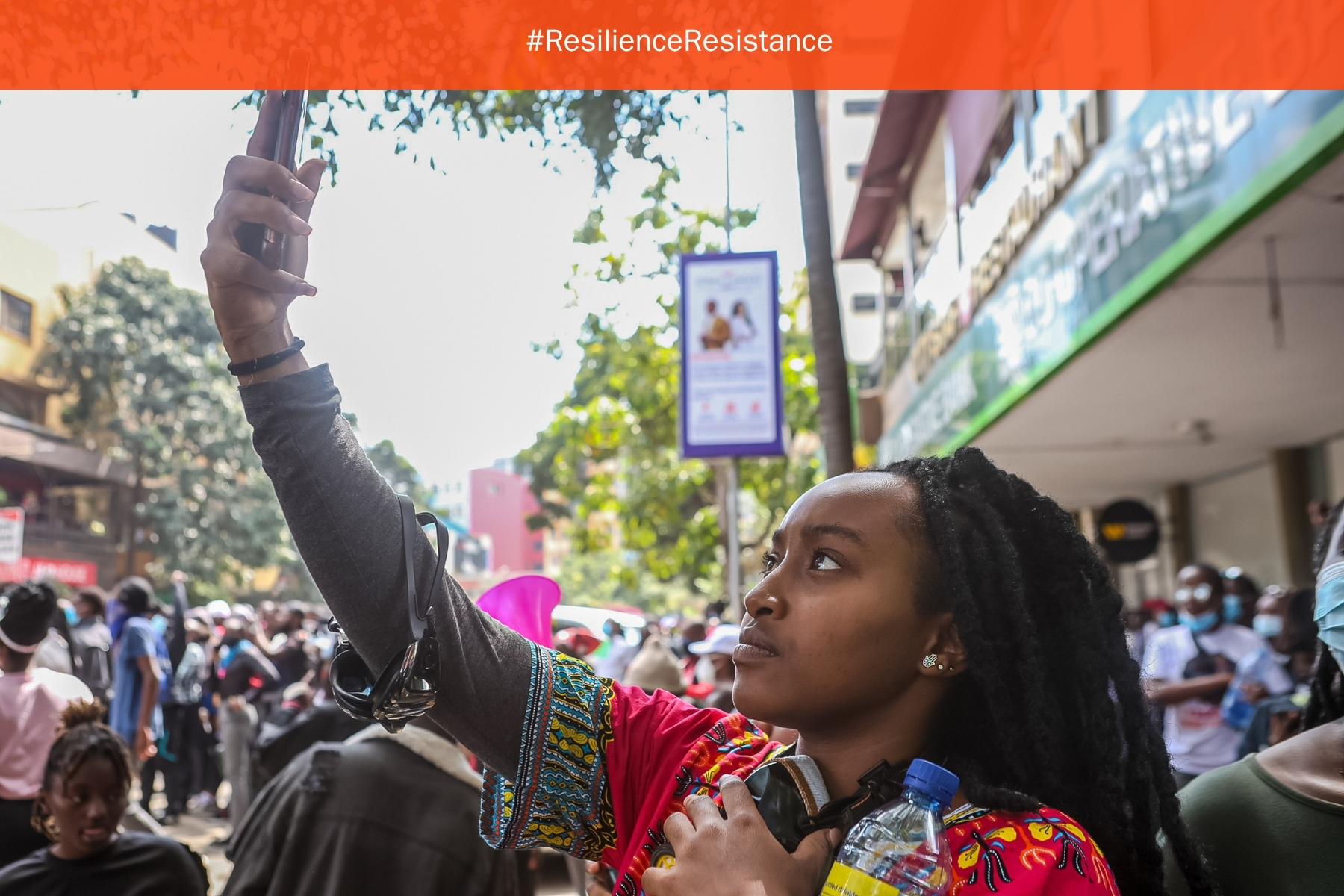
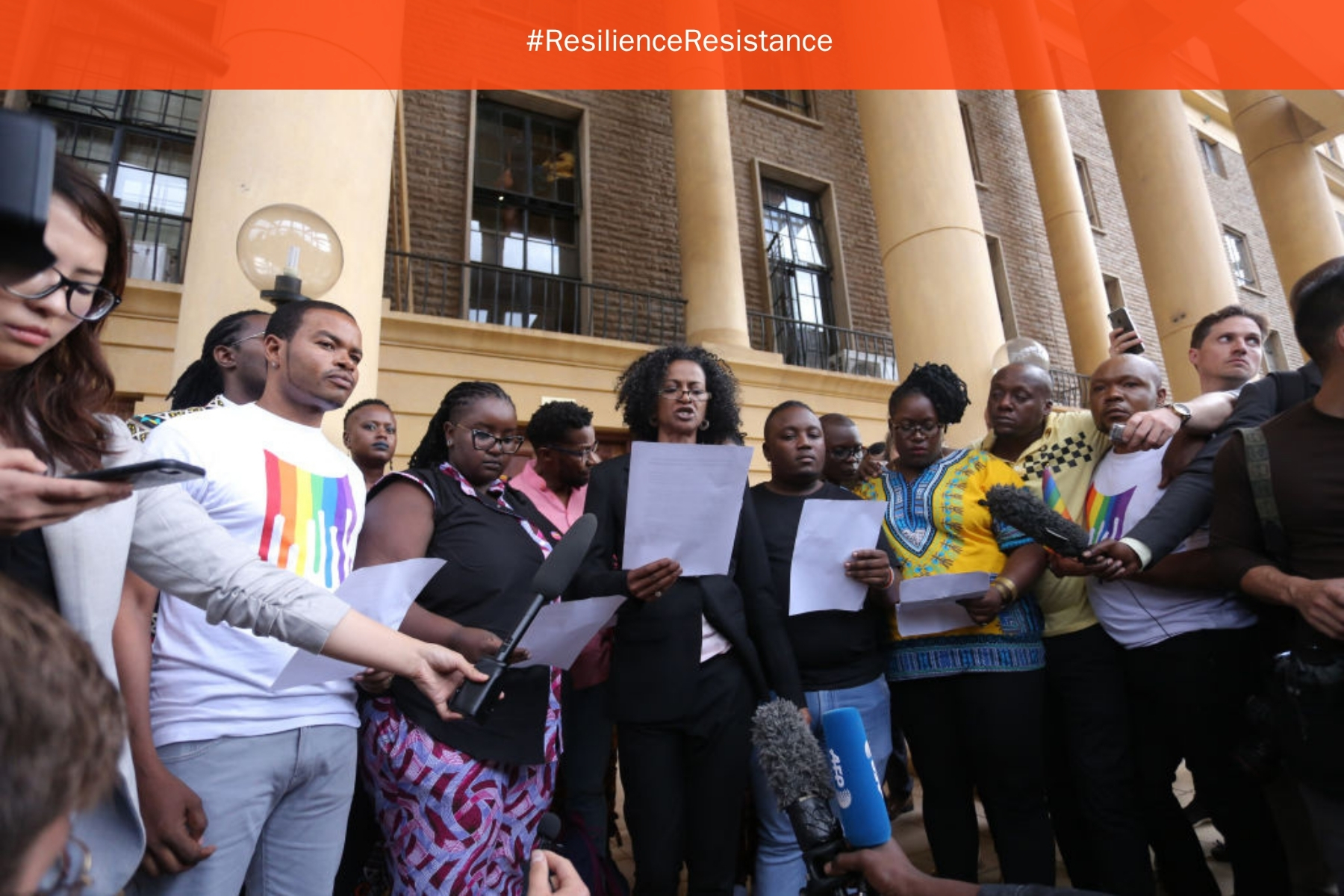
Photo by Boniface Muthoni/SOPA Images/LightRocket via Getty Images.
Africa is a vast, layered, and deeply diverse continent, partitioned by colonial borders and segmented by language, yet bound together by shared history, cultures, and identities. For decades, artificial divisions have shaped how Africans see each other and how power is organized across the continent. In some ways, these divisions have brought Africans together, but in other ways, they have slowed integration, complicated collaboration, and delayed Africa’s full participation in successive industrial revolutions.
But something is shifting.
From Fragmentation to Connection
The generation born in the late 1990s—raised in the aftermath of structural adjustment, in the rise of mobile technology, and in the explosion of the internet—has begun to dissolve these inherited barriers. Not through formal treaties or state-led processes, but through culture, connection, and collective expression. It happens through music that travels across borders without visas, through social media banter that ignores colonial languages and reinvents them, through dance challenges, trends, and the conversations that make a Nigerian, a Kenyan, and a South African part of the same cultural moment. Increasingly, the dissolution is being done through political action.
In Kenya, this shift came into sharp focus during the protests against the now infamous Finance Bill 2024. In the eyes of the state, what began as a familiar middle-class grievance quickly evolved into something far more significant: a nationwide youth-led uprising that defied traditional political organization. There were no singular leaders to arrest, no centralized command to dismantle, and no predictable script to follow. became a collective consciousness shaped in real-time across digital platforms.
This was not accidental. And it was not spontaneous in the way it has often been described.
It was the culmination of years of digital convergence—of young people consuming similar content, confronting similar injustices, and arriving at similar conclusions, together. Across timelines and threads, a political awareness had been forming consistently and powerfully. TikTok hashtags like #Corruptok, #RejectFinanceBill, #RutoMustGo, #OccupyParliament, and #EndSARS became anchors of resistance against taxation, corruption, and rogue regimes.
Kenya’s June 2024 protests became a blueprint for citizens in states observing and maintaining the status quo against rogue regimes. The Kenyan Gen Zs’ journey to occupy the State House began as a quest for accountability and transparency, drawing attention and solidarity messages from Americans, Europeans, Asians, and political activists across the world. While the Gen Z-led revolution in Kenya was punctured by an elite political horse-trading pact, their counterparts in Nepal and Madagascar led successful revolutions that toppled their governments.
Tanzania and Uganda, Kenya’s neighbors who held elections in 2025 and 2026 respectively, felt the impact of the cross-border political consciousness and solidarity of young people. In Tanzania, long viewed as a politically conservative country, the youth declared protests for election day decrying the detention of opposition leaders and the shambolic election set to be held. Election observers, including those from the Africa Union and the Southern African Development Community (SADC), declared the Tanzanian elections as not free and fair and undemocratic. Kenyan activists and politicians supported their cry for freedom with solidarity messages. During the election day protests, Kenyans living on the border actively marched alongside their Gen Z counterparts.
These protests were crushed by heavy-handed security forces. It is believed that thousands of Tanzanian young people were killed extrajudicially. International bodies, such as the UN, condemned the actions by the Tanzanian government and have demanded an independent inquiry and accountability for the atrocities committed. Civil society groups in both Kenya and Tanzania have petitioned the International Criminal Court to intervene.
In the run up to Uganda’s election in 2026, some Kenyan activists crossed over to Uganda to express solidarity with the Bobi Wine-led opposition party in their quest for freedom. Two prominent Kenyan activists were arrested and held without charge for months before being released.
East Africa showed solidarity with their neighbors by creating hashtags that likened the East African revolutionary movements to a soccer tournament. The initial June 2024 protests between Gen Z and the government of Kenya were declared to be a “friendly match.” The Tanzanian protests in 2025 were called “quarterfinals,” while the Ugandan protests in 2026 were labeled as the “semifinals.” Kenya’s 2027 general election will be the ultimate “final.”
Today, East African heads of state are determined to crush the willpower of Gen Z youth. They have been quoted as downplaying their unity and declaring outright war on unified protests, calling Gen Z a “lost generation” and “bad-mannered children” whose love for democracy is founded on destruction of property and who should be “dealt” with severely. According to them, asking for accountability and transparency has become an act of terrorism. But the youth of Kenya are moving with determination, in spite of the risk and keeping in mind the words of Wael Ghonim: “The power of the people is greater than the people in power.” Gen Z and the millennials have vowed to get their message home.
They have since moved from protests to organizing and registering as voters in what once was known as voter apathy among the youth. Young people have vowed to change that. It is now even more clear that health care is on the ballot, education is on the ballot, security is on the ballot, and livelihoods and cost of living are on the ballot. The message is clear: you cannot deny the existence of a thing by saying it does not exist.
A Generation Knocking on Closed Doors
This awakening exists in tension with deeply entrenched systems. Across African societies—whether in governance, public service, gender advocacy spaces, cultural institutions, or religious structures—the status quo remains guarded. It is maintained by gatekeepers, reinforced by bureaucracies, and often captured by cartels and intermediaries who determine whose ideas are valid and whose voices are heard.
For young people, that has meant exclusion.
New ideas struggle to find space within rigid systems that prioritize hierarchy over innovation. Participation is often symbolic rather than substantive. And power remains concentrated in structures that are slow to adapt and reluctant to yield. The question then becomes: Where do new ideas go when there is no room for them within conventional systems? Increasingly, they go digital. Functioning as the “new table,” digital platforms have done something profoundly disruptive: they have removed intermediaries. They have allowed young Africans to speak directly to each other, to organize without permission, and to build narratives outside of institutional control. In doing so, they have not only amplified voices but also reshaped how power is perceived and exercised. As Wole Soyinka once stated, “The greatest threat to freedom is the absence of criticism.”
With the rise of artificial intelligence, even long-standing barriers like language are beginning to erode. Real-time translation is making it easier for Africans to communicate across the linguistic divides that once seemed insurmountable. Conversations that were once confined within Anglophone, Francophone, or Lusophony silos are increasingly intersecting. Efforts like the African Union’s push to elevate Kiswahili as a continental language reflect an awareness of this need for unity.
Yet, while political processes continue to negotiate identity along demographic lines, young people are quietly opting out of these divisions. They are choosing instead to meet on digital platforms: spaces where identity is fluid, collaboration is organic, and belonging is self-defined. This is where a new kind of Pan-Africanism is emerging—not one dictated by states but one lived by people. It is a Pan-Africanism of playlists, hashtags, shared struggles, and collective demands.
To build this new table, we need the promotion, protection, and expansion of the digital civic space. This will entail enhancing digital infrastructure, lowering access costs, and investing in sustainable energy systems capable of powering the growing demands of artificial intelligence and emerging technologies. It will also be necessary to enact a robust and responsive underpinning legal framework that recognizes digital spaces as an avenue, or platform, for policy development. We are in the digital revolution, a golden opportunity for Africa to harness the power of digital spaces and unlock its full potential.
A Pivotal Moment
The same generation that is reshaping narratives online has the potential to redefine offline ownership of its governance, its economies, and critically, its natural resources. For too long, Africa’s wealth has been extracted, negotiated, and controlled in spaces far removed from its people. That, too, is beginning to be questioned, and perhaps that is the most revolutionary shift of all.
In May 2026, Kenya hosted the Africa Forward Summit alongside French President Emmanuel Macron, bringing together more than 30 heads of state. Yet on the sidelines of the summit, young Kenyans took to the streets in protest, expressing solidarity with West Africans and condemning what they viewed as continued French injustices and neocolonial influence in the region. Young Africans are not just speaking, they are beginning to organize and imagine a continent that works on its own terms. The movement that will unite Africa may not look like previous movements. It may not gather in conference halls or draft declarations in formal language. It may emerge instead from digital timelines, threads, and conversations—messy, decentralized, and often unpredictable. Is this the new table?
Angel Mbuthia is a Kenyan policy expert, youth advocate, and the National Youth Chair of the Jubilee Party. She is a Mandela Washington Fellow (2024) and winner of Ms. President (season 2) for her work and passion in advocacy and governance.
Resilience & Resistance is a Charles F. Kettering Foundation blog series that features the insights of thought leaders and practitioners who are working to expand and support inclusive democracies around the globe. Direct any queries to globalteam@kettering.org.
The views and opinions expressed by contributors to our digital communications are made independent of their affiliation with the Charles F. Kettering Foundation and without the foundation’s warranty of accuracy, authenticity, or completeness. Such statements do not reflect the views and opinions of the foundation which hereby disclaims liability to any party for direct, indirect, implied, punitive, special, incidental, or other consequential damages that may arise in connection with statements made by a contributor during their association with the foundation or independently.